I’ve been repairing and making guitars for some 54 years now, and my body is telling me that it’s time to retire. So I’m trying to untangle what that’s about, and how to go about it, and doing it. It’s a slow process.
I’m doing two things at this time. First: I’ve occupied my shop building for more than 25 years now; it’s 2,500 square feet and is set up to do the work that I do. I’m looking to see if there’s anyone out there who would be interested in taking the business/building over when I do retire. If you are, please do get in touch with me.
The second thing I’m doing is putting a lot of my woods and artworks up for sale, starting with this website.
As to the artwork, it is all 100% done by me. It’s derived and approached from the techniques, materials, and the aesthetics of lutherie. A lot of the artwork looks like rosetted guitar tops… that could actually be used as guitar tops for someone’s next guitar. Or they could be put on a wall and admired.
I’m also selling off some of my prized Brazilian Rosewood that I’ve been collecting for many years. There are four things that you should know about it. First, I bought most of it before the Cites Regulations came into existence, so I don’t have Cites Certification for this wood. Quite a bit of it is recycled – that is, cut from timbers that were themselves cut down a long time ago to make buildings and dams, etc., that are no longer in use. So I don’t think I’ve contributed to the illegal poaching of rosewoods. A lot of it is Dalbergia stumpwood. I also bought the bigger proportion of my stash legally, from L.M.I., MacBeath Hardwoods, and from other luthiers who had had the wood for years and were retiring – or from people who had found the wood in an attic or storeroom after a guitar-making relative had died.
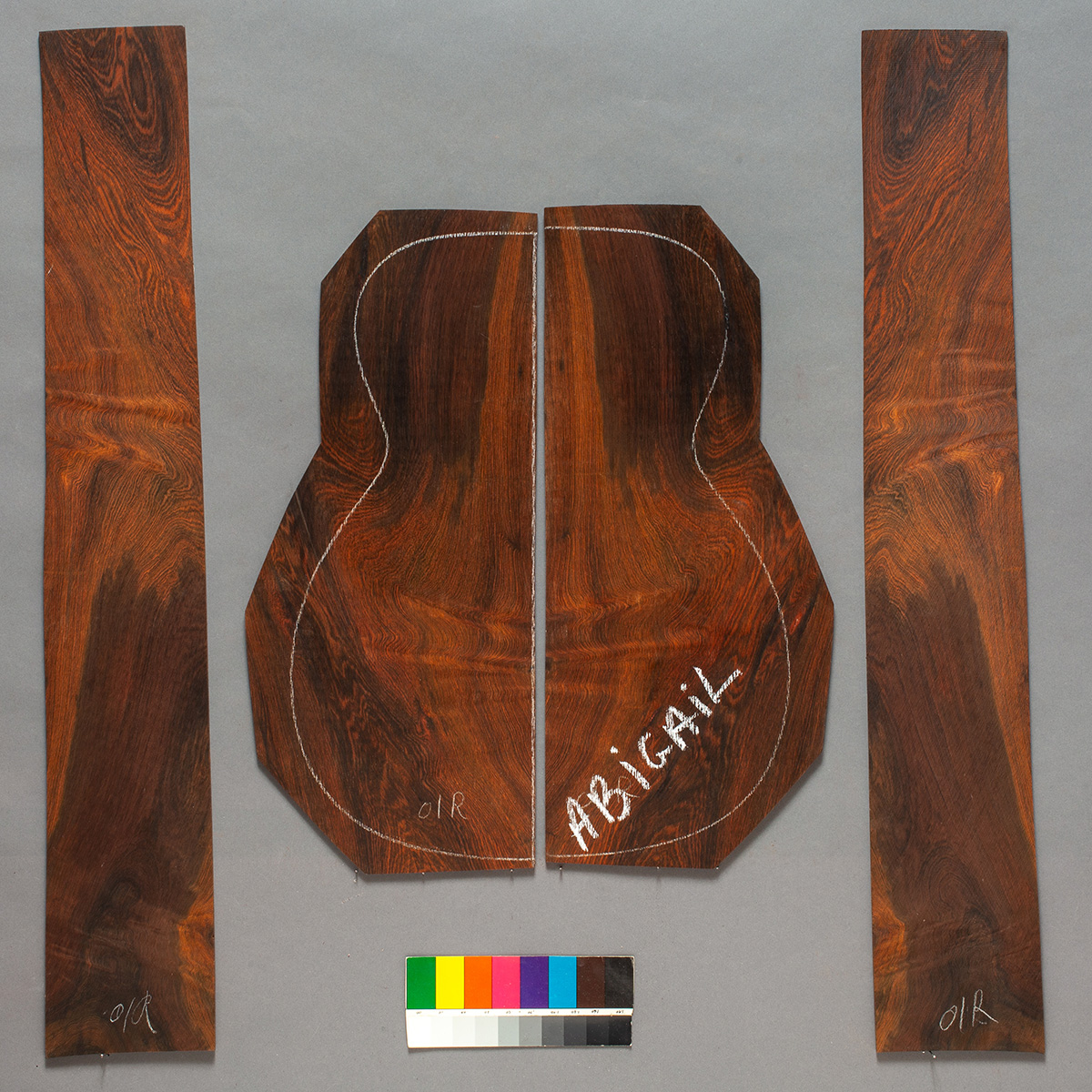
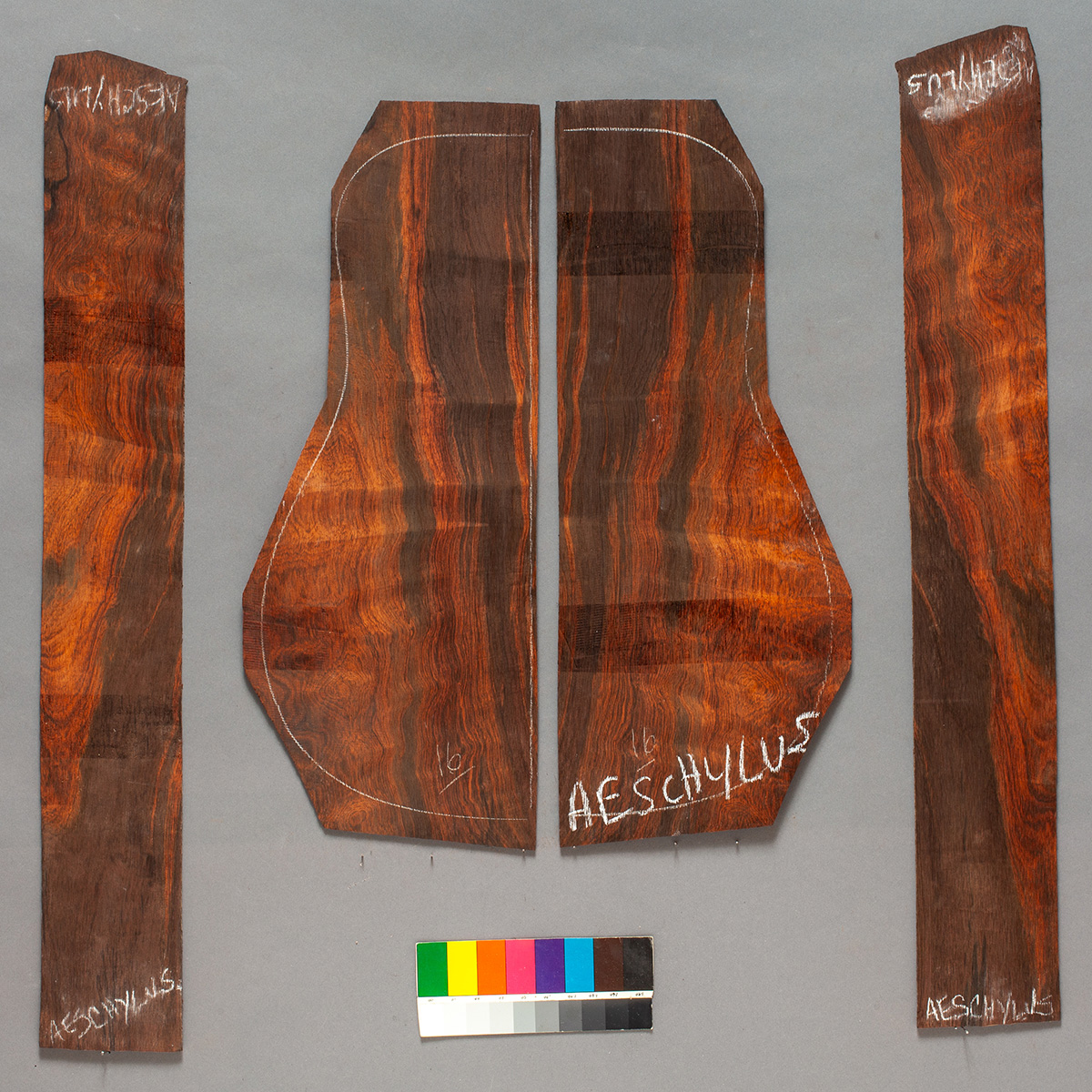
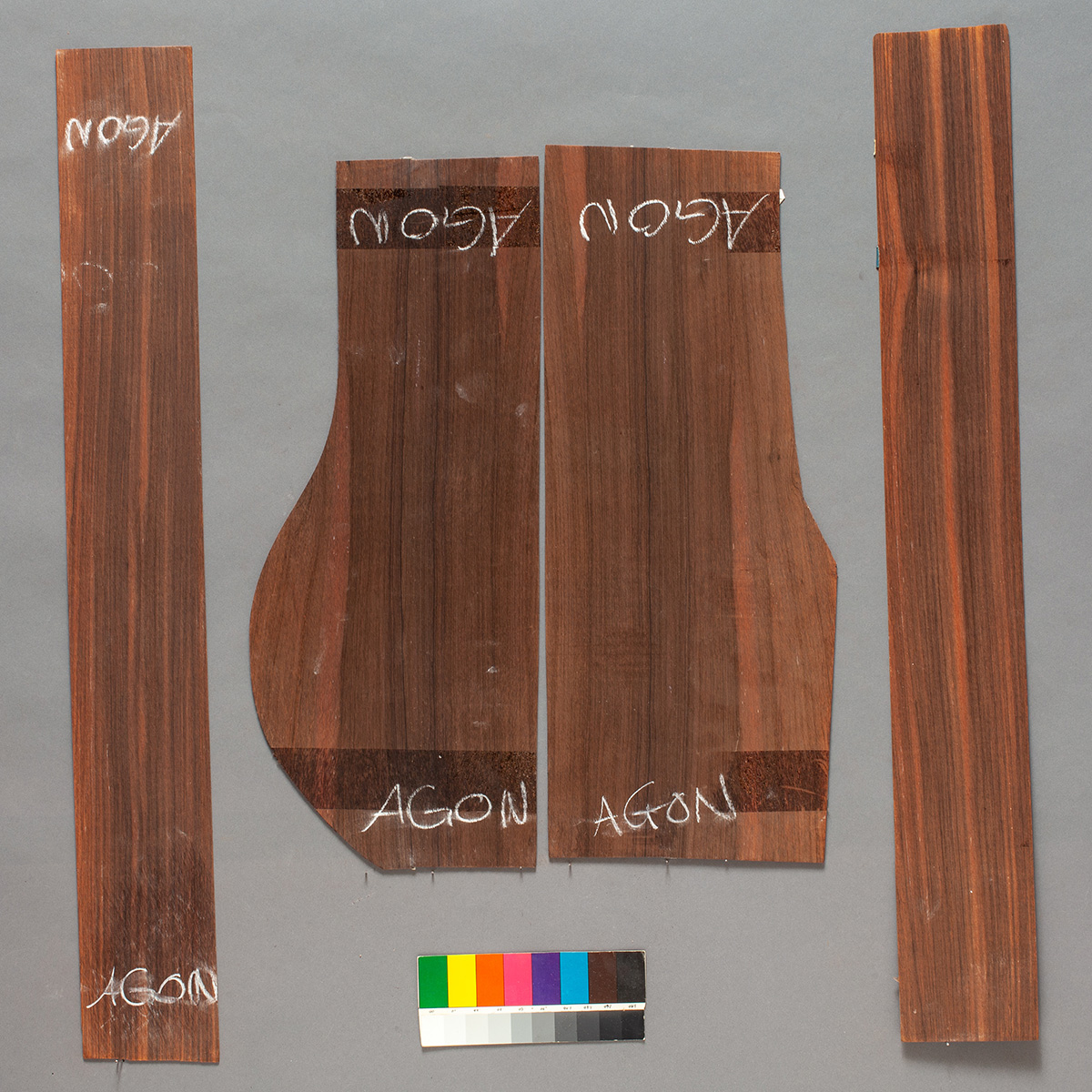
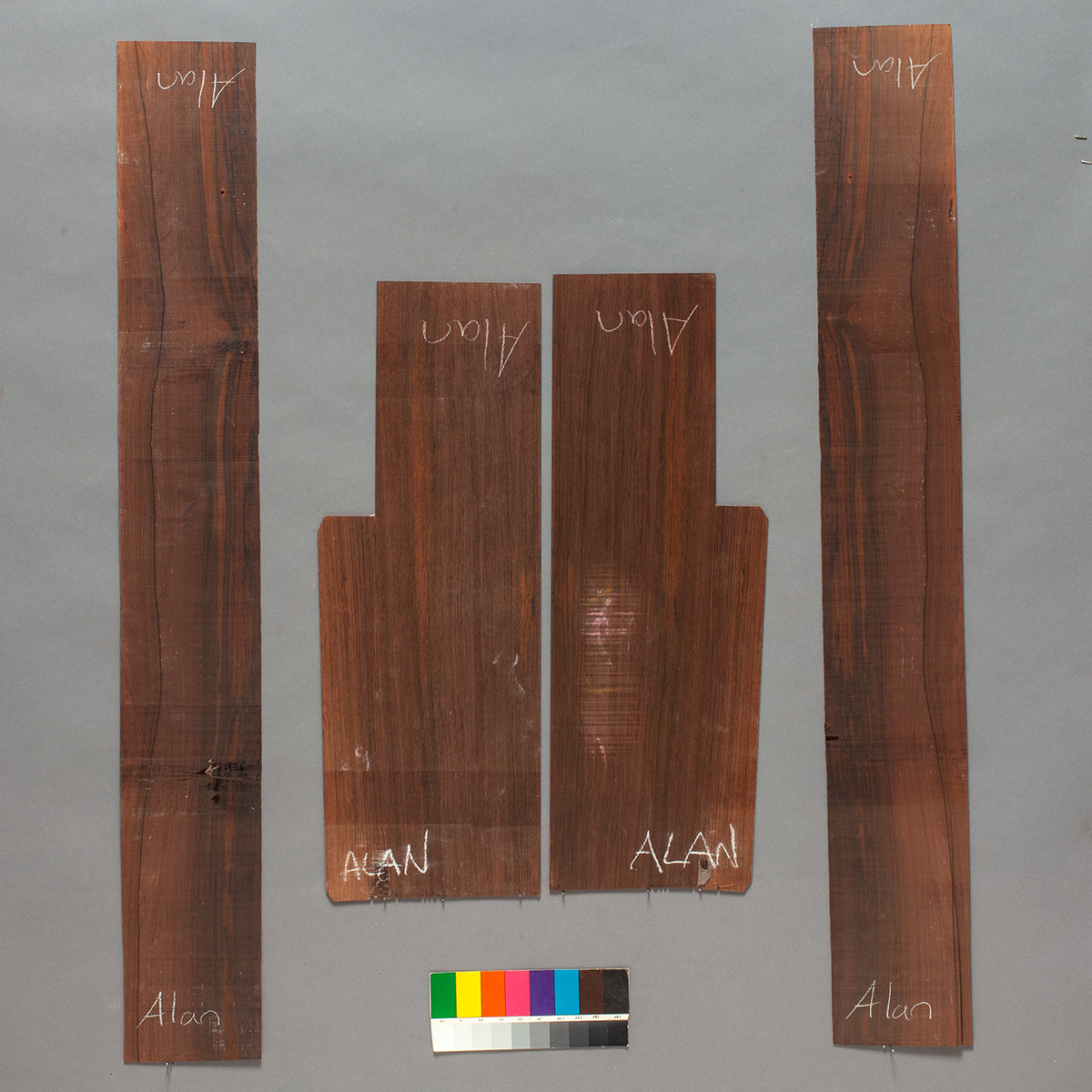
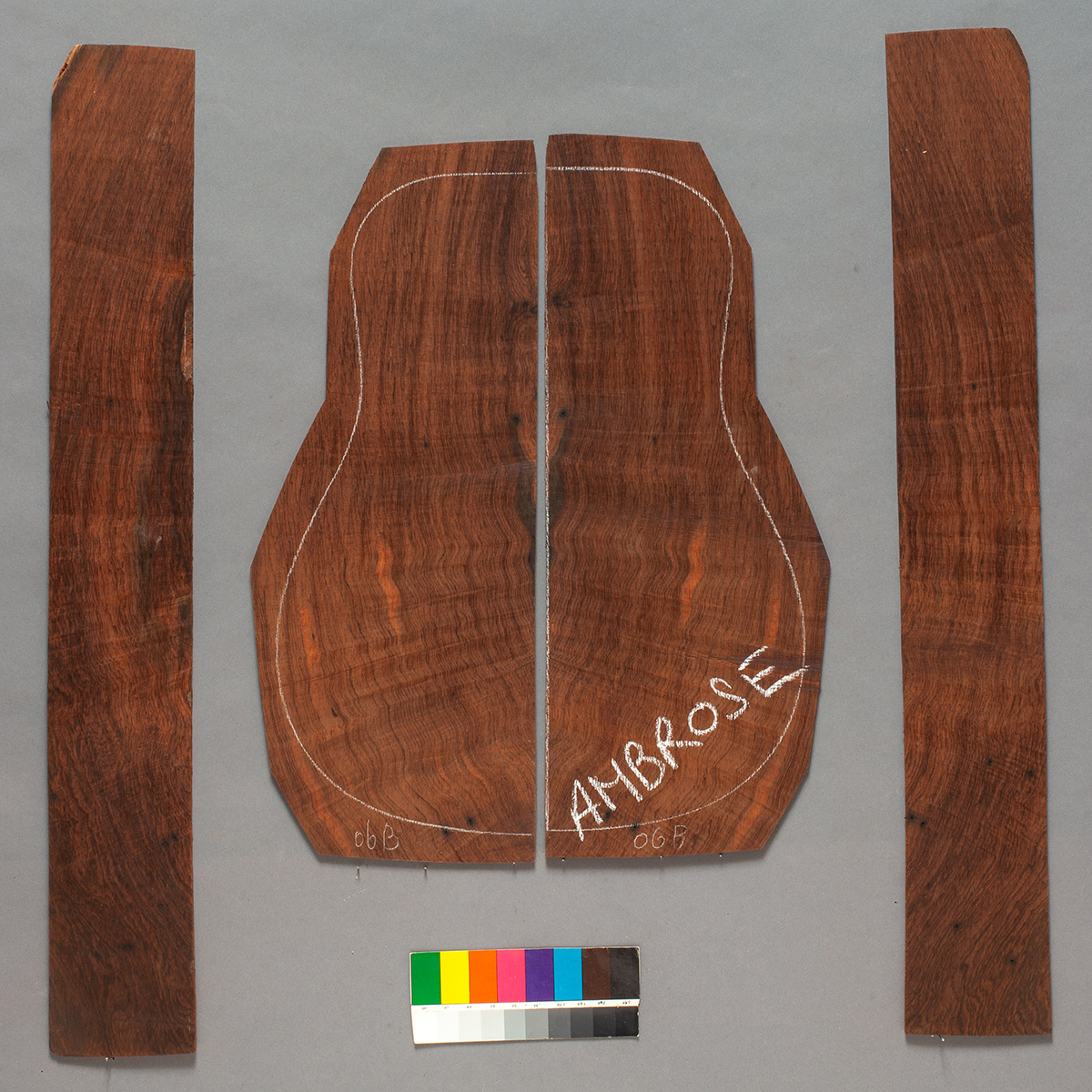
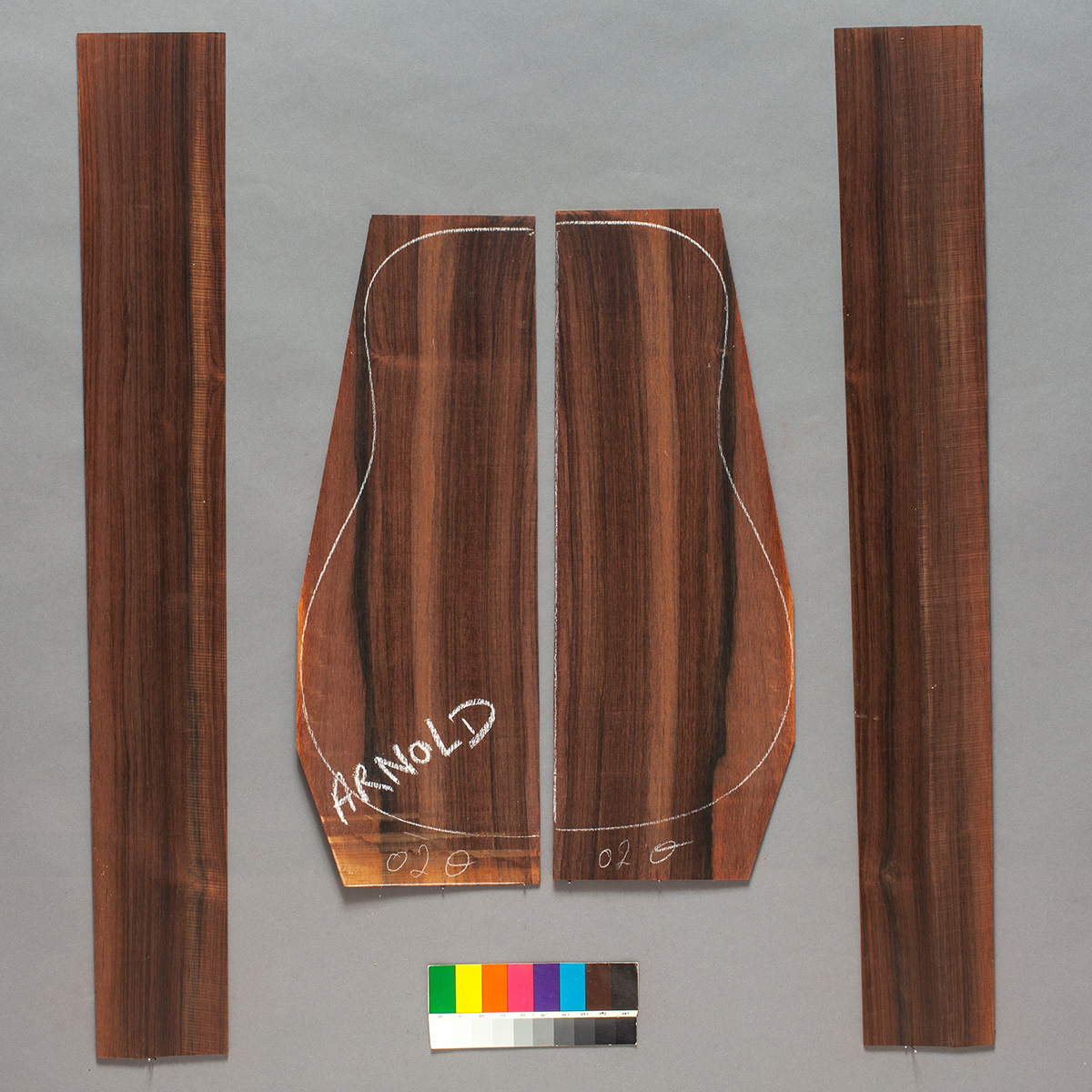
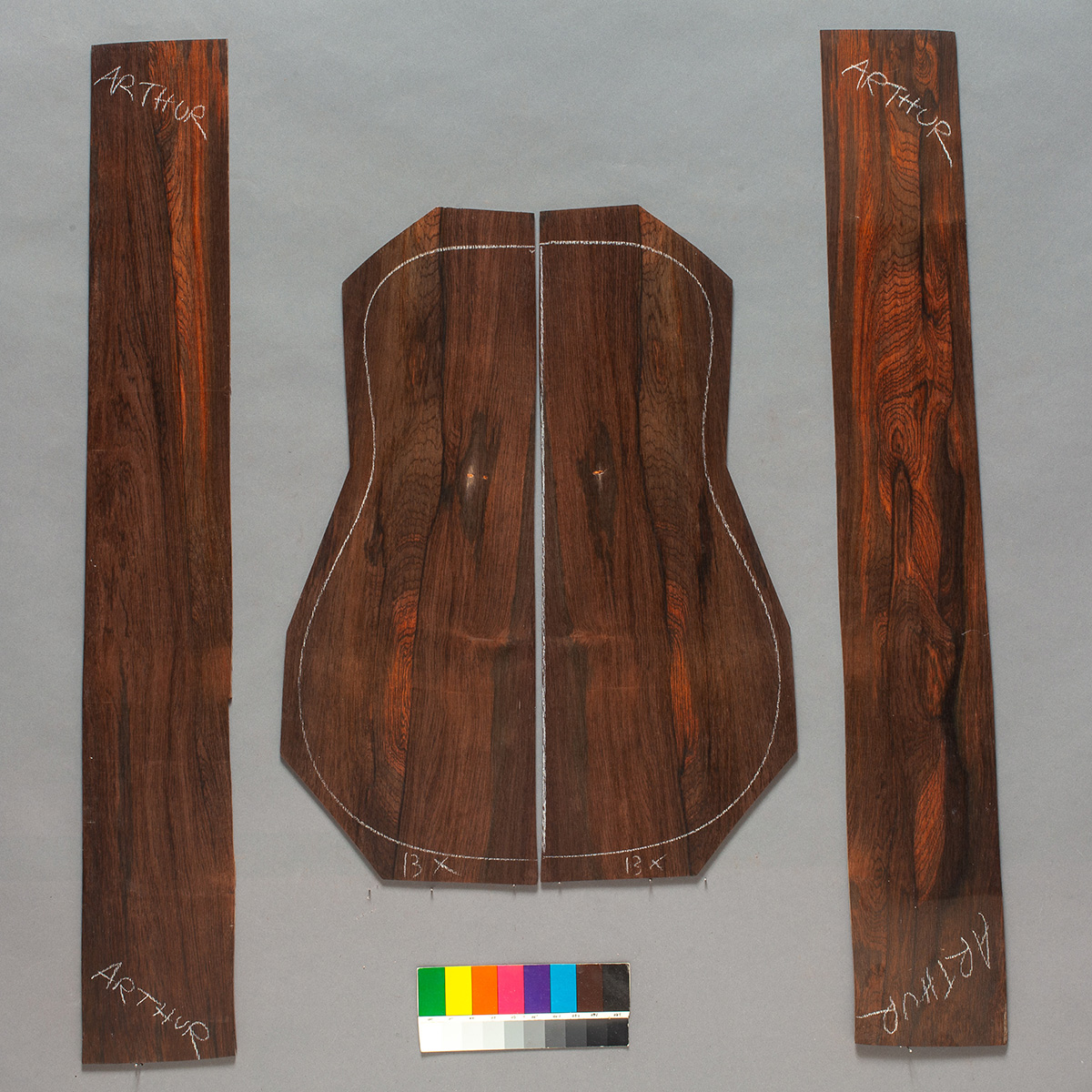
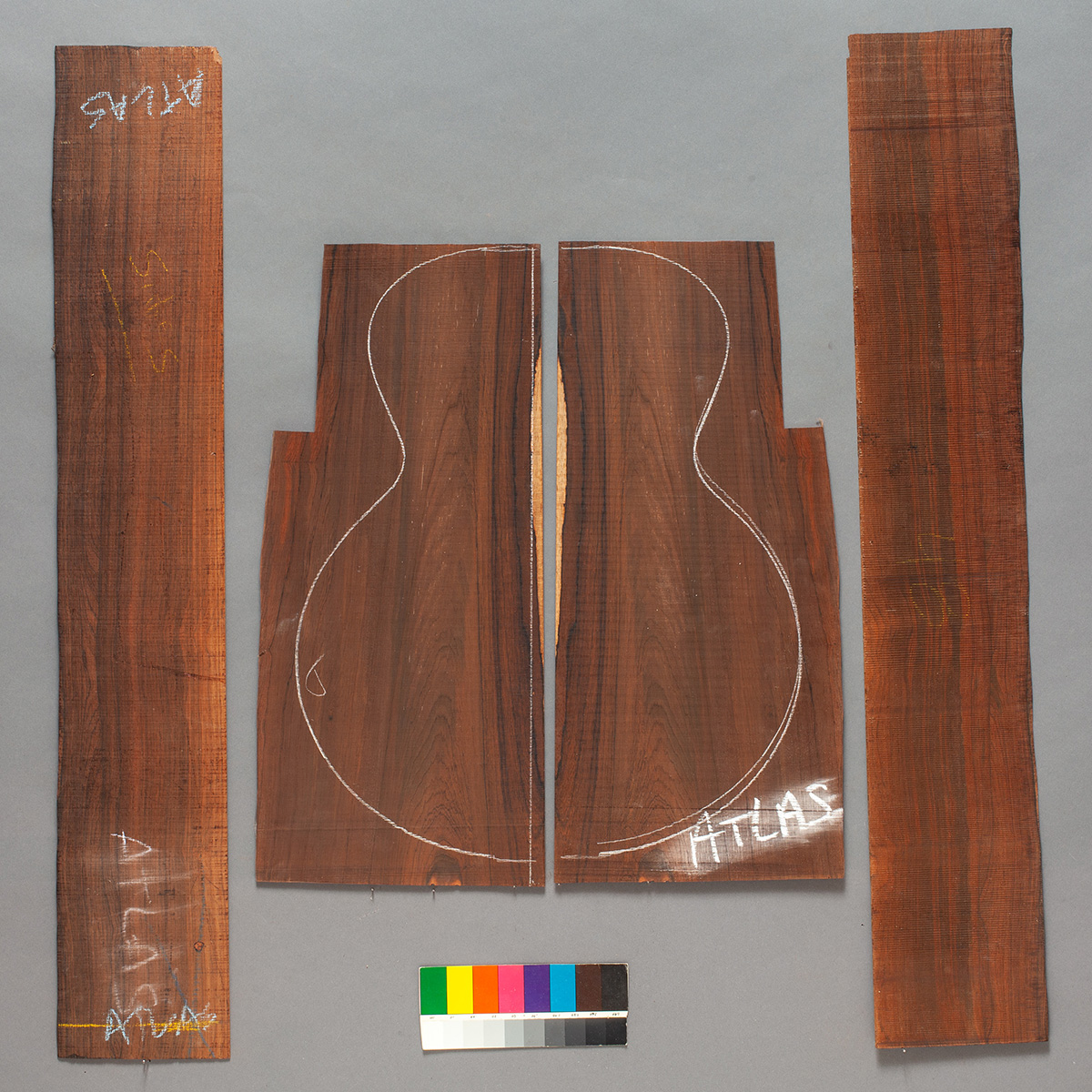
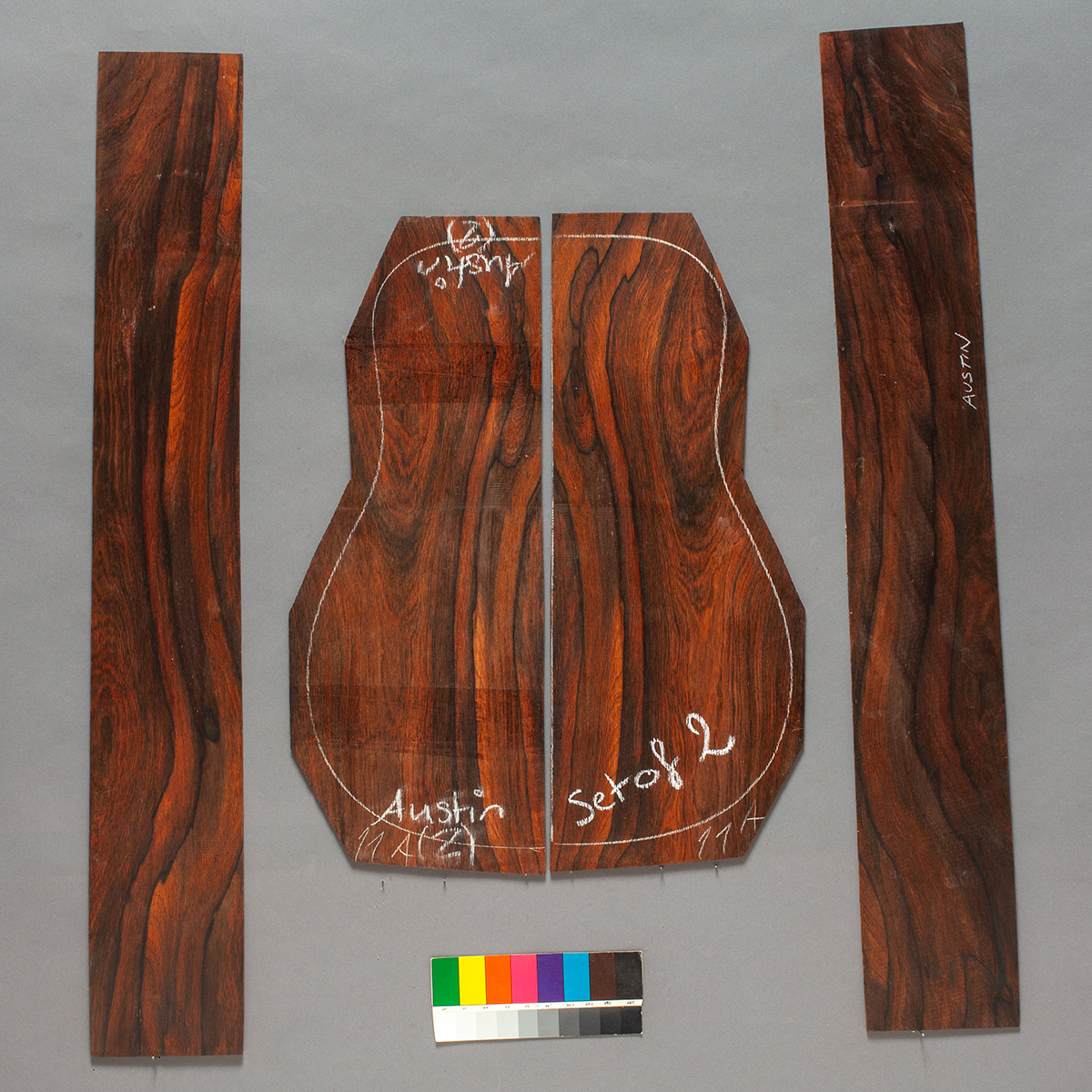
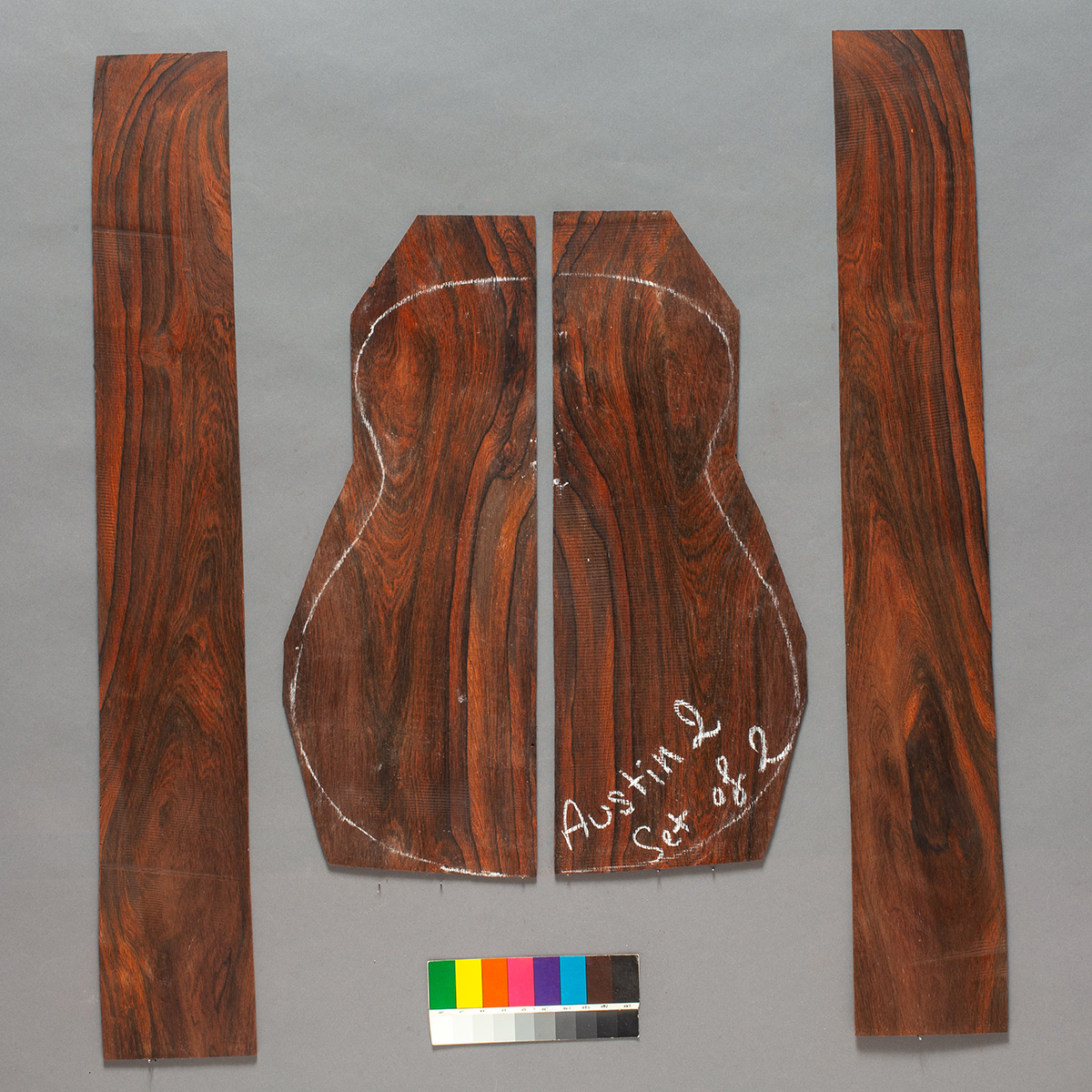
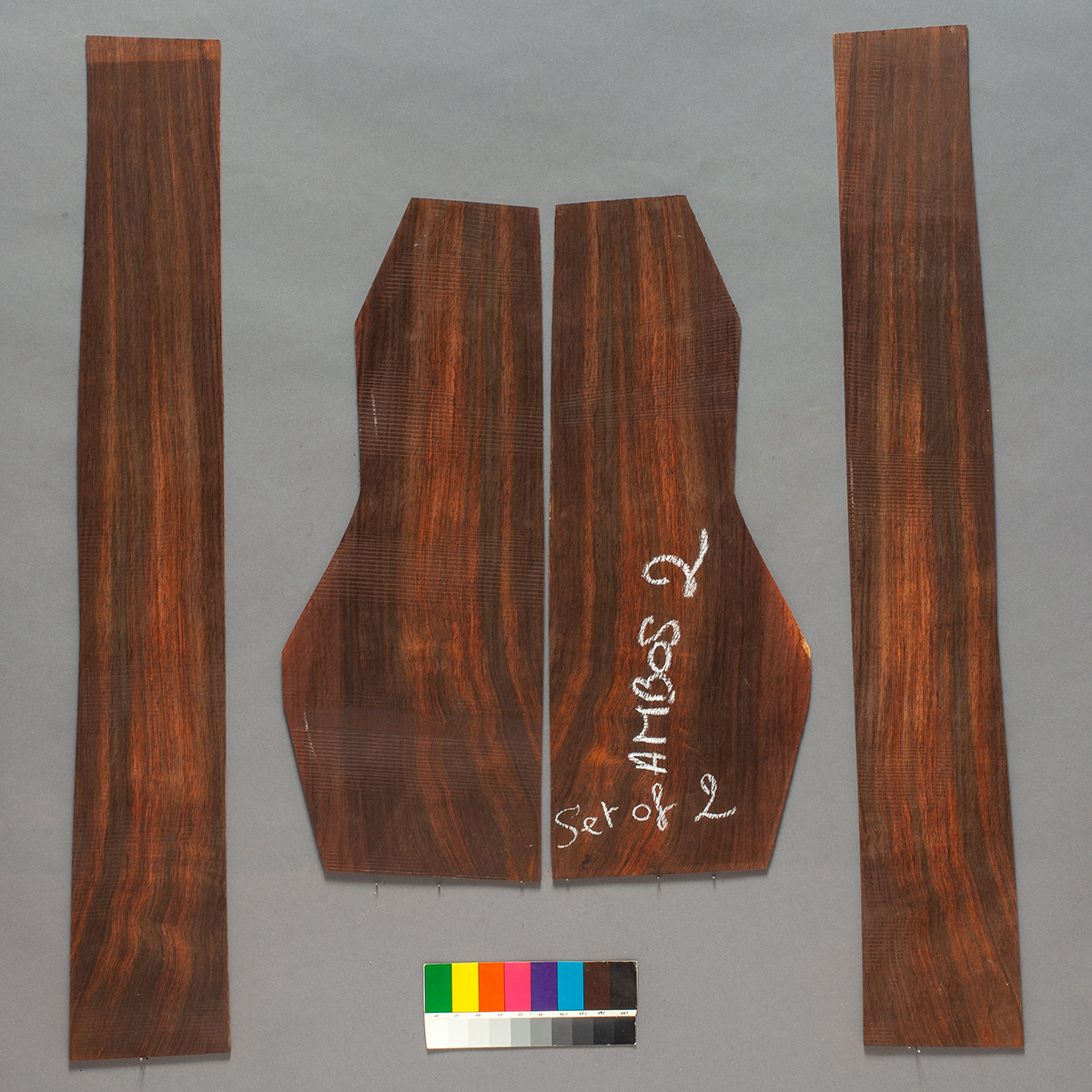
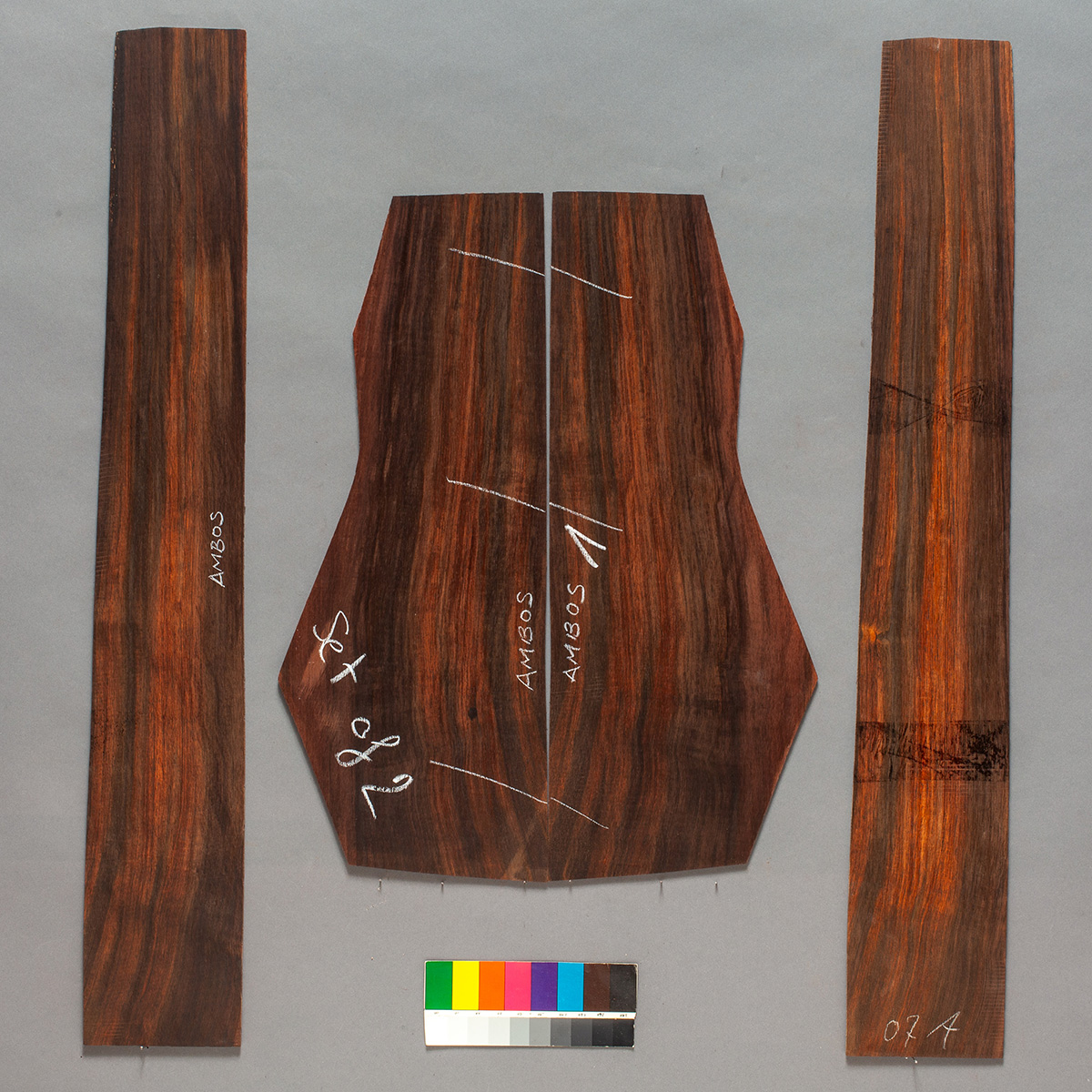
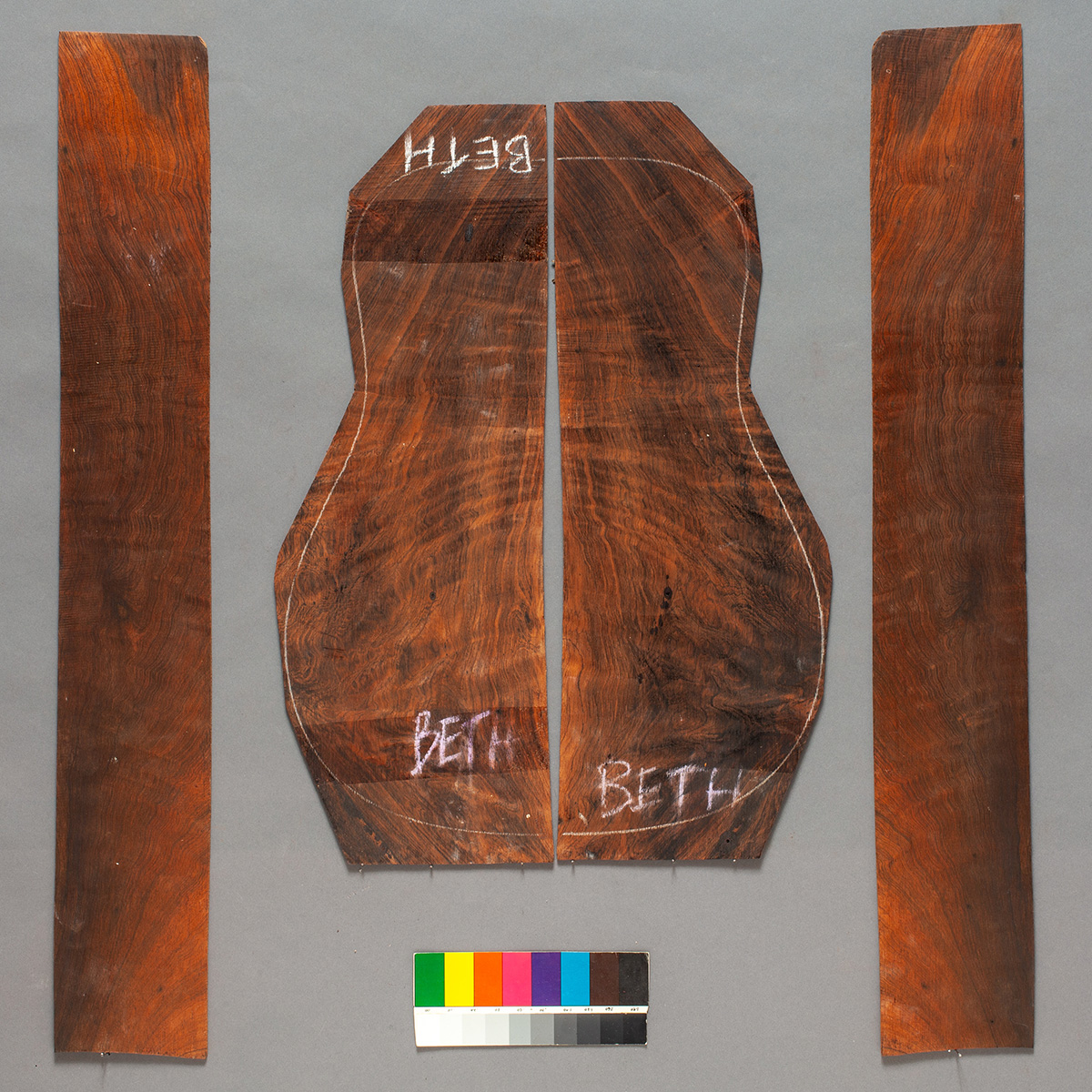
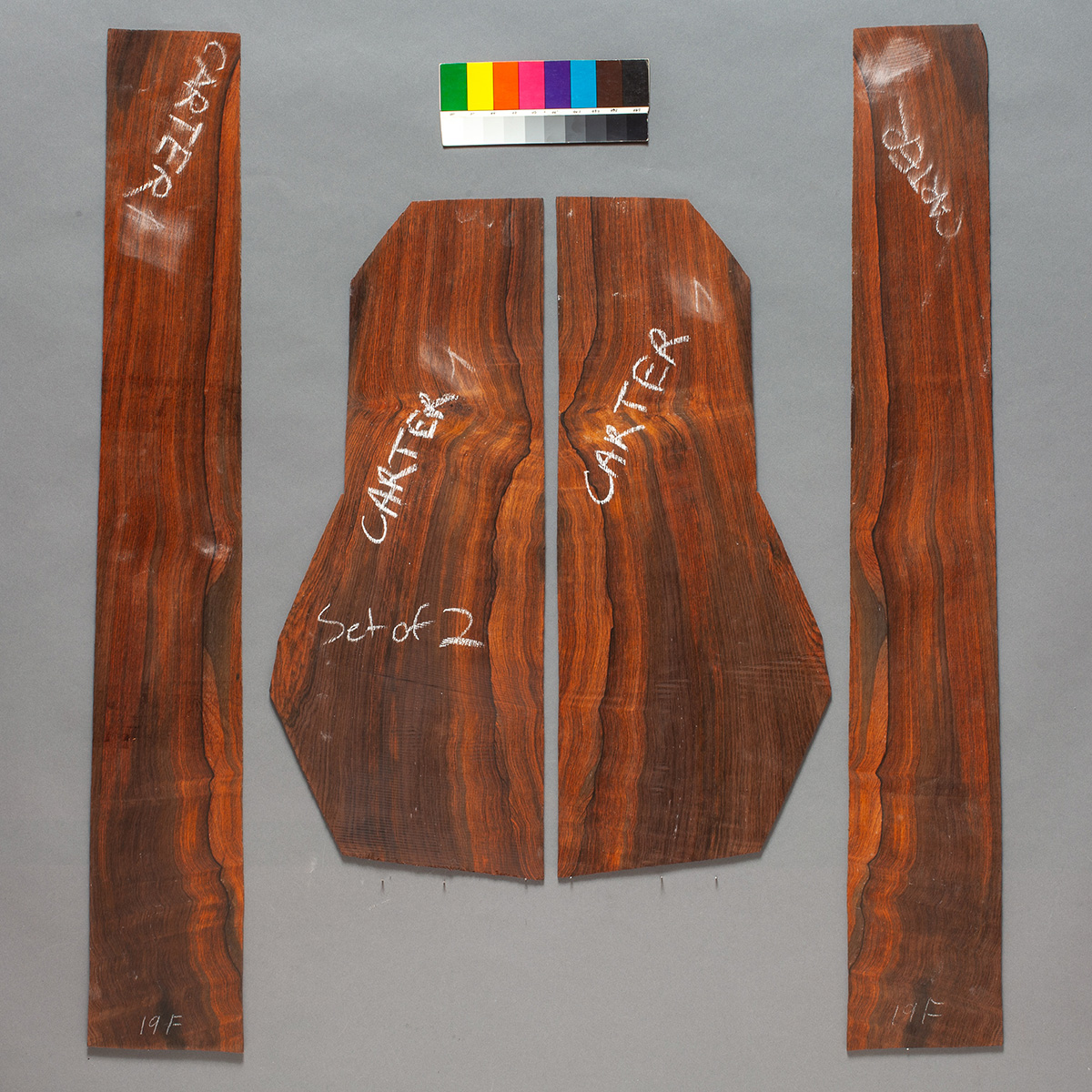
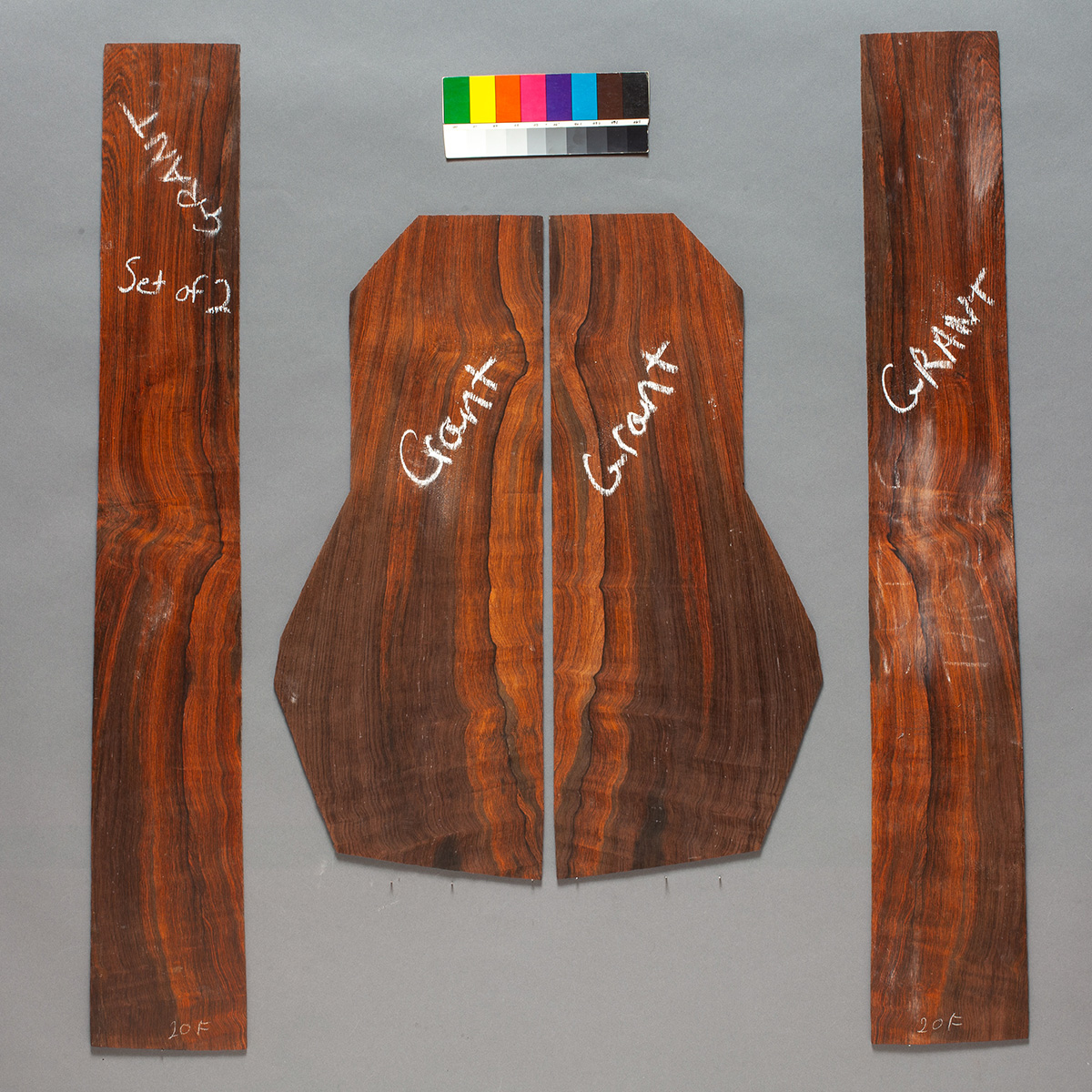
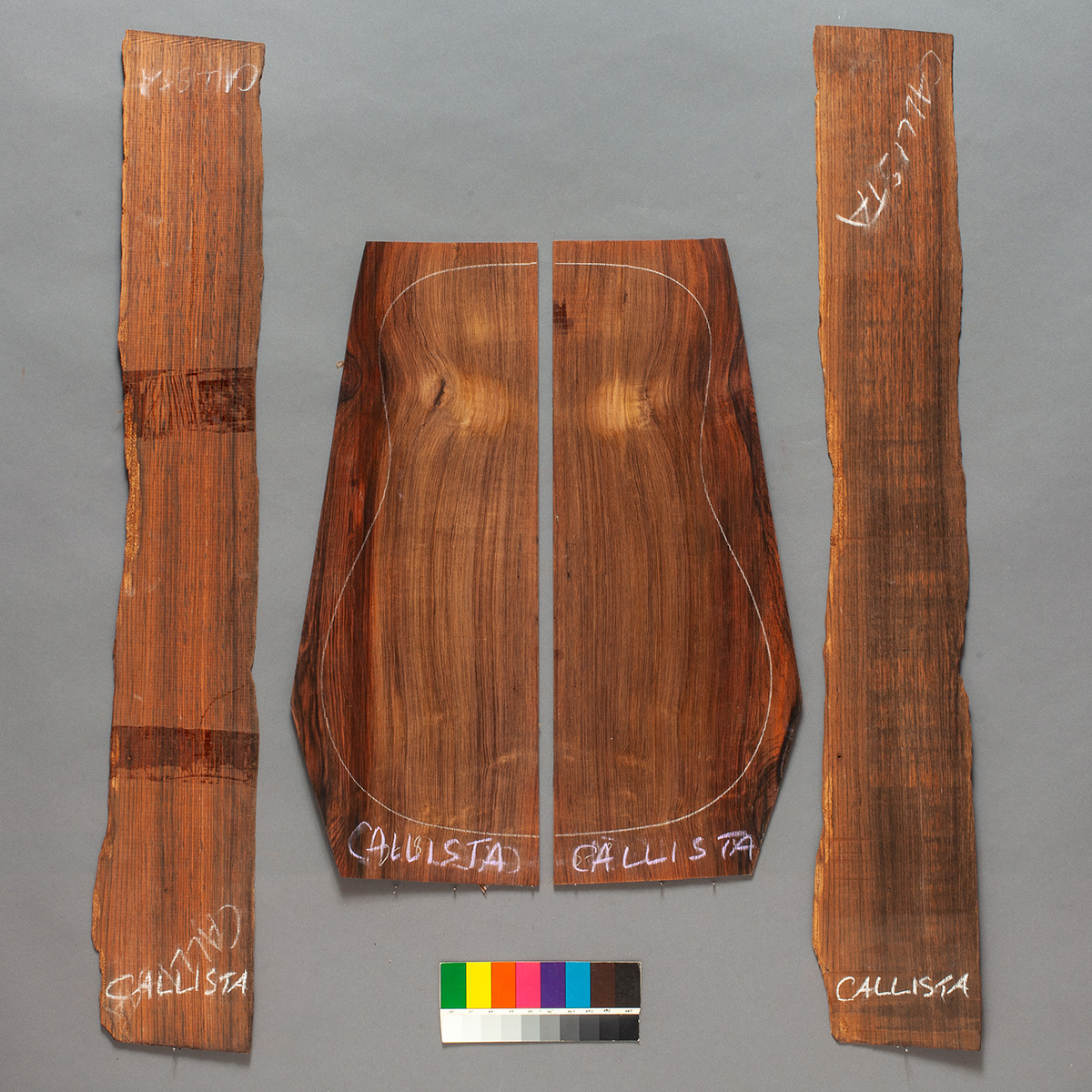
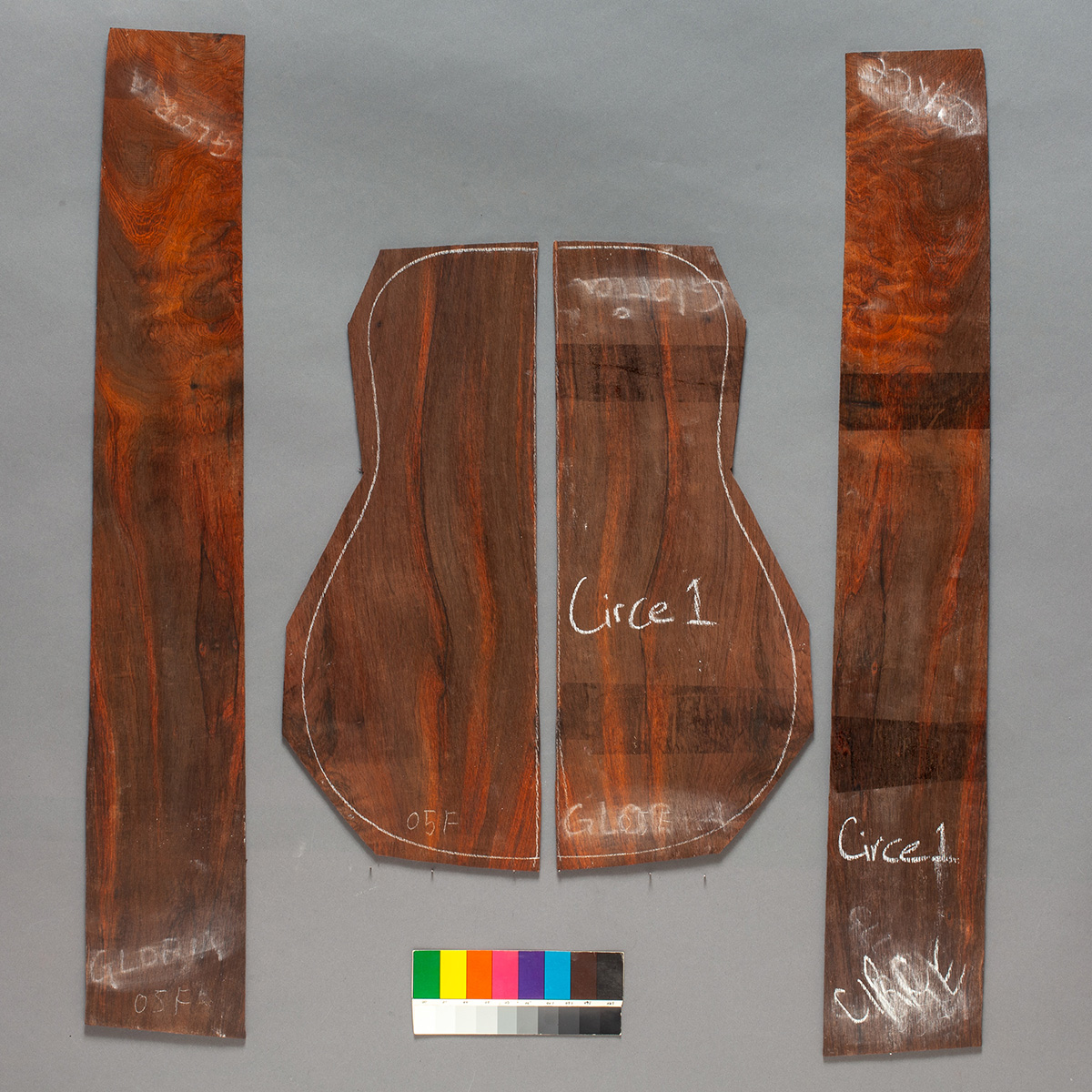
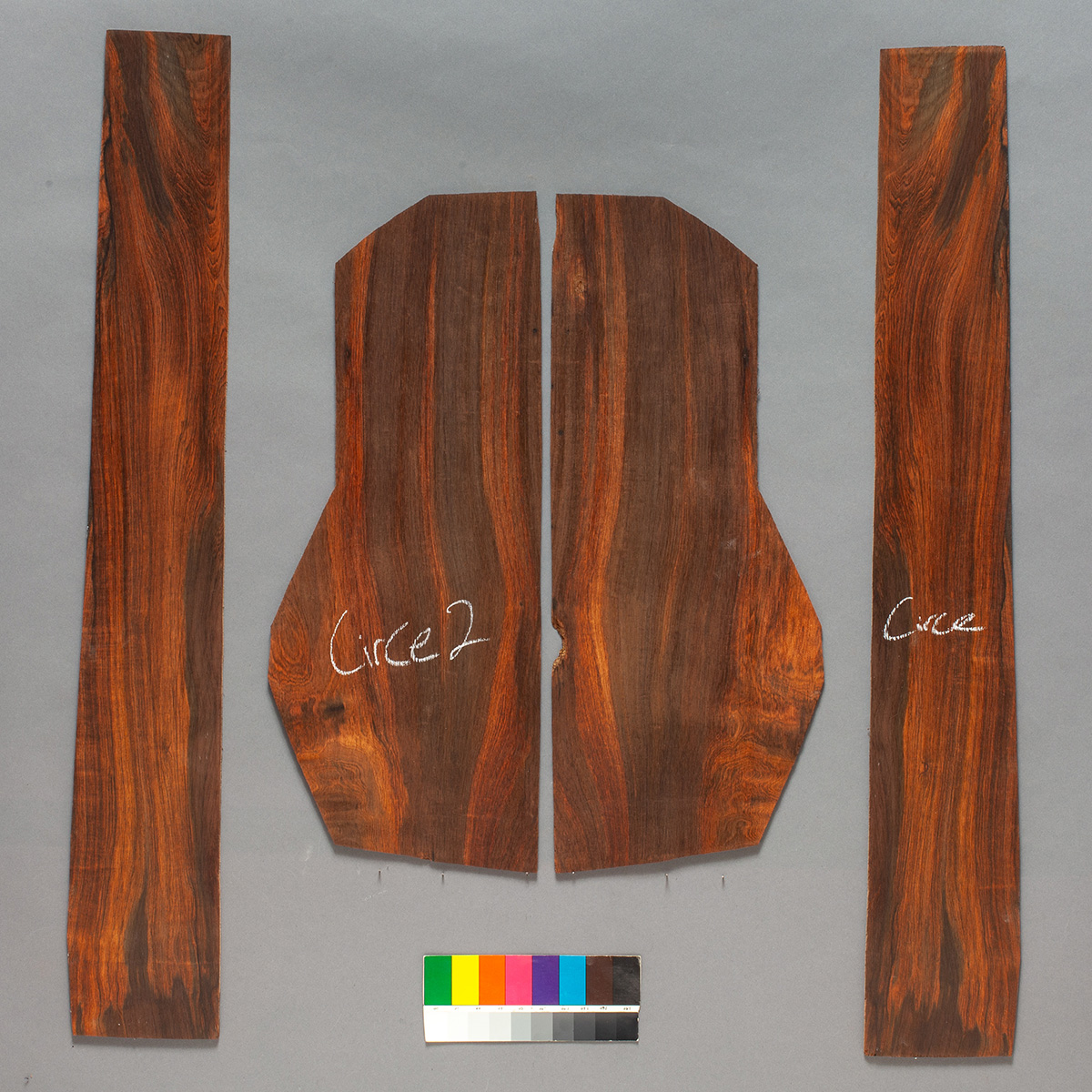
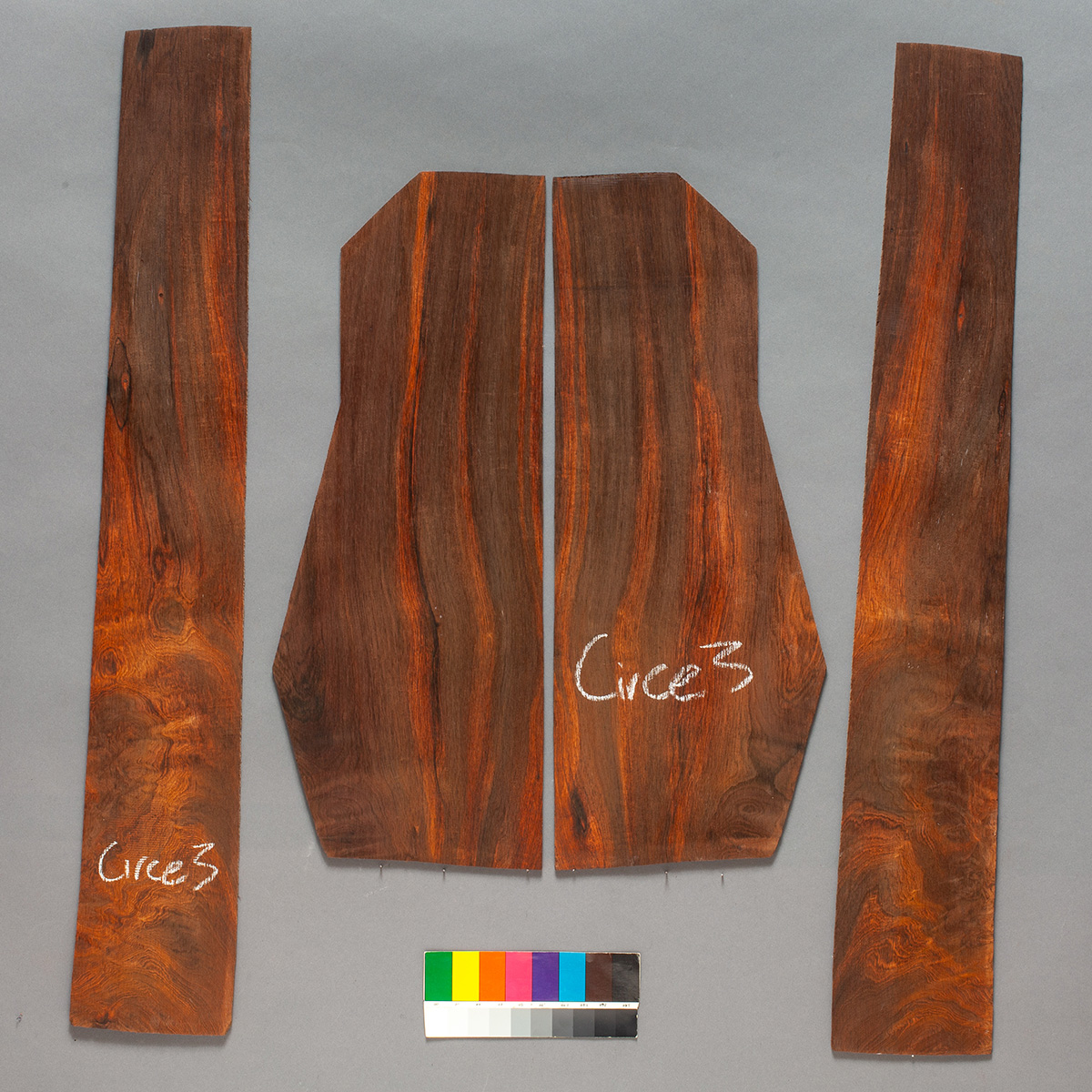
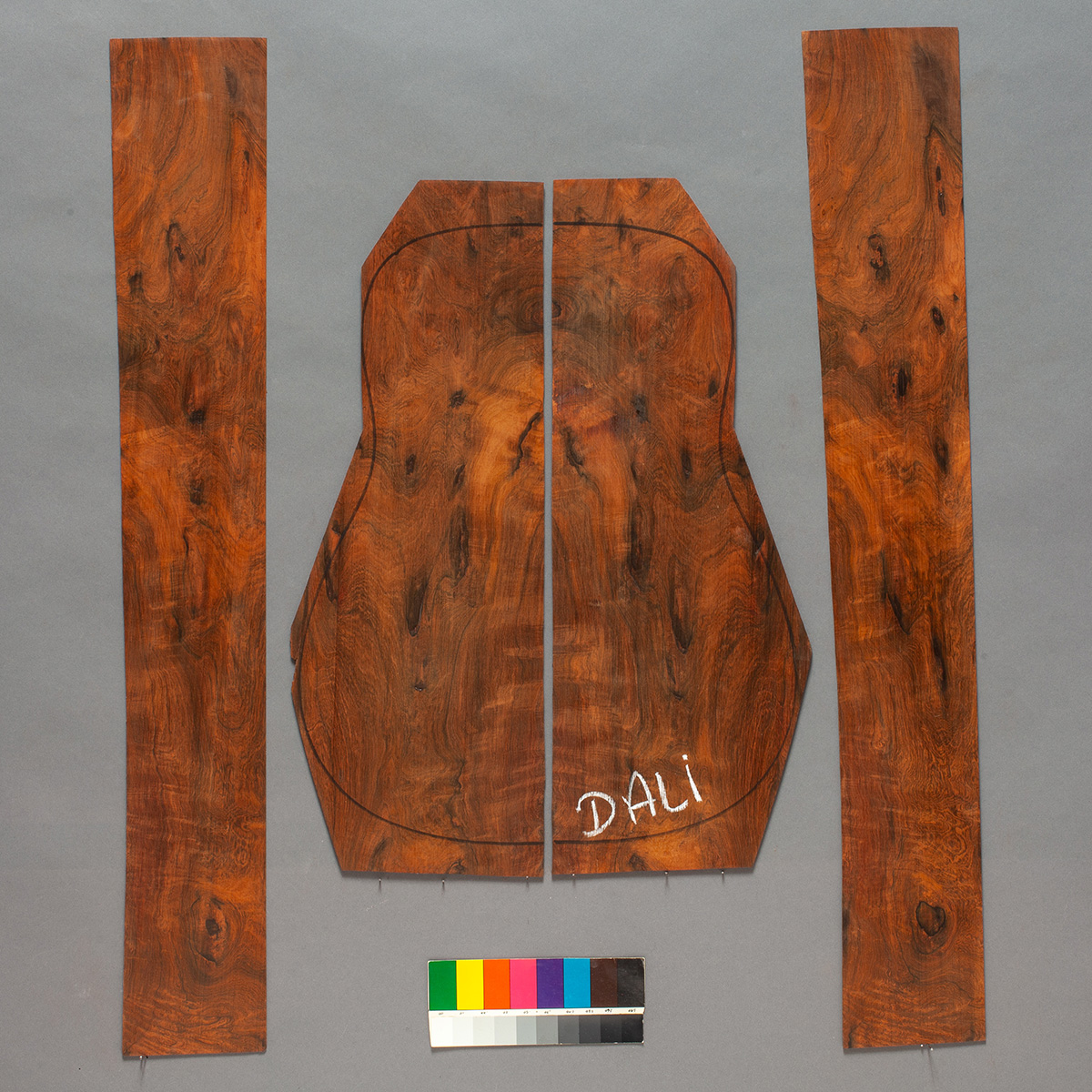
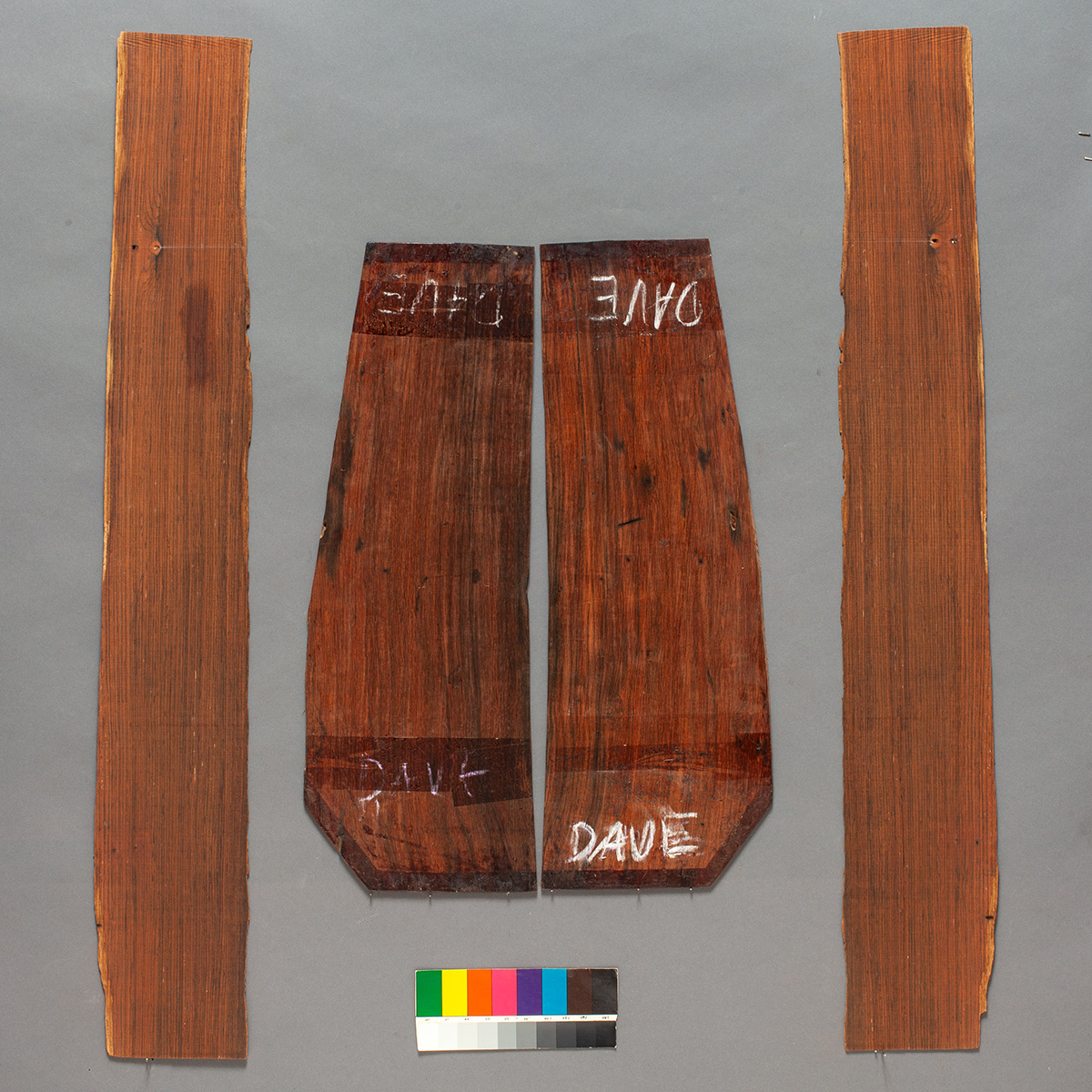
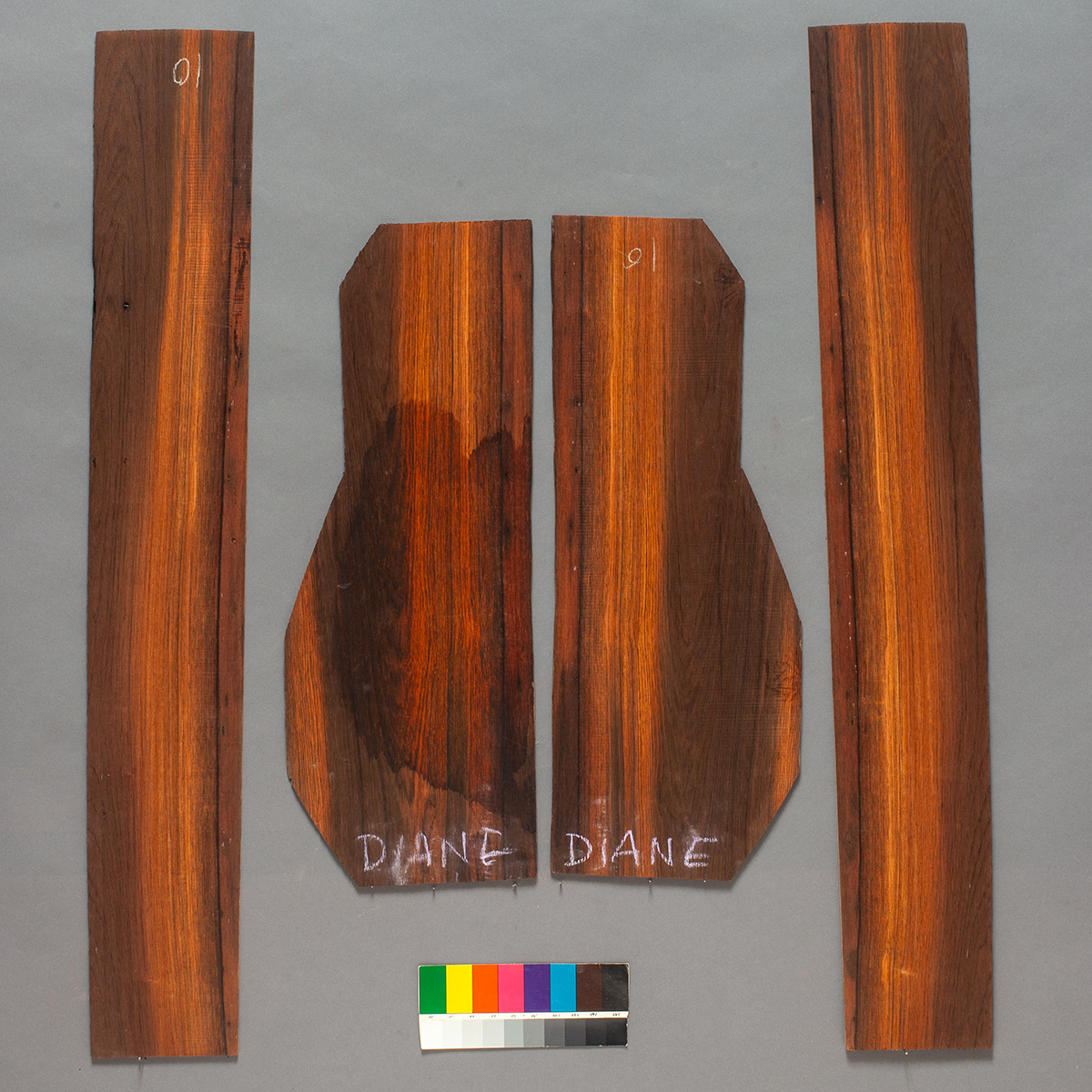
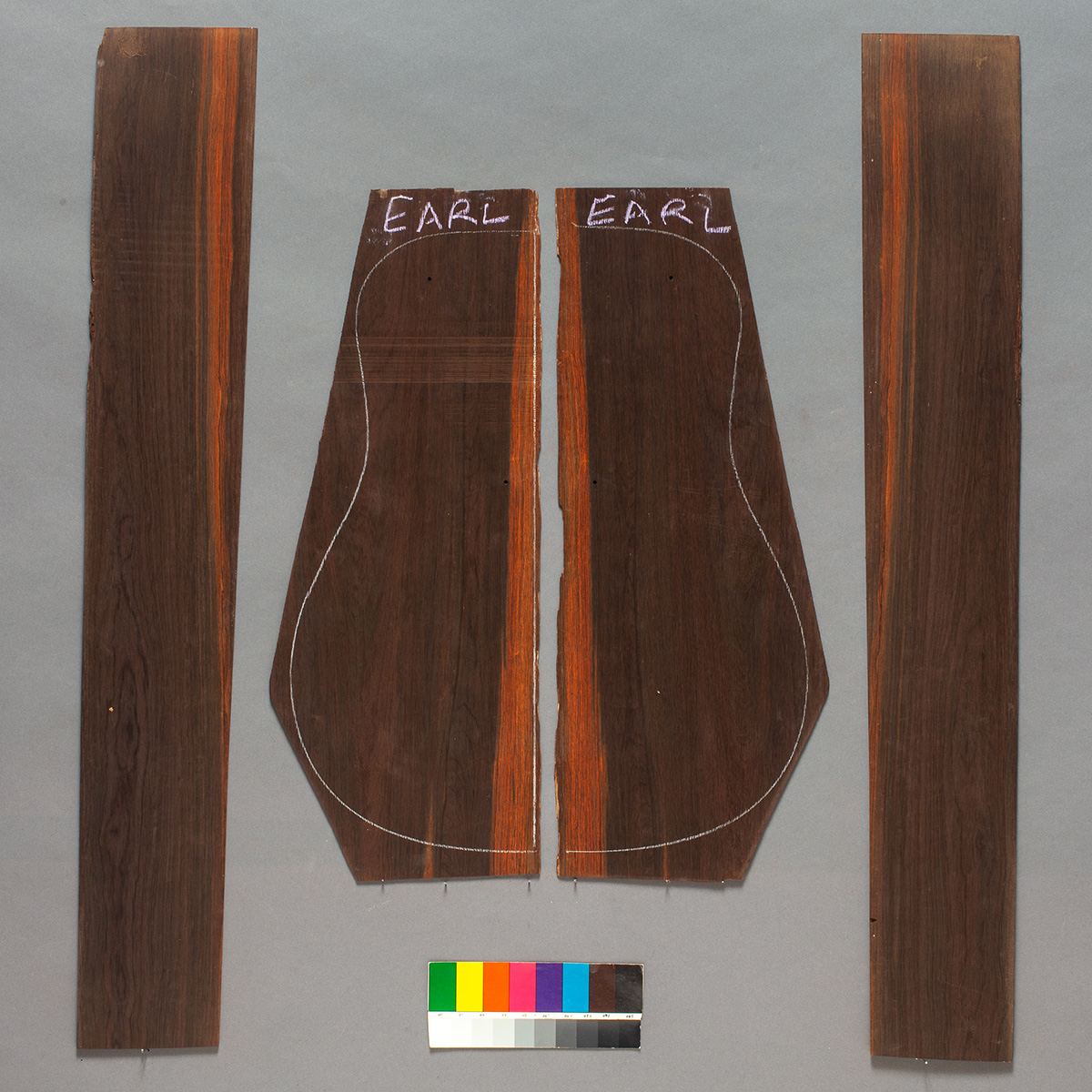
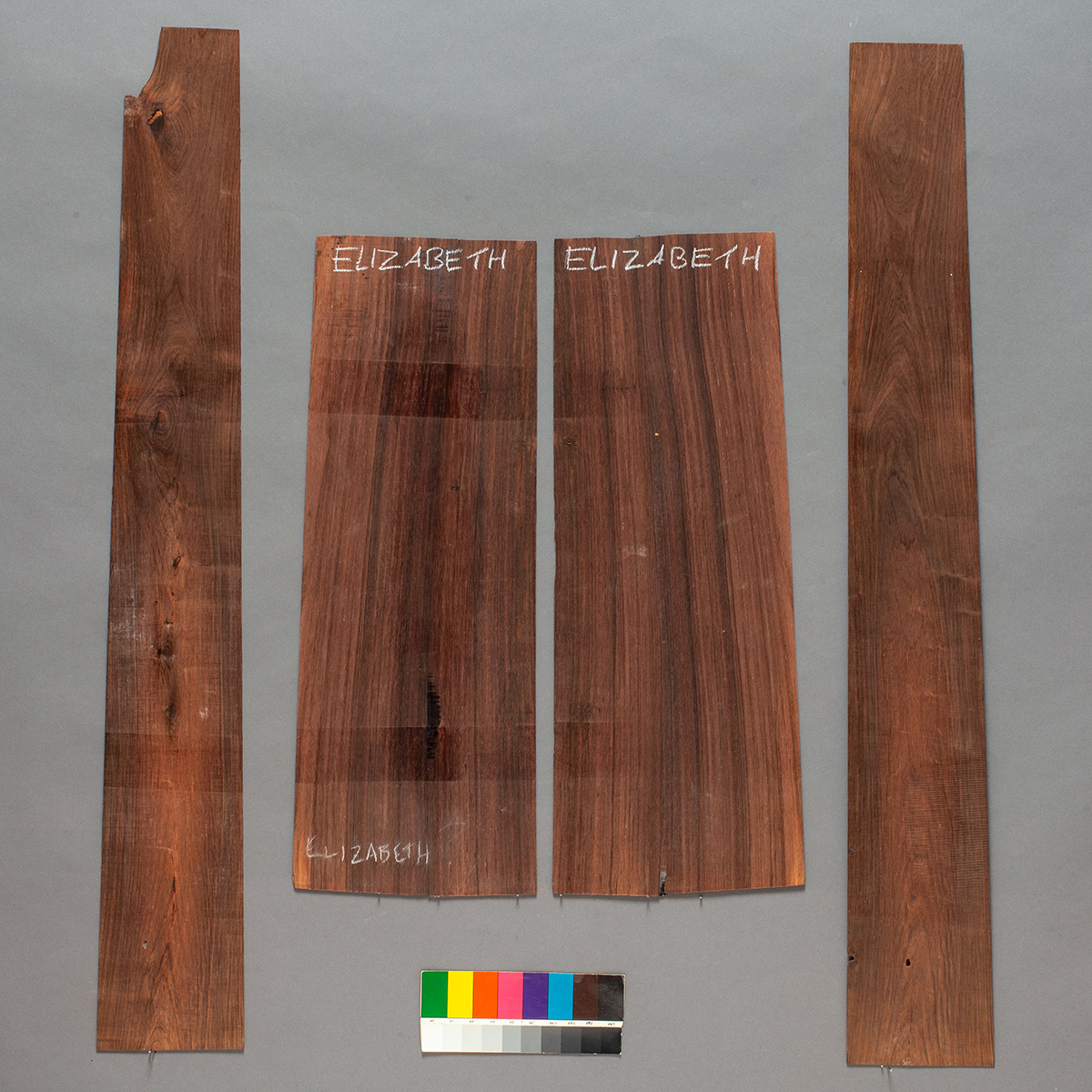
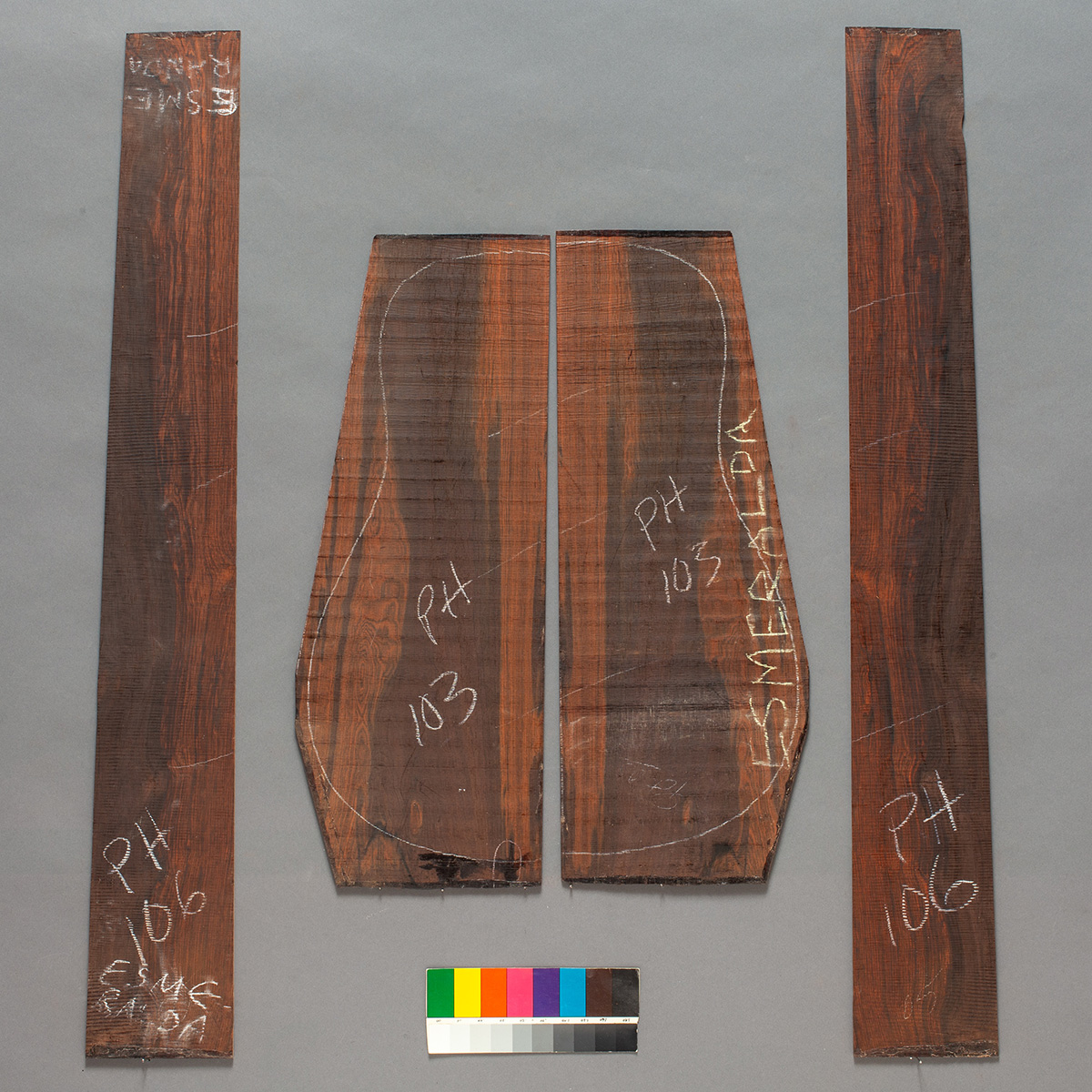
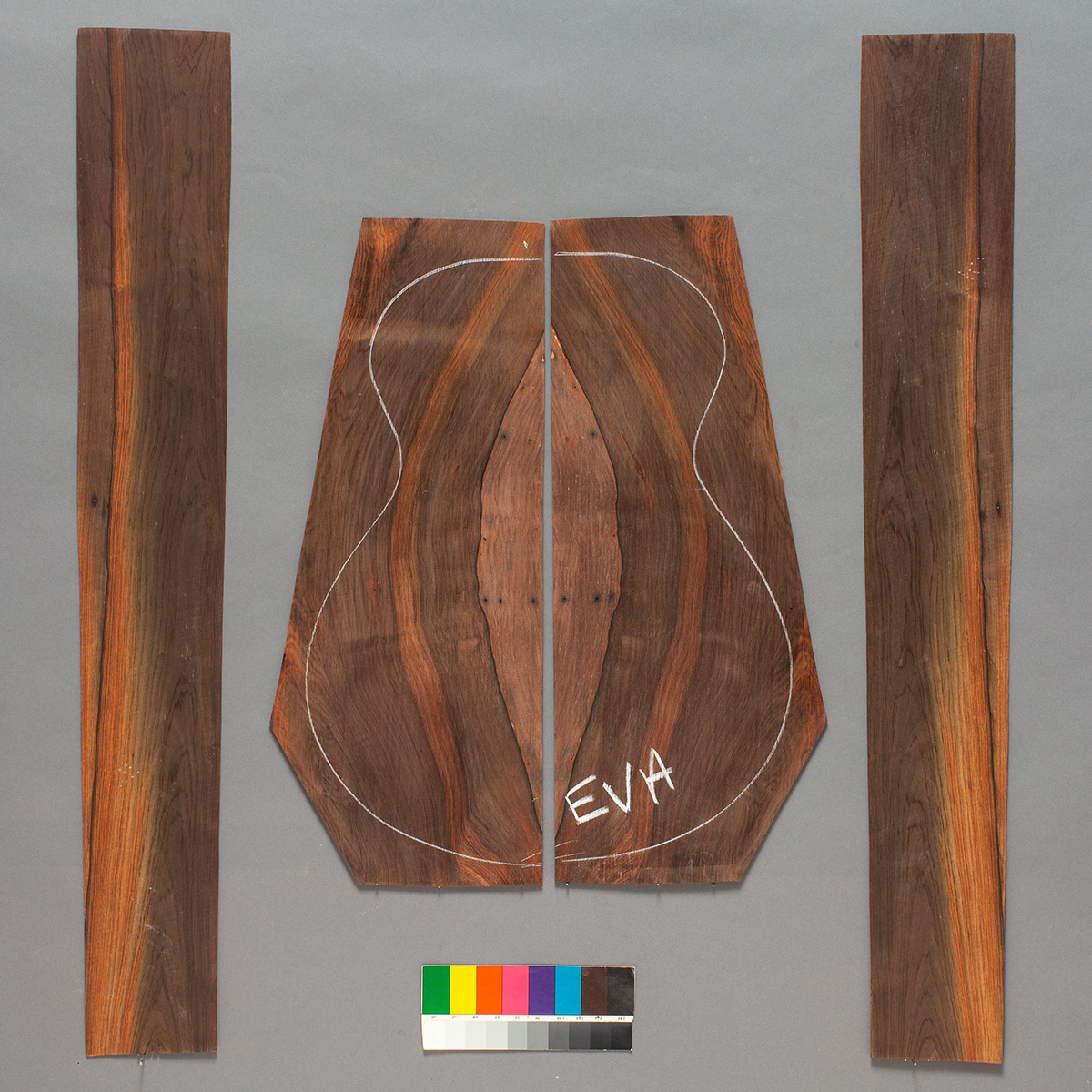
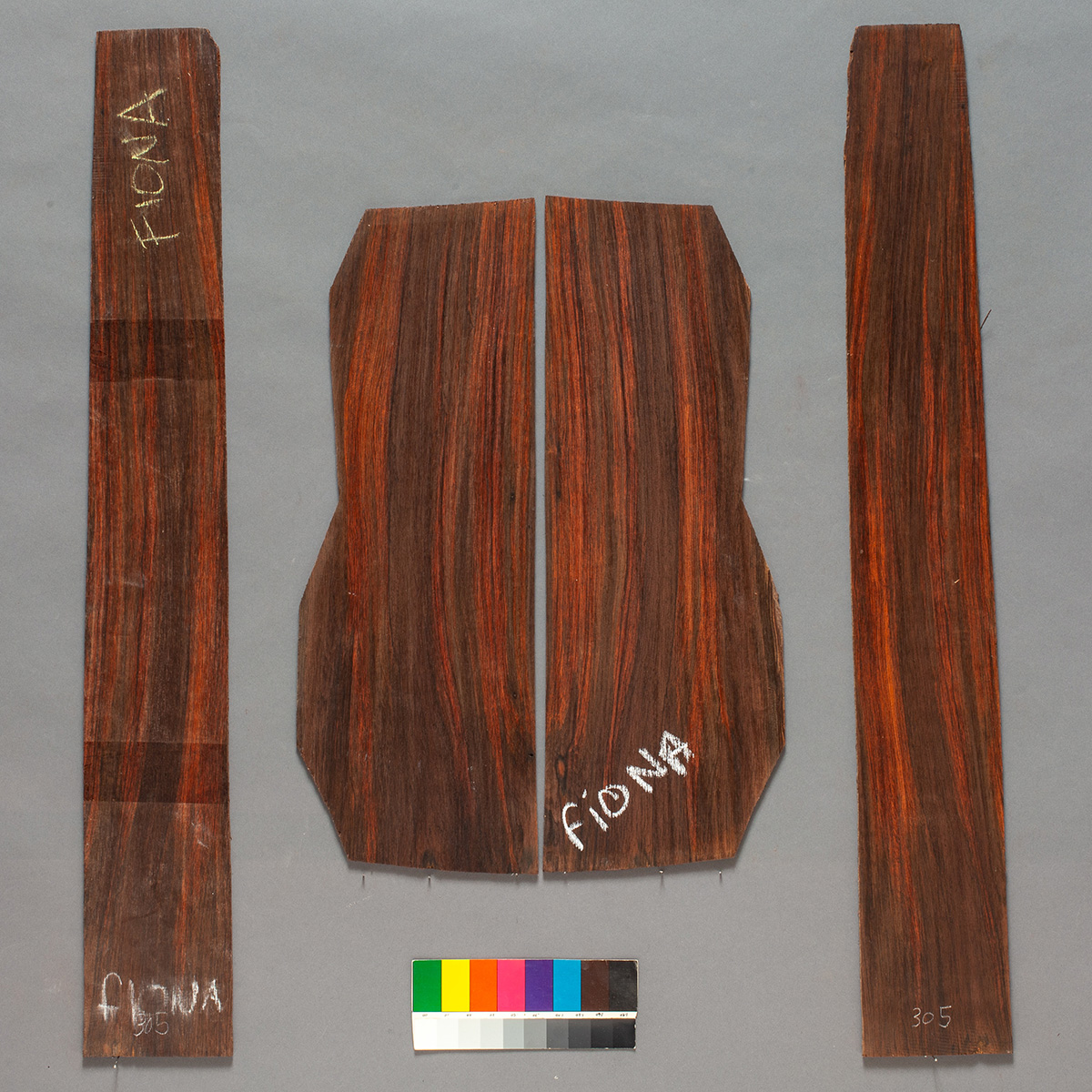
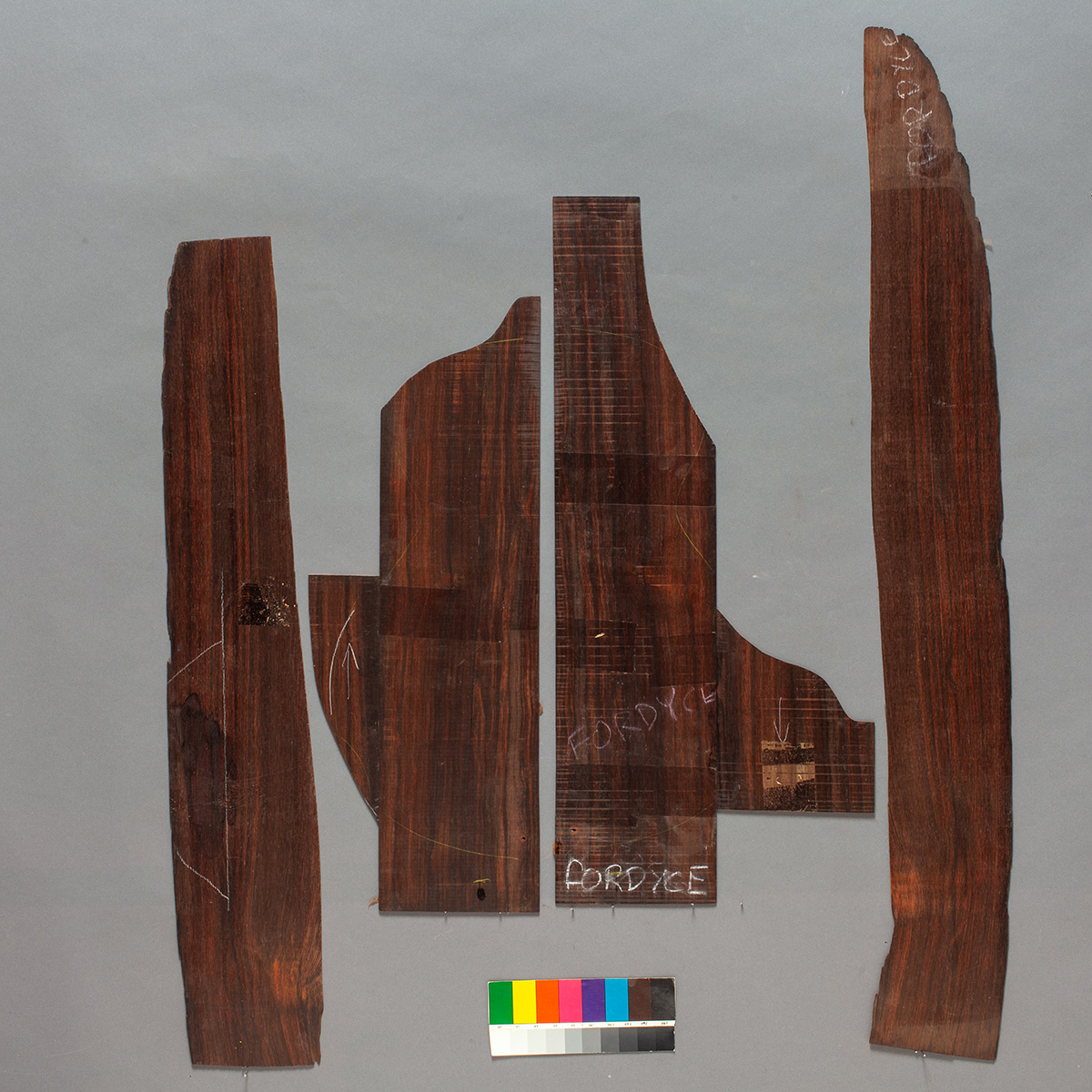
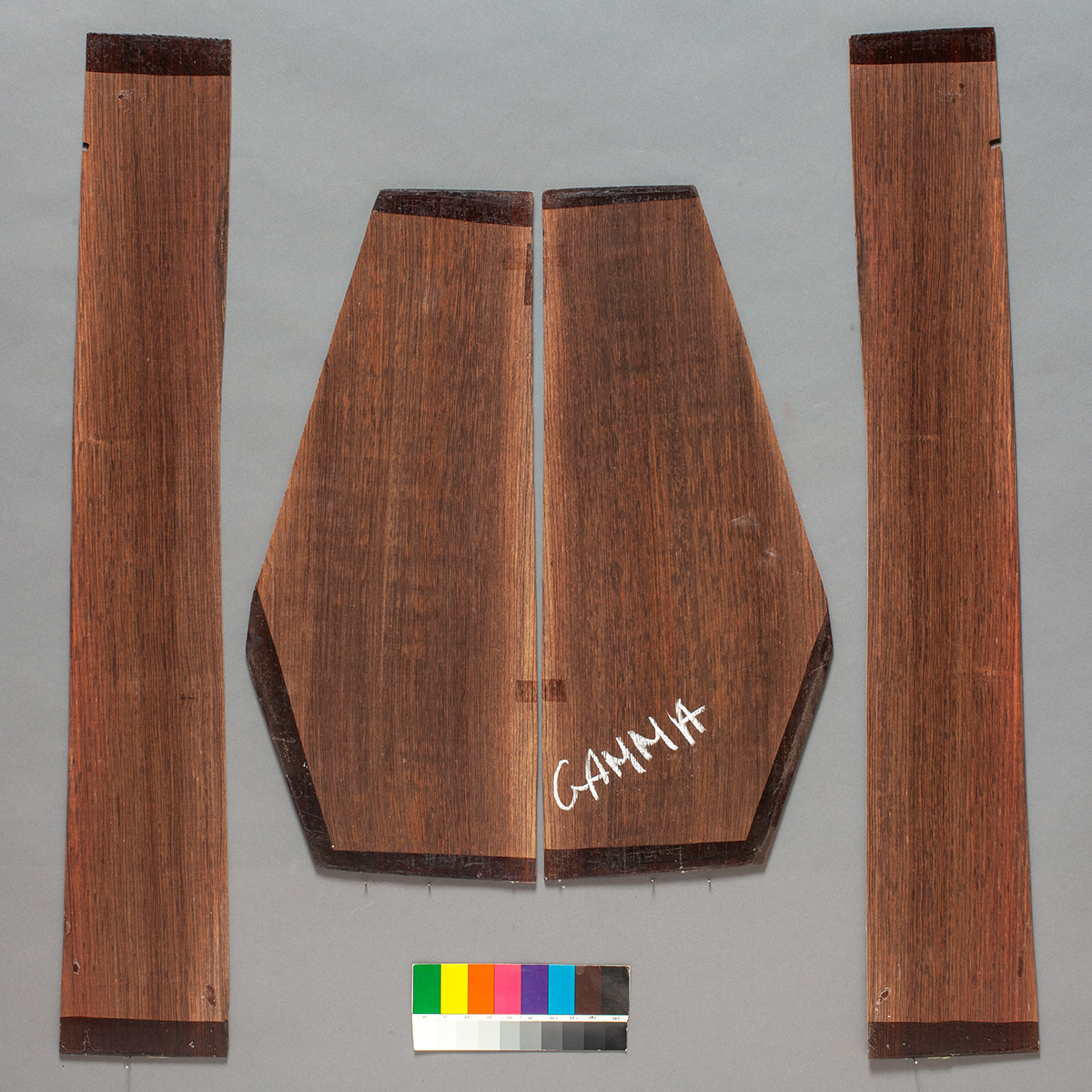
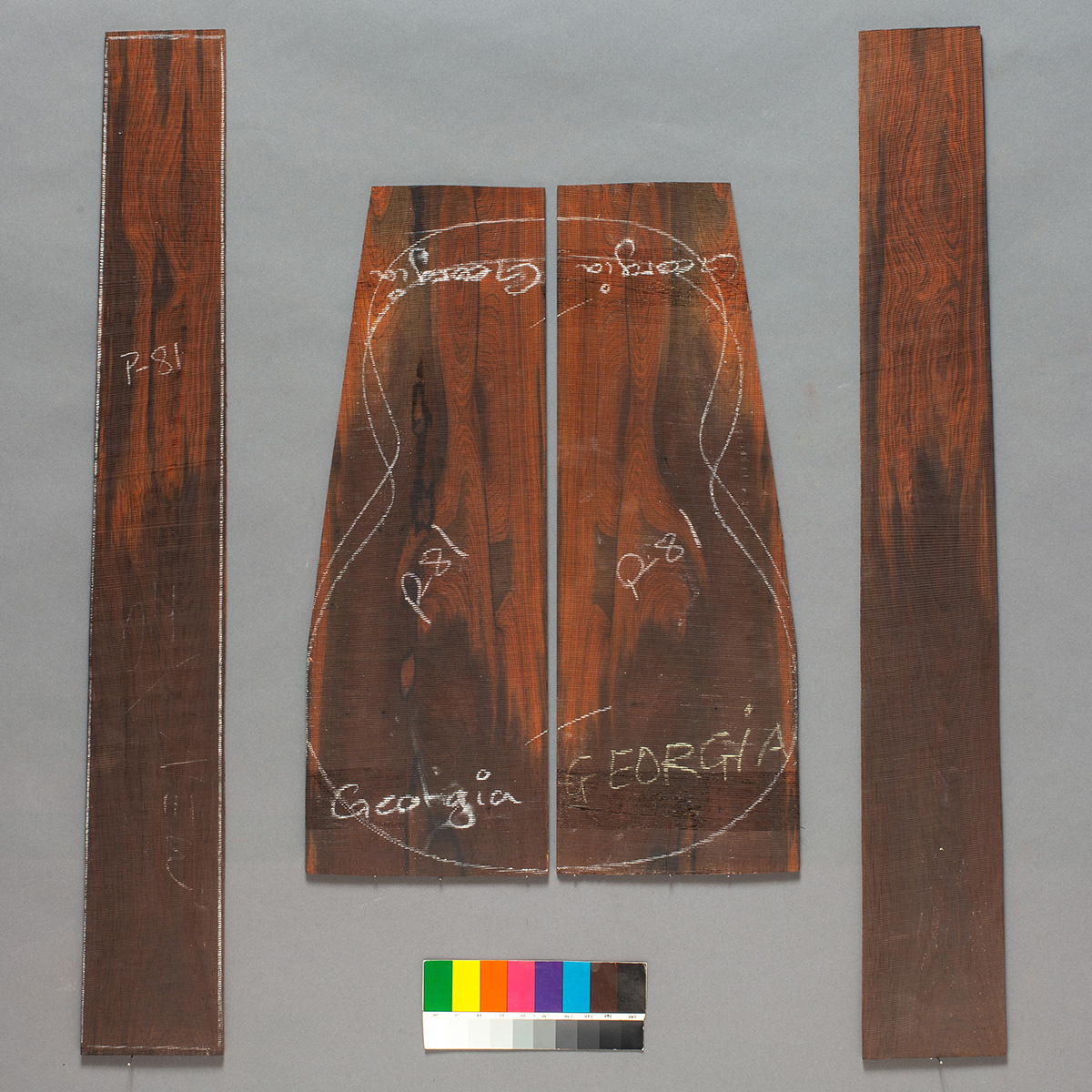
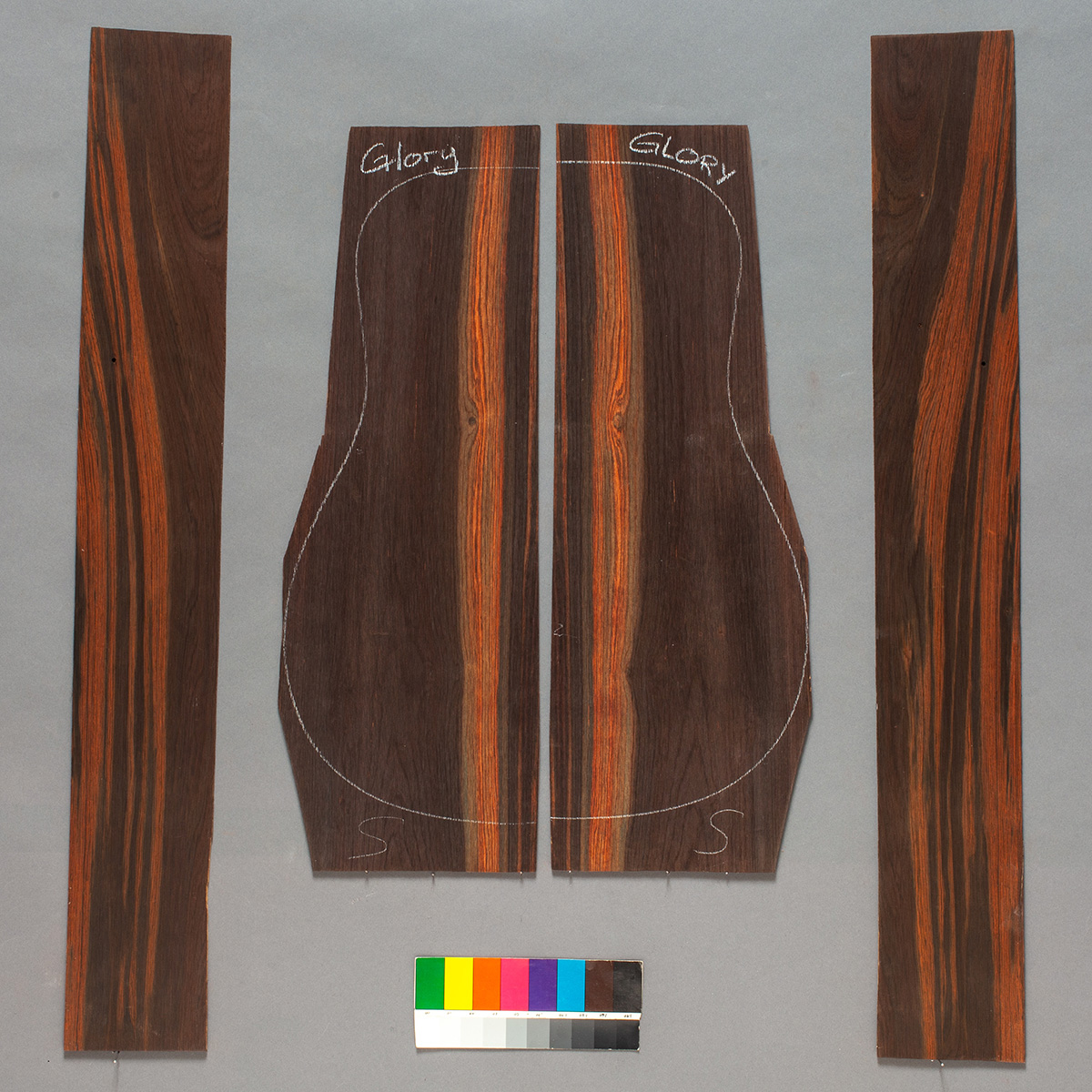
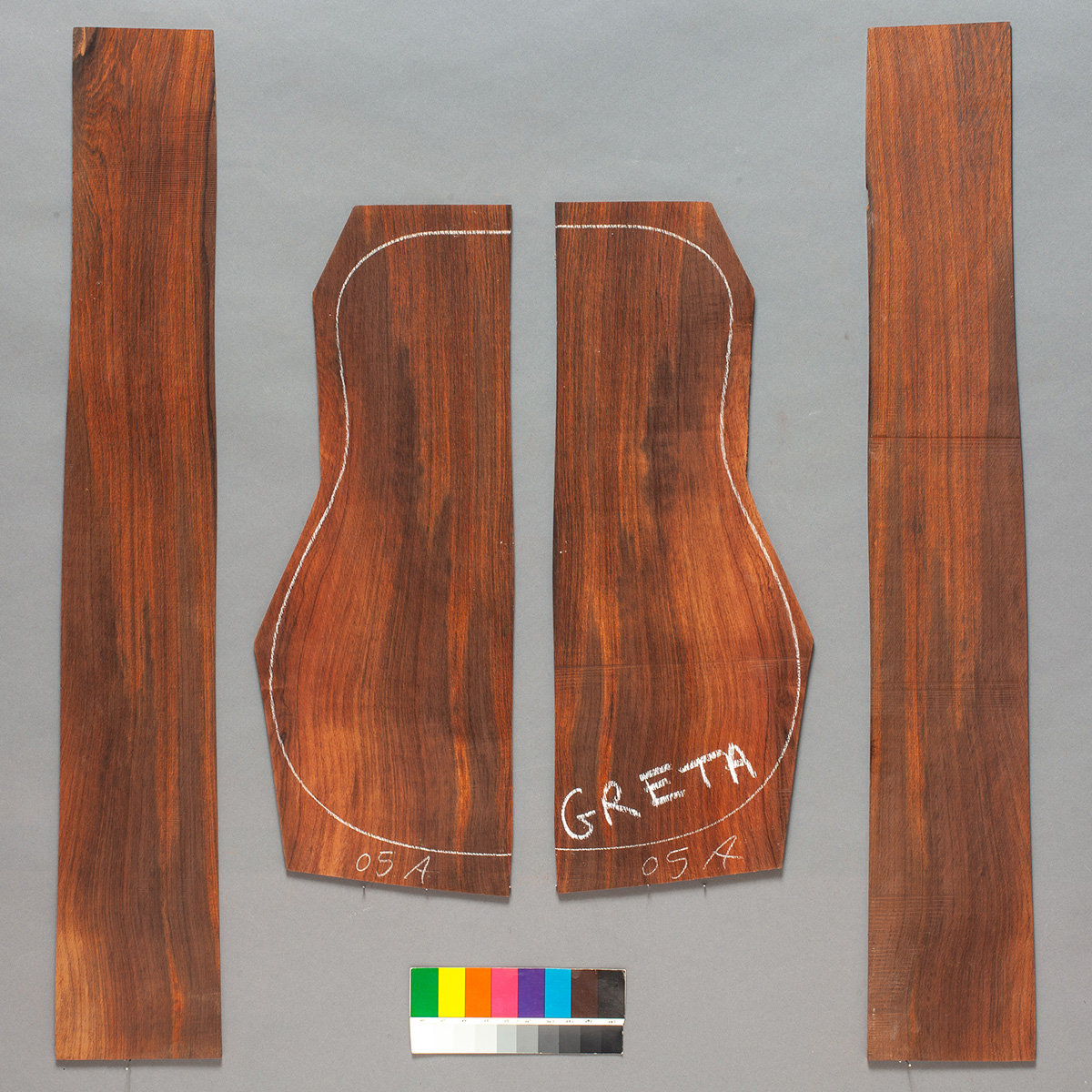
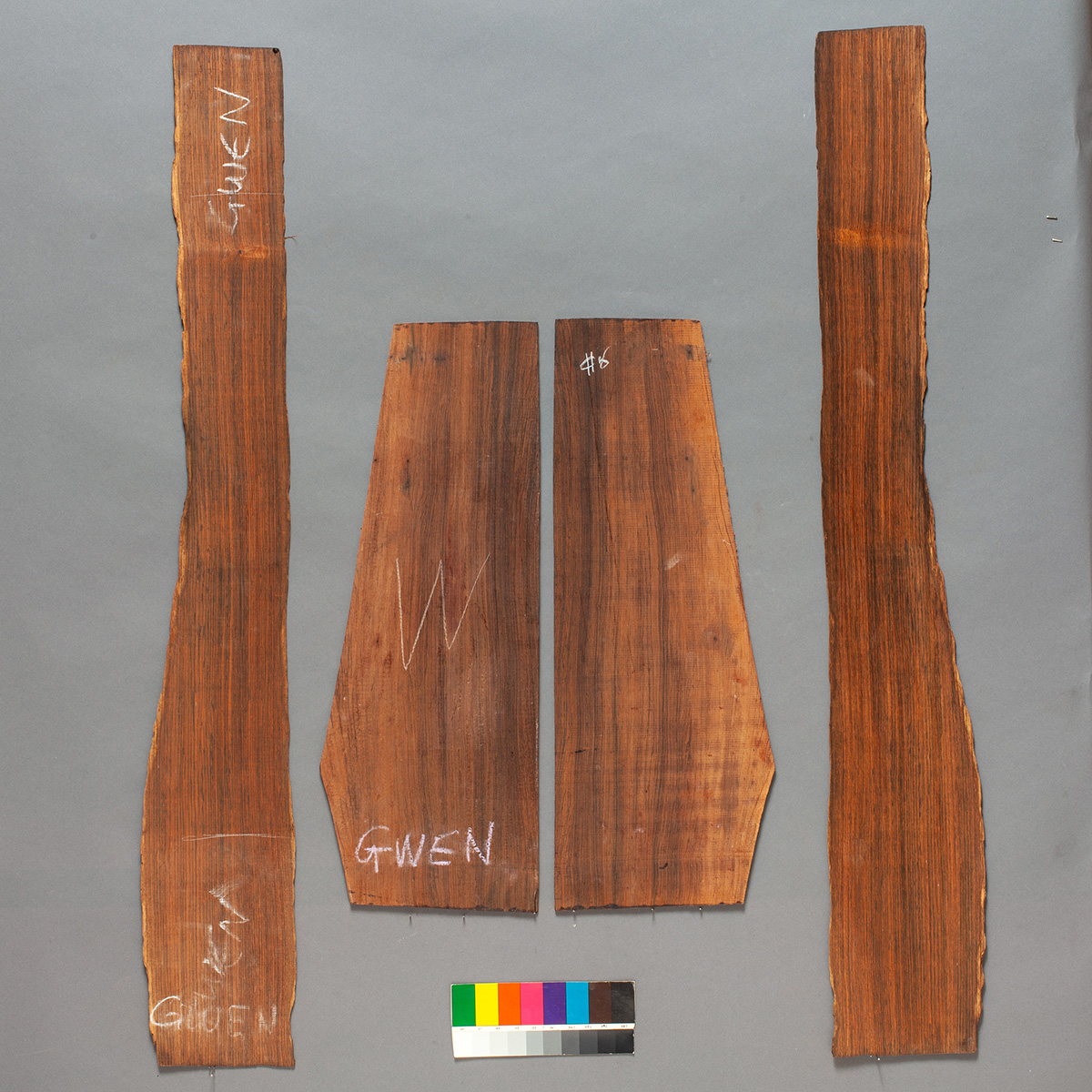
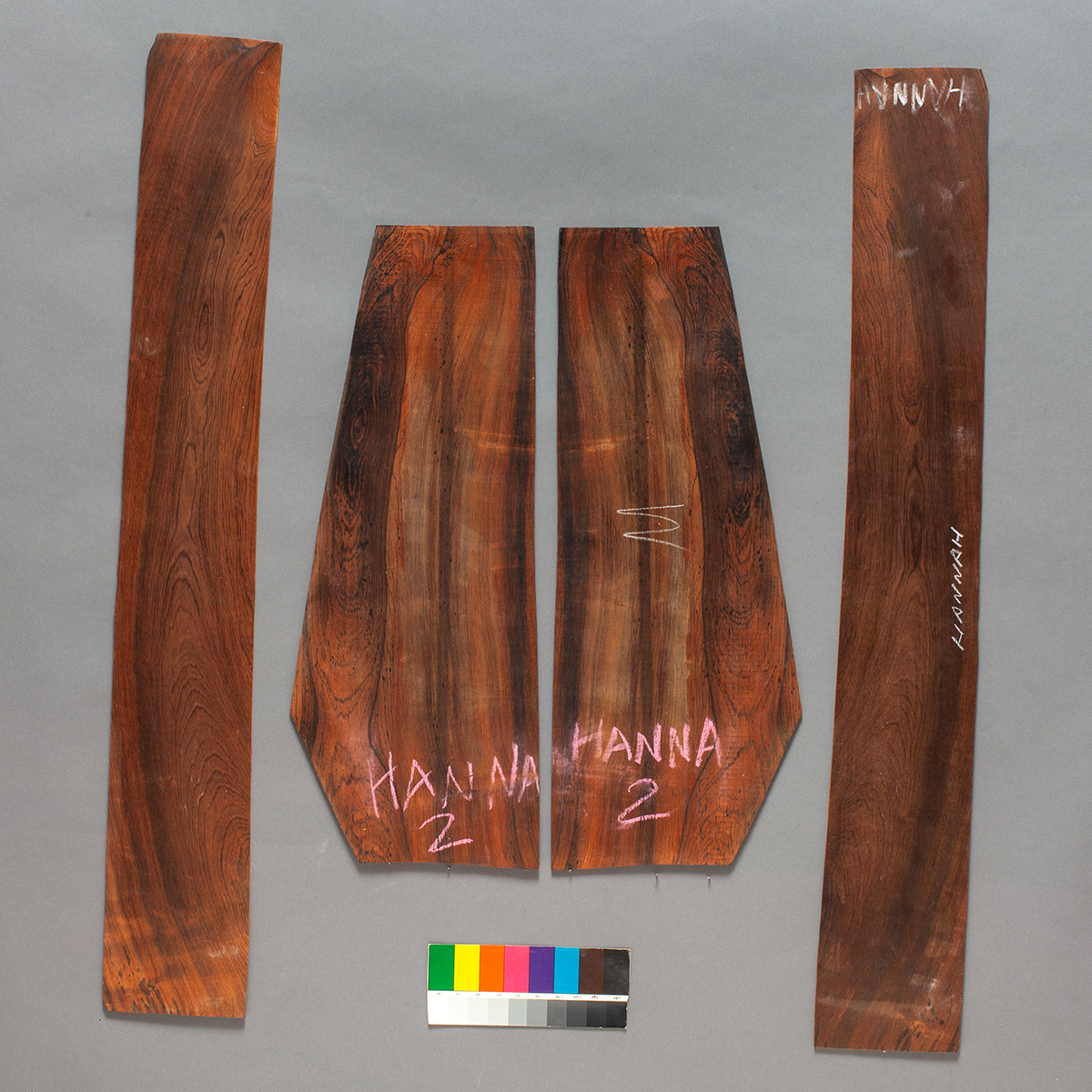
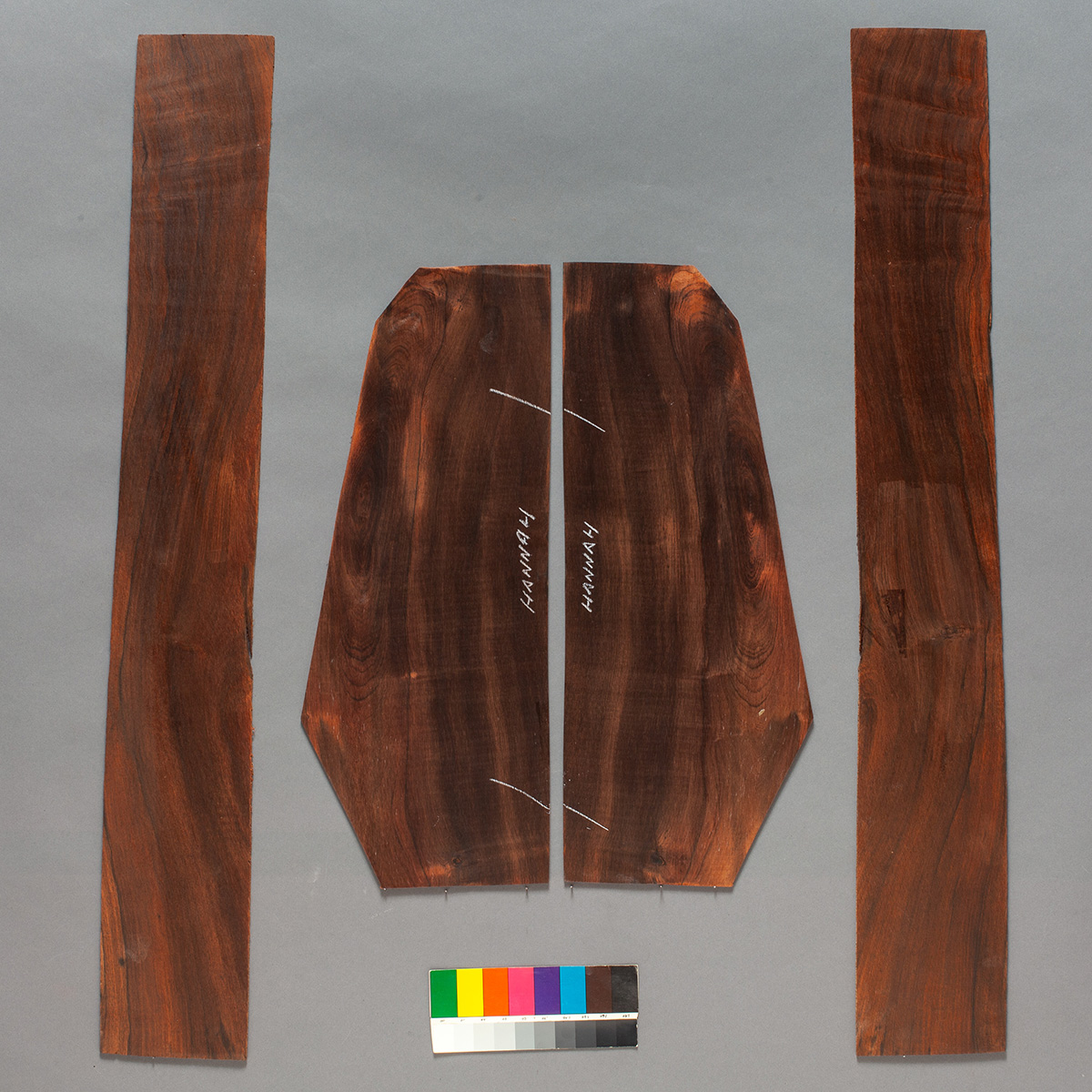
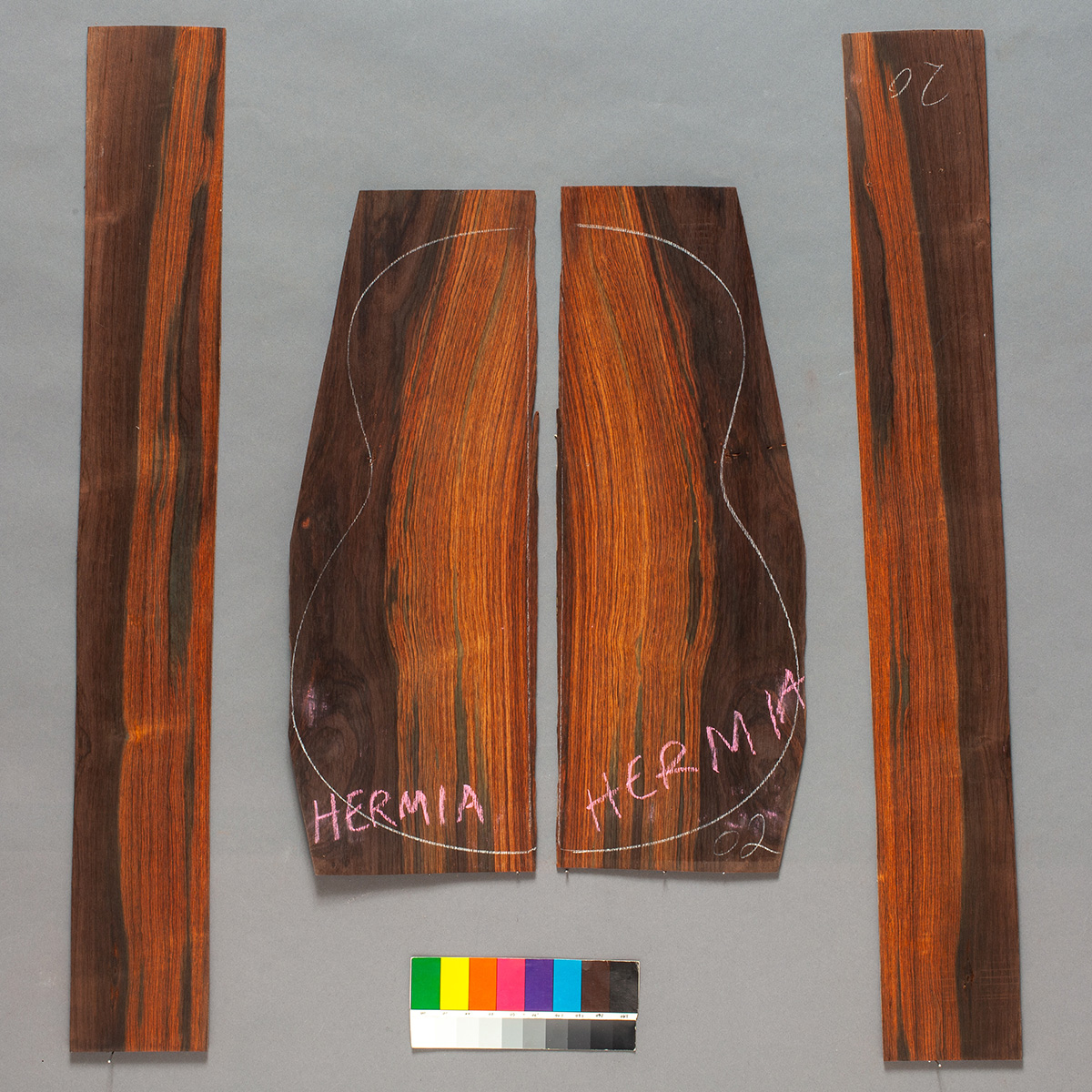
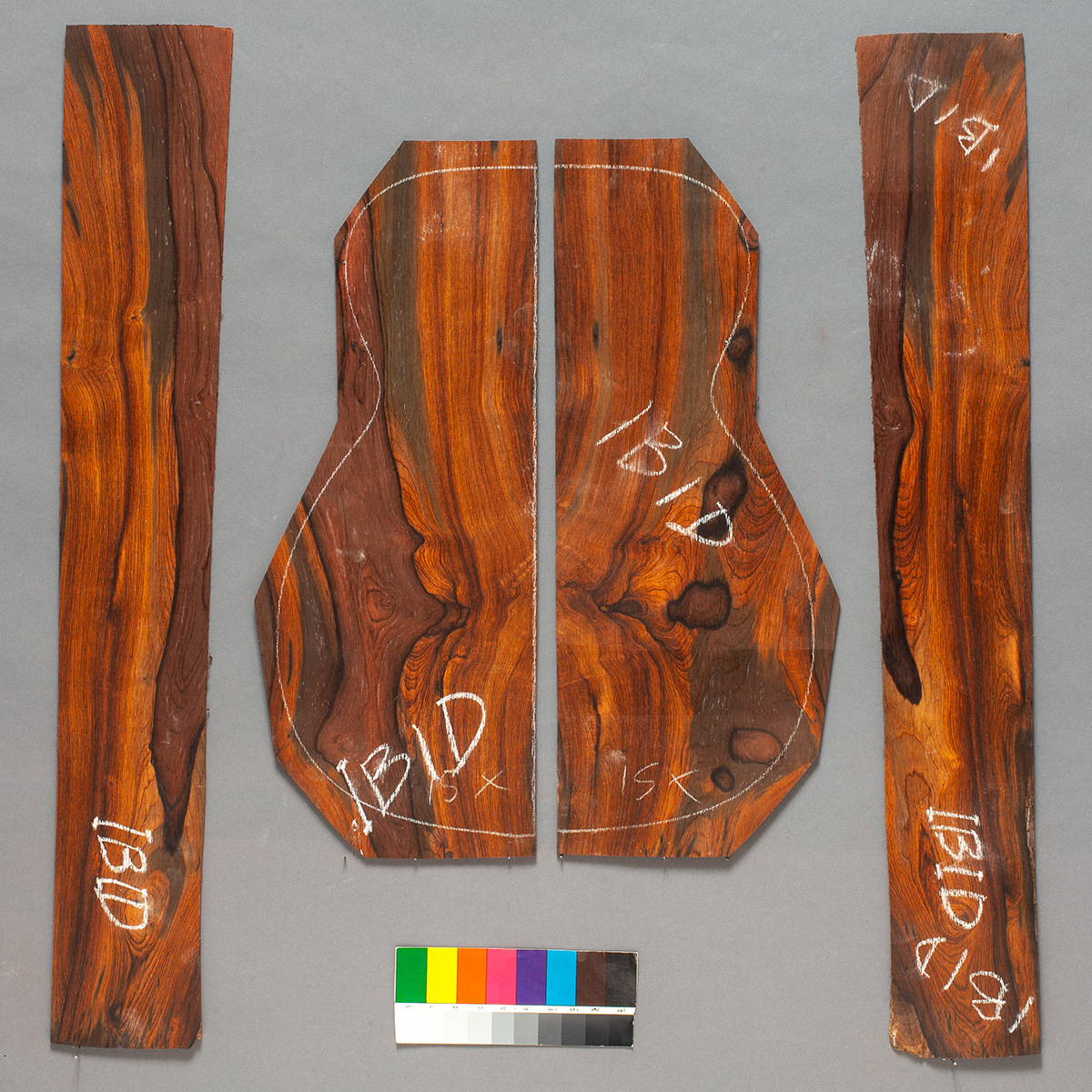
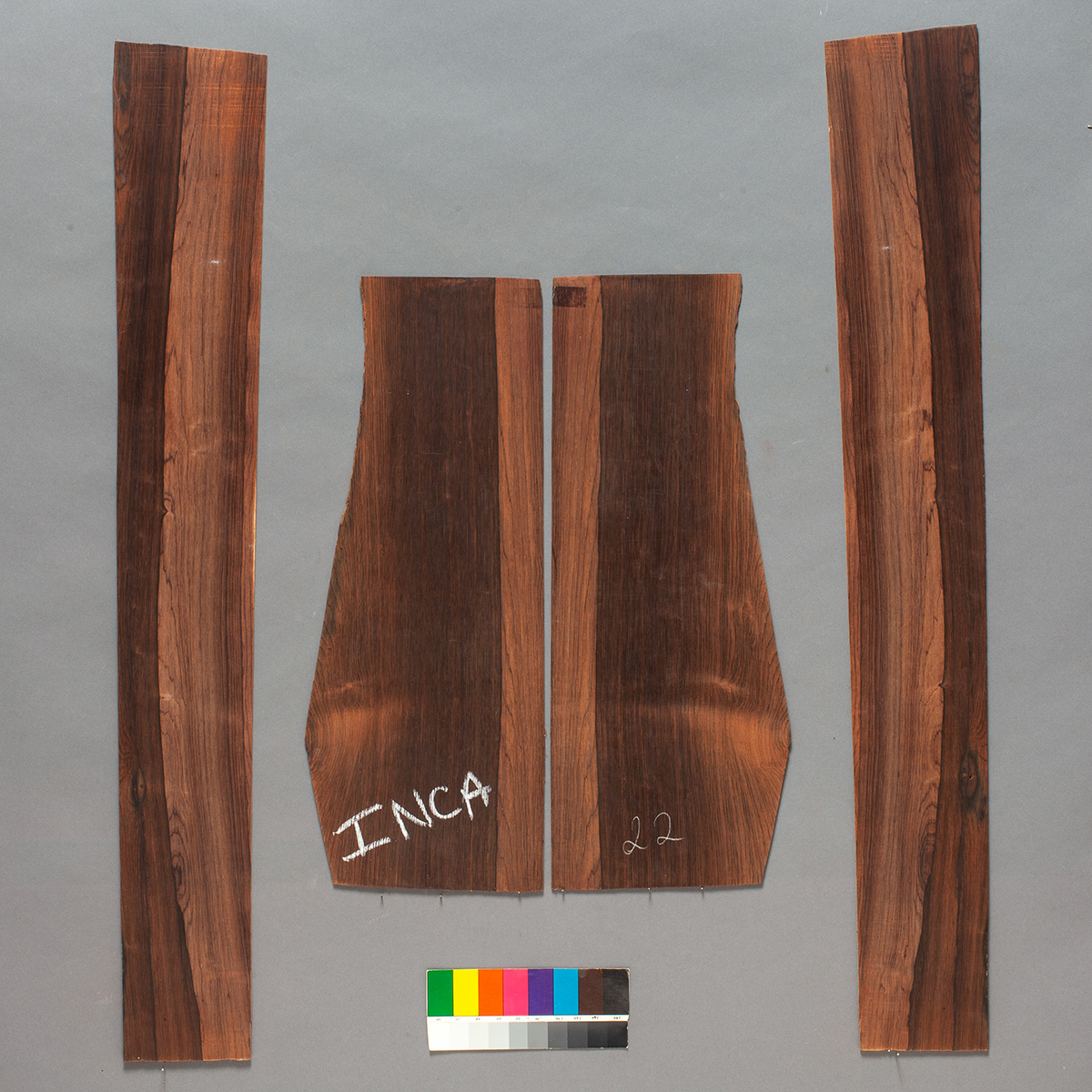
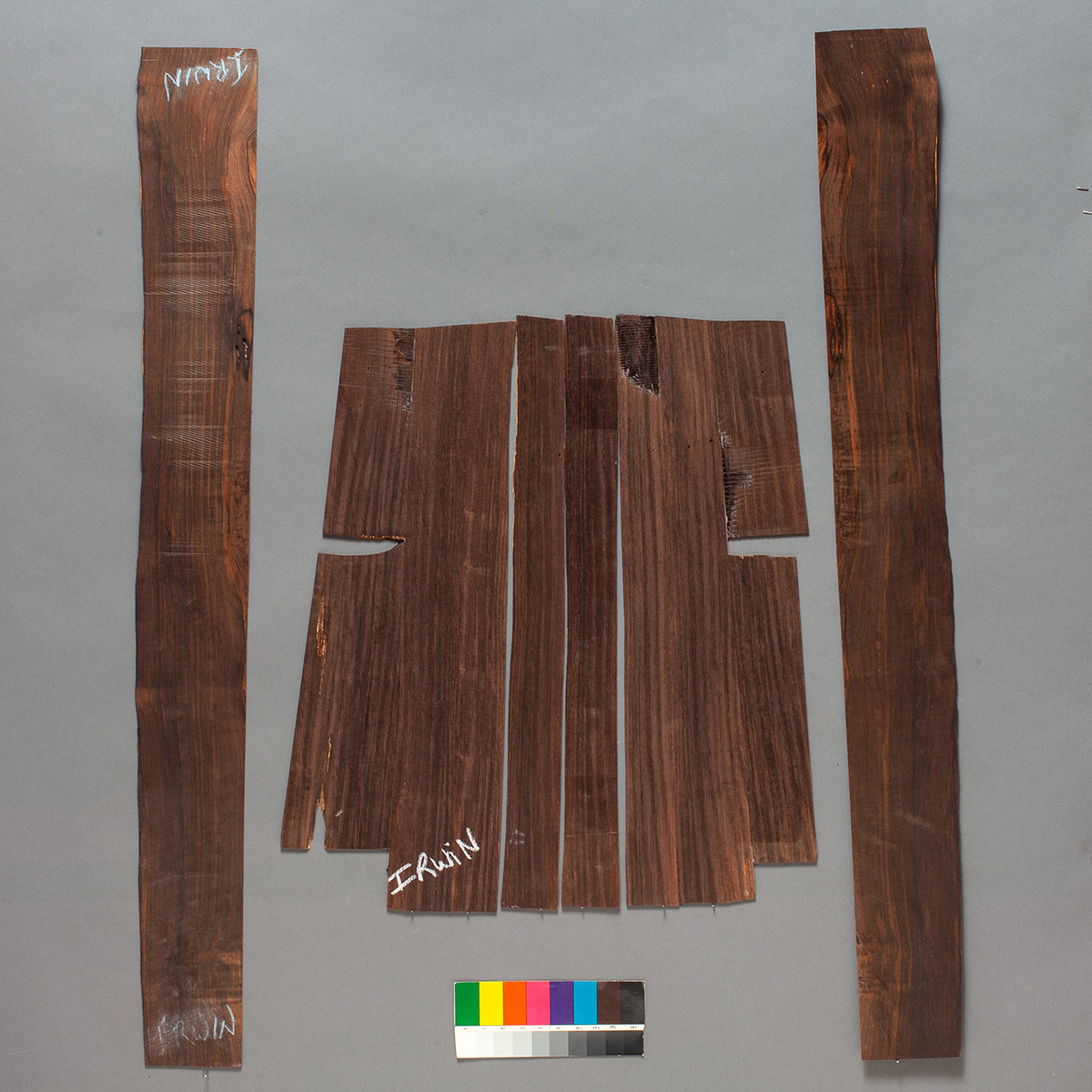
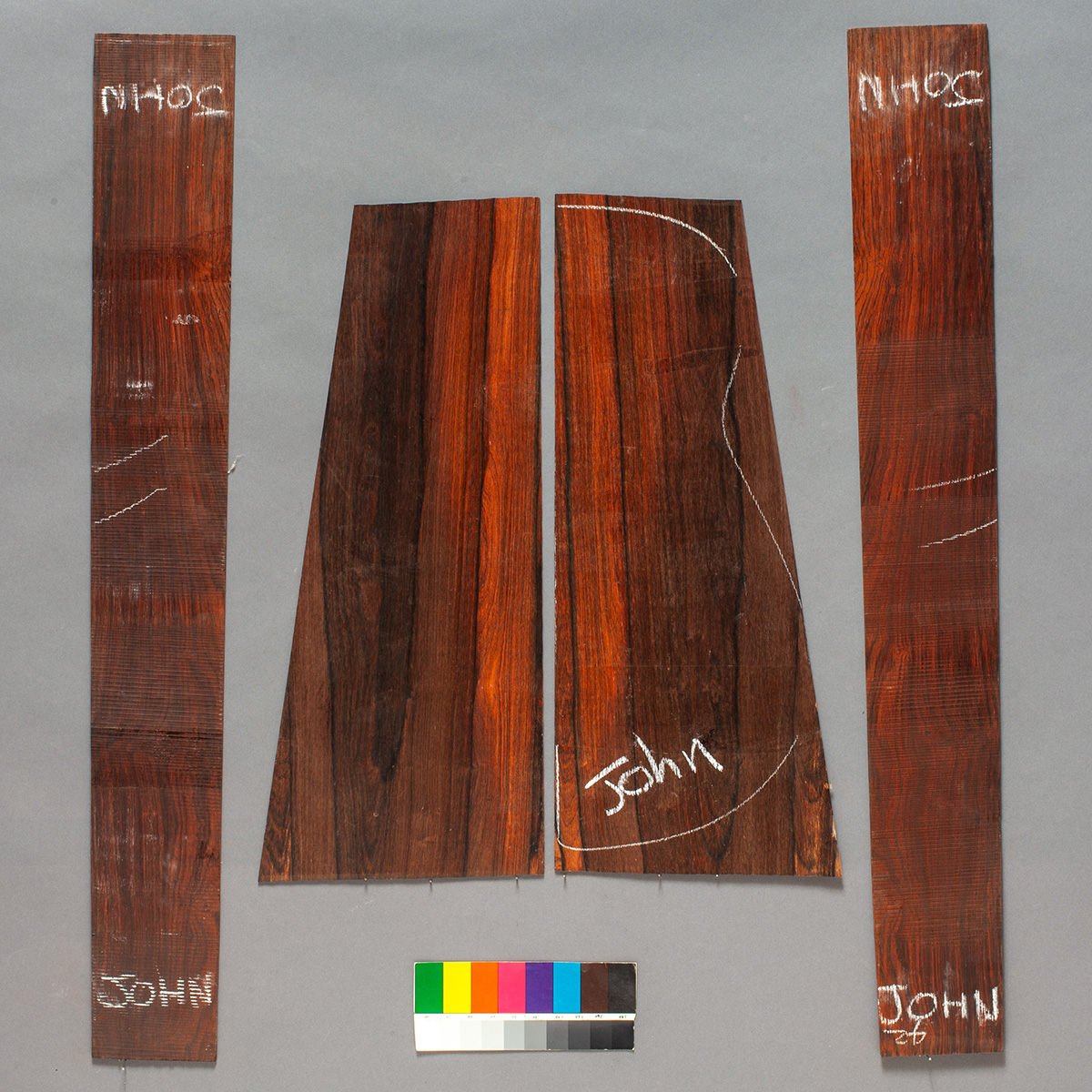
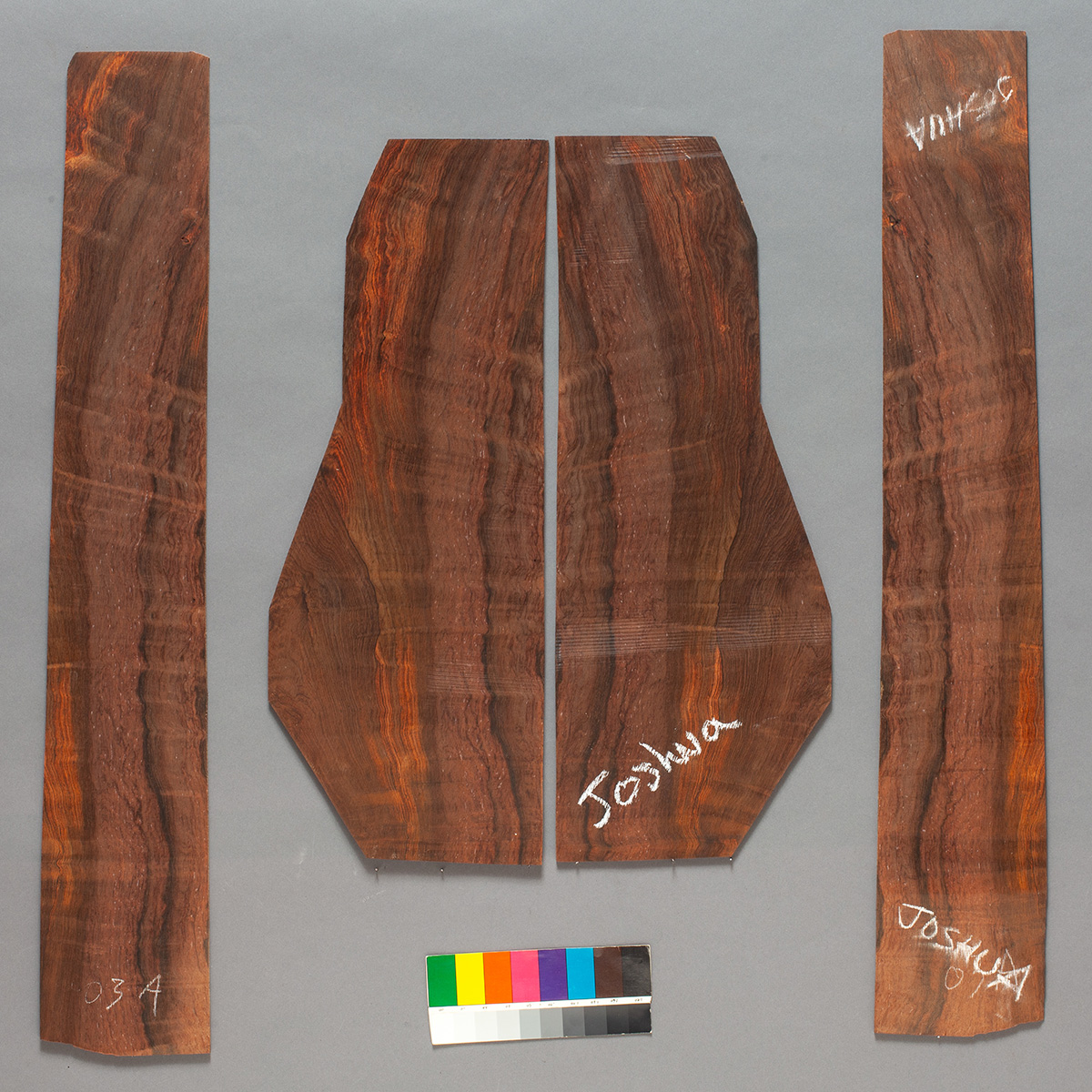
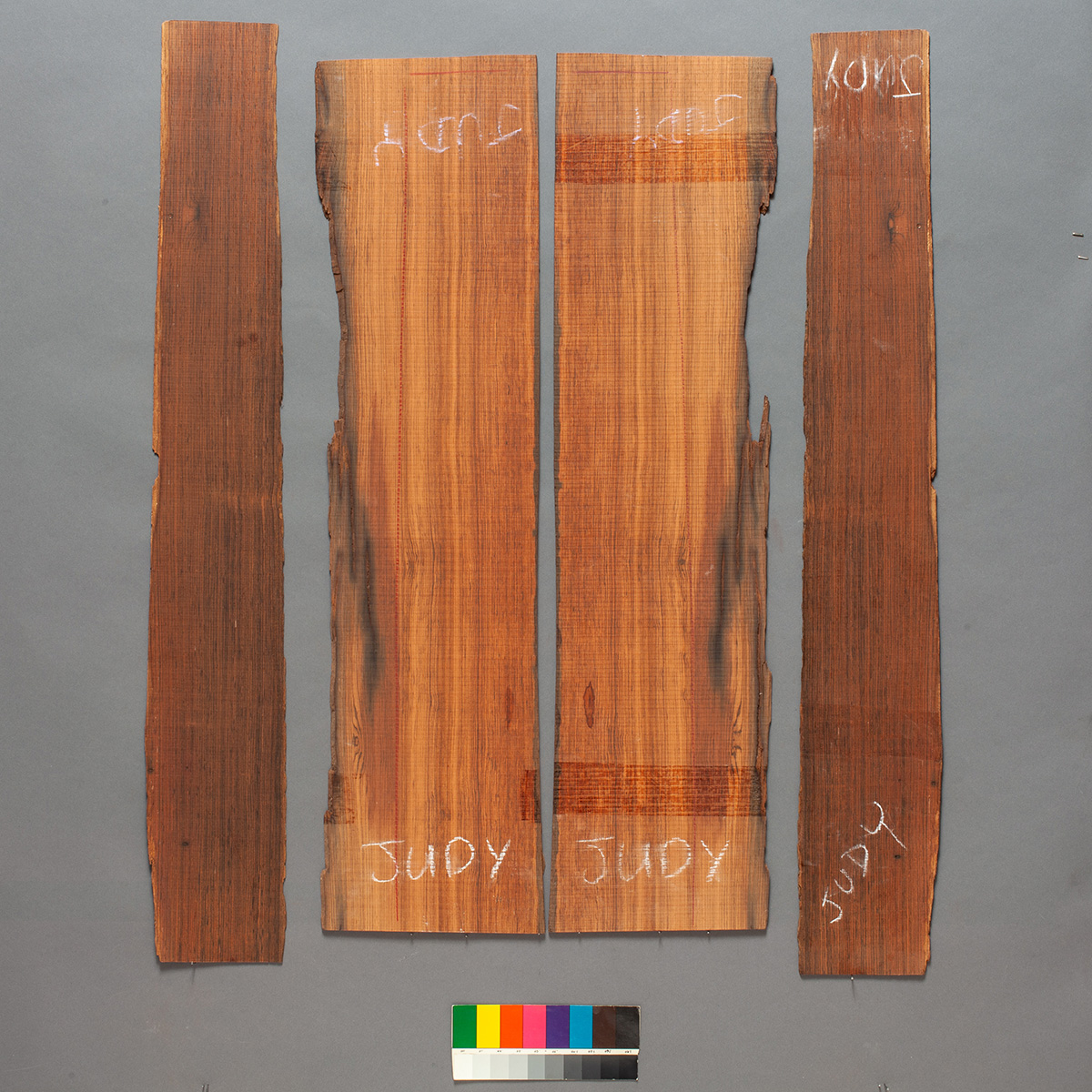
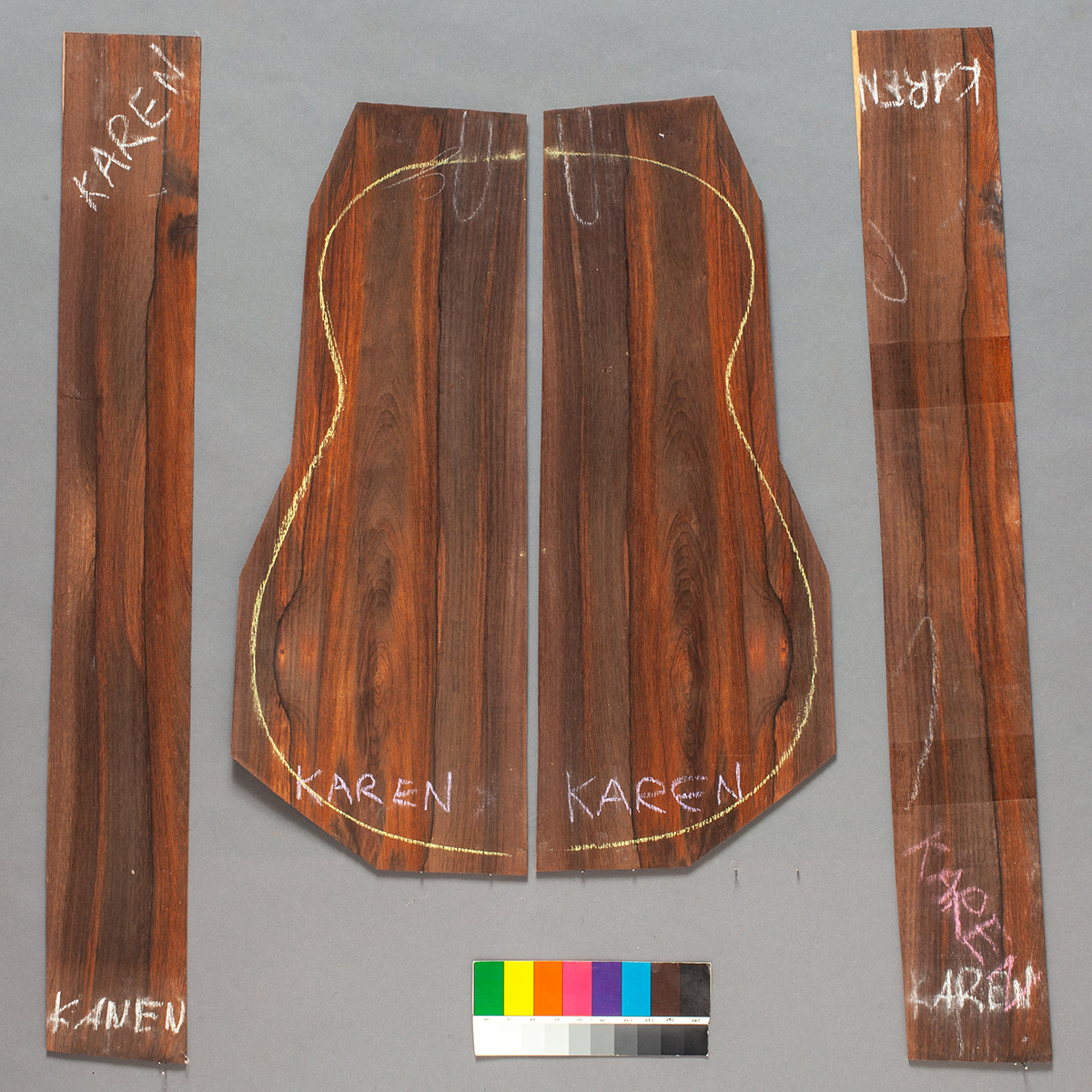
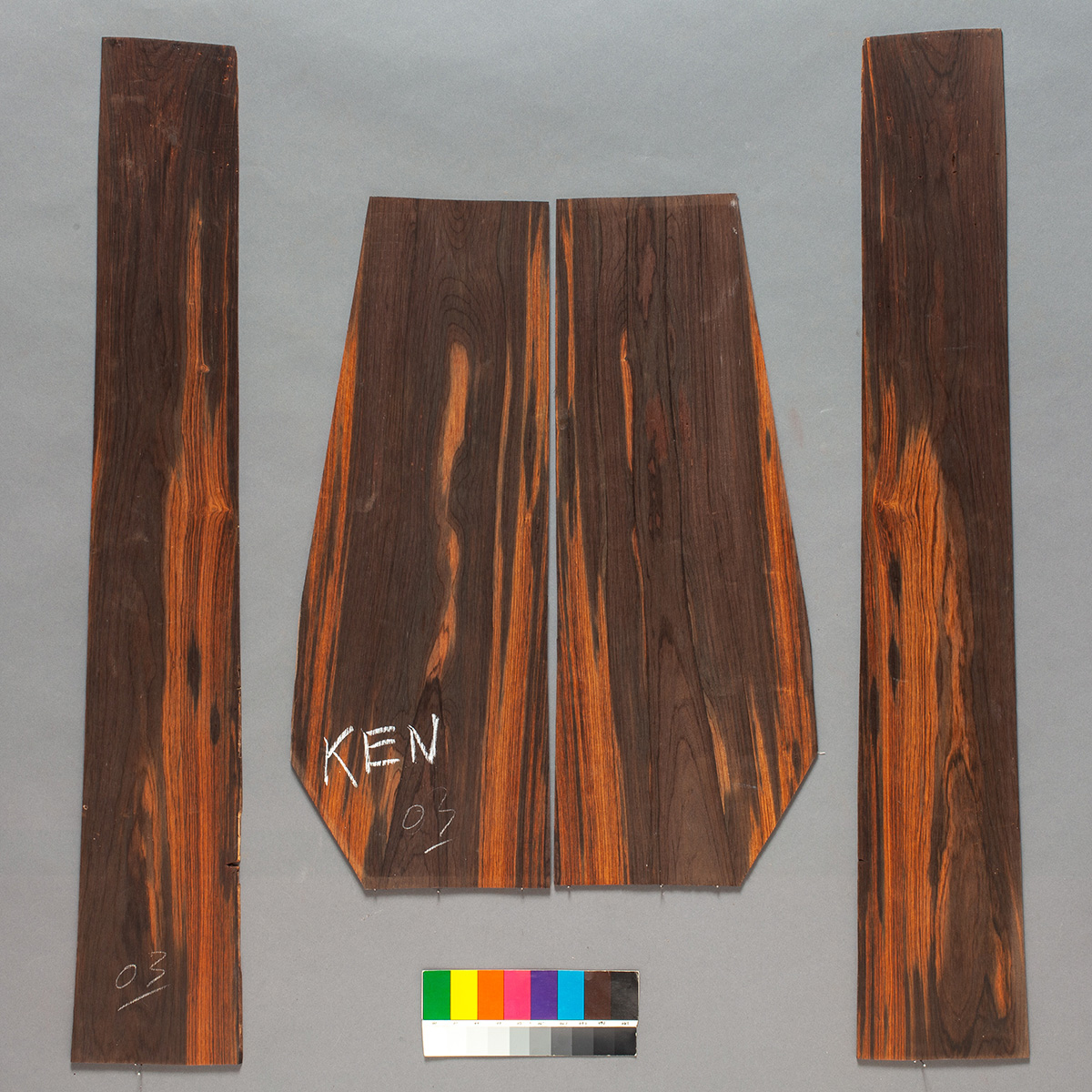
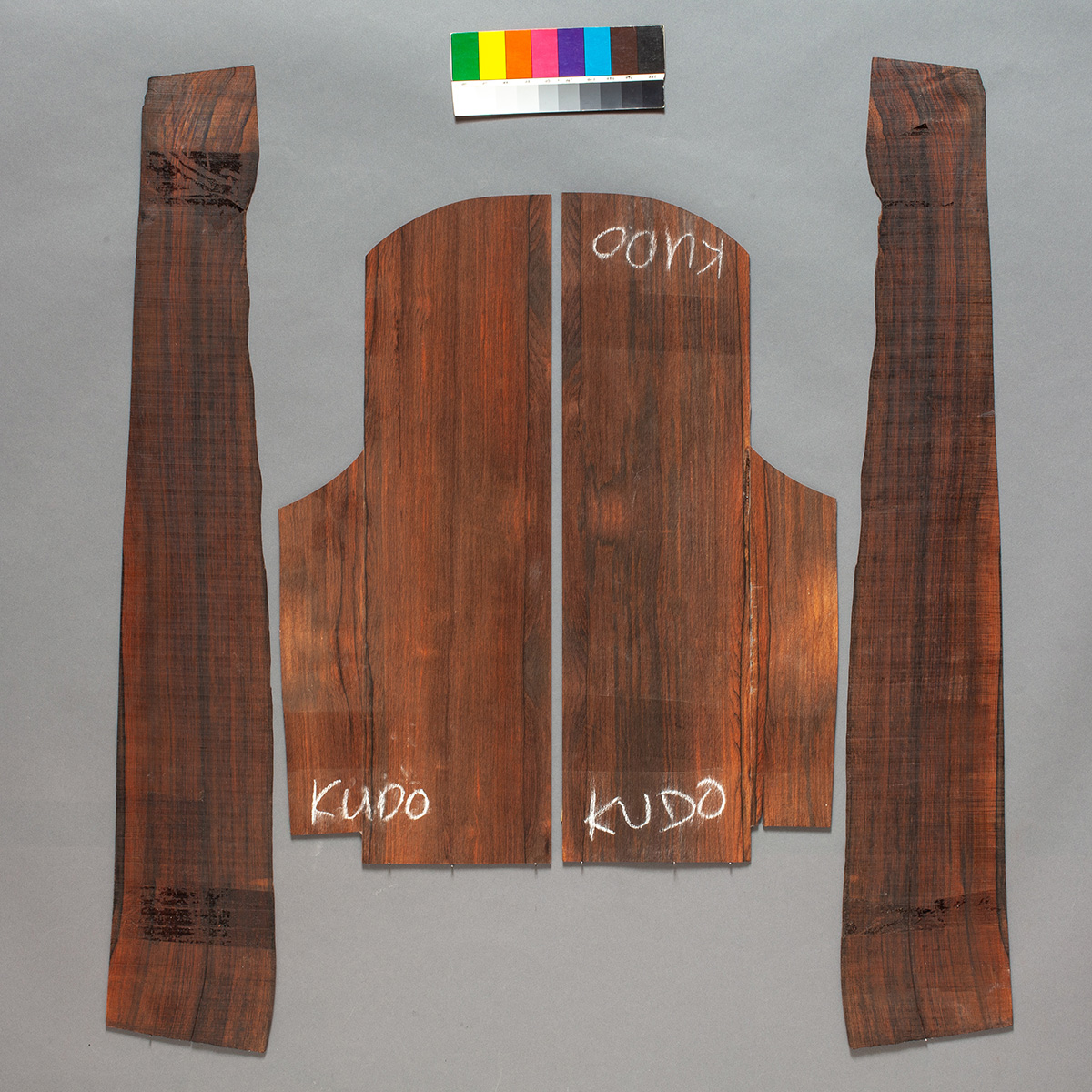
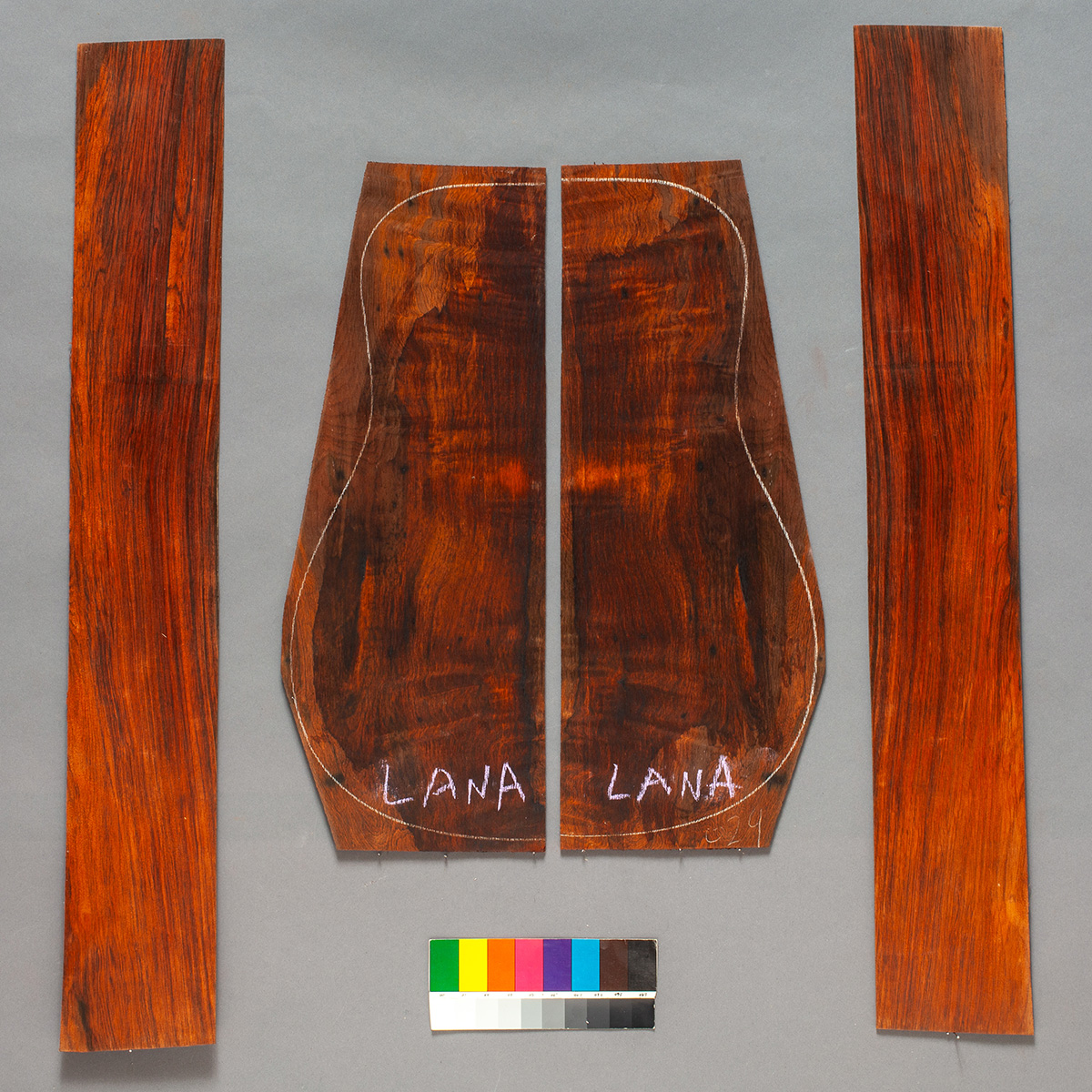
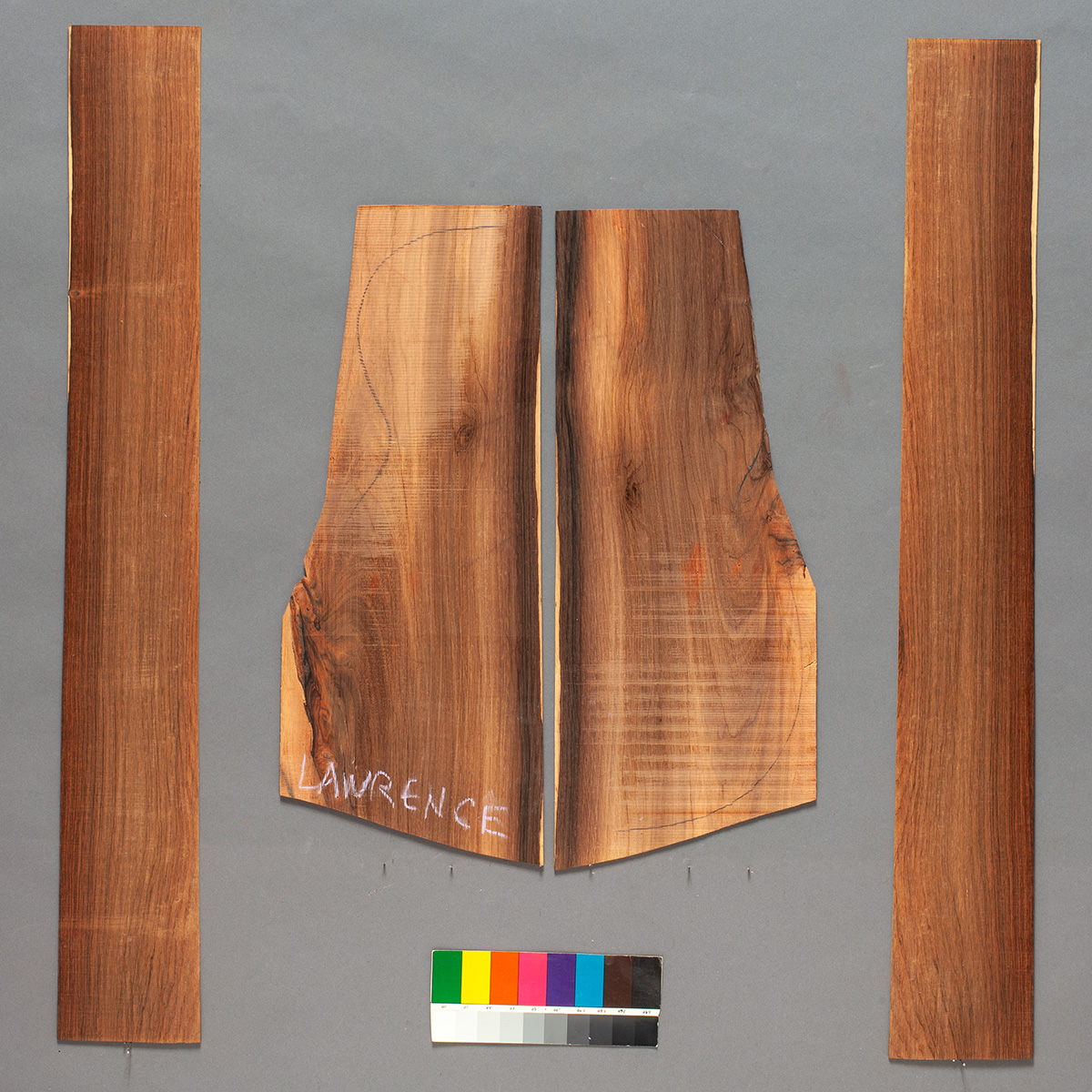
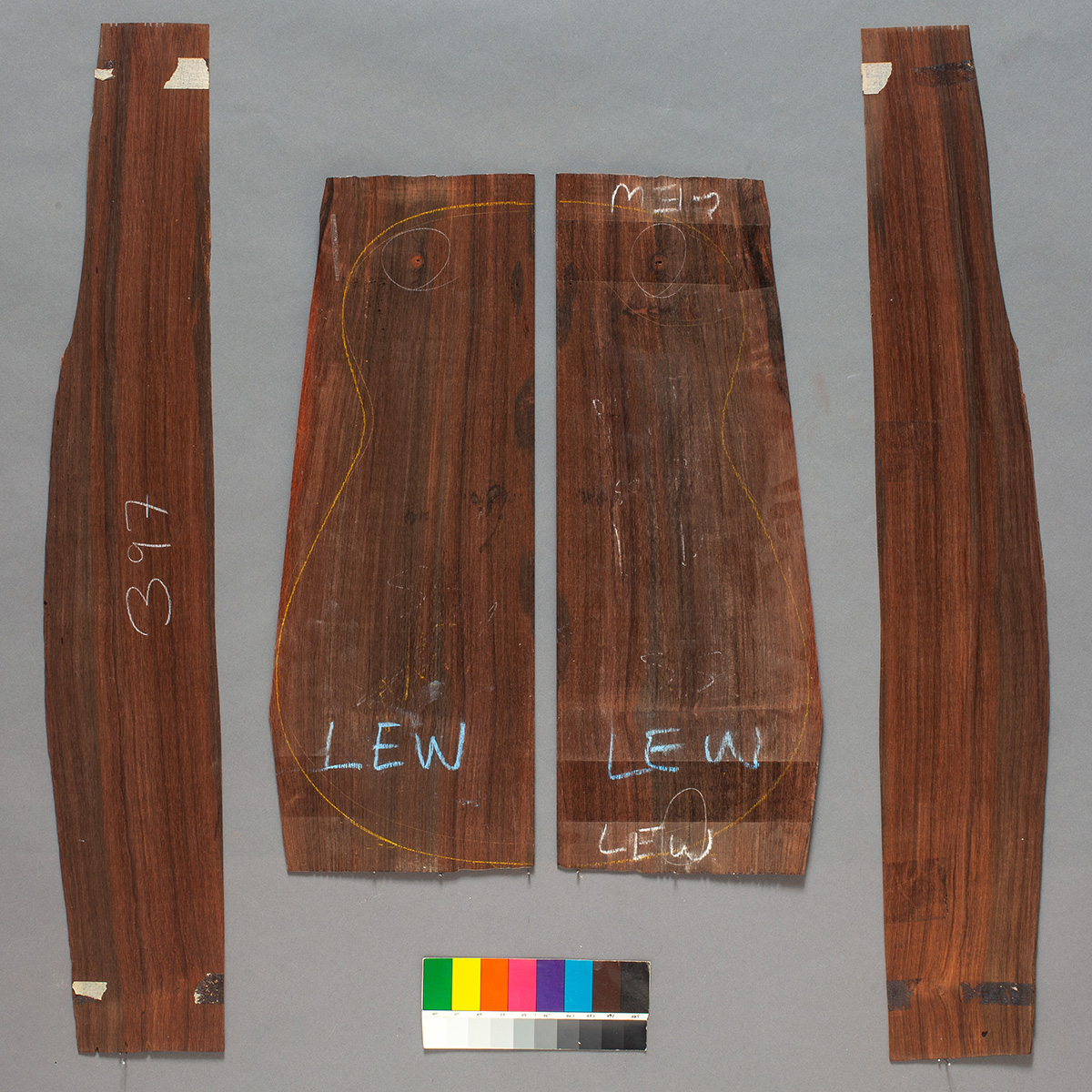
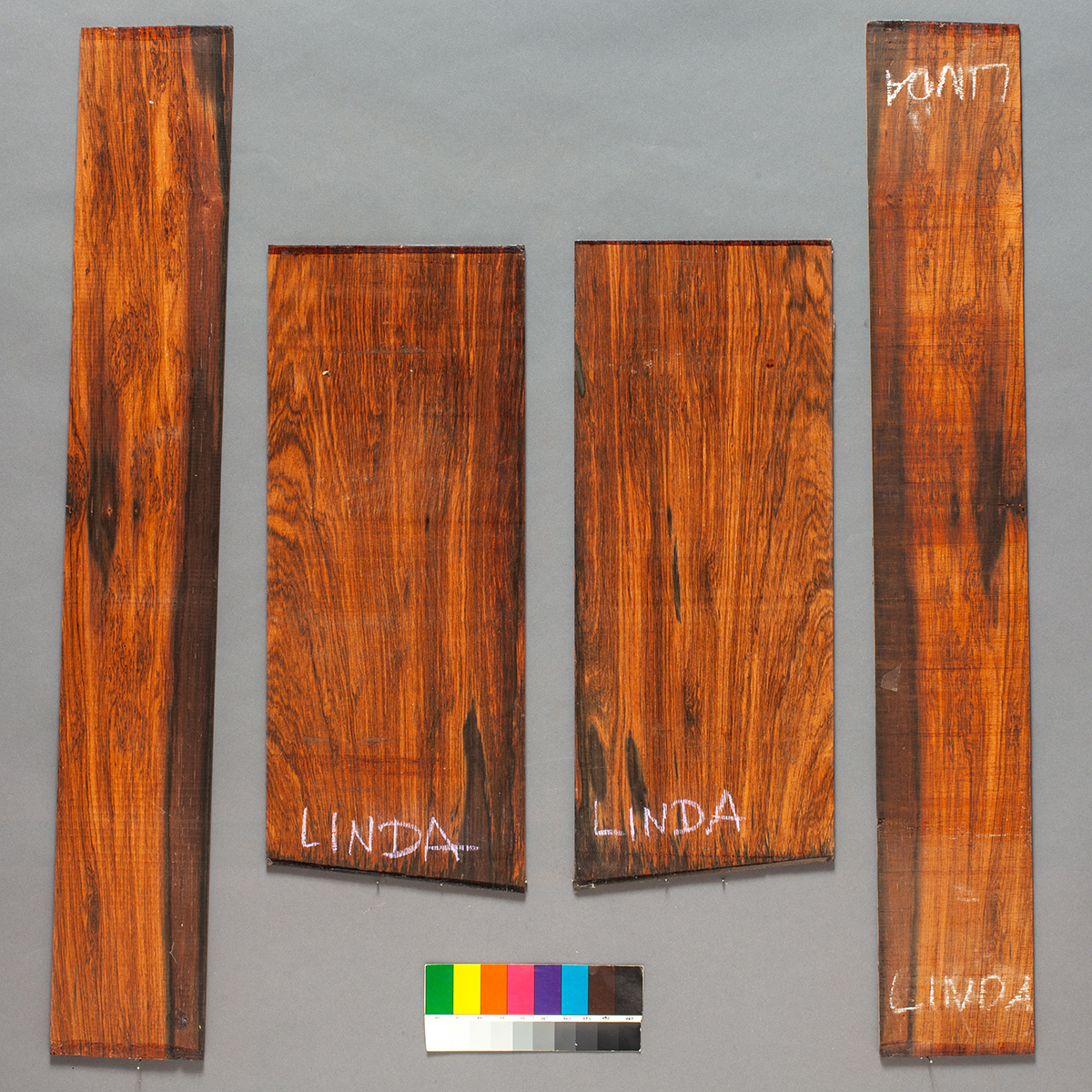
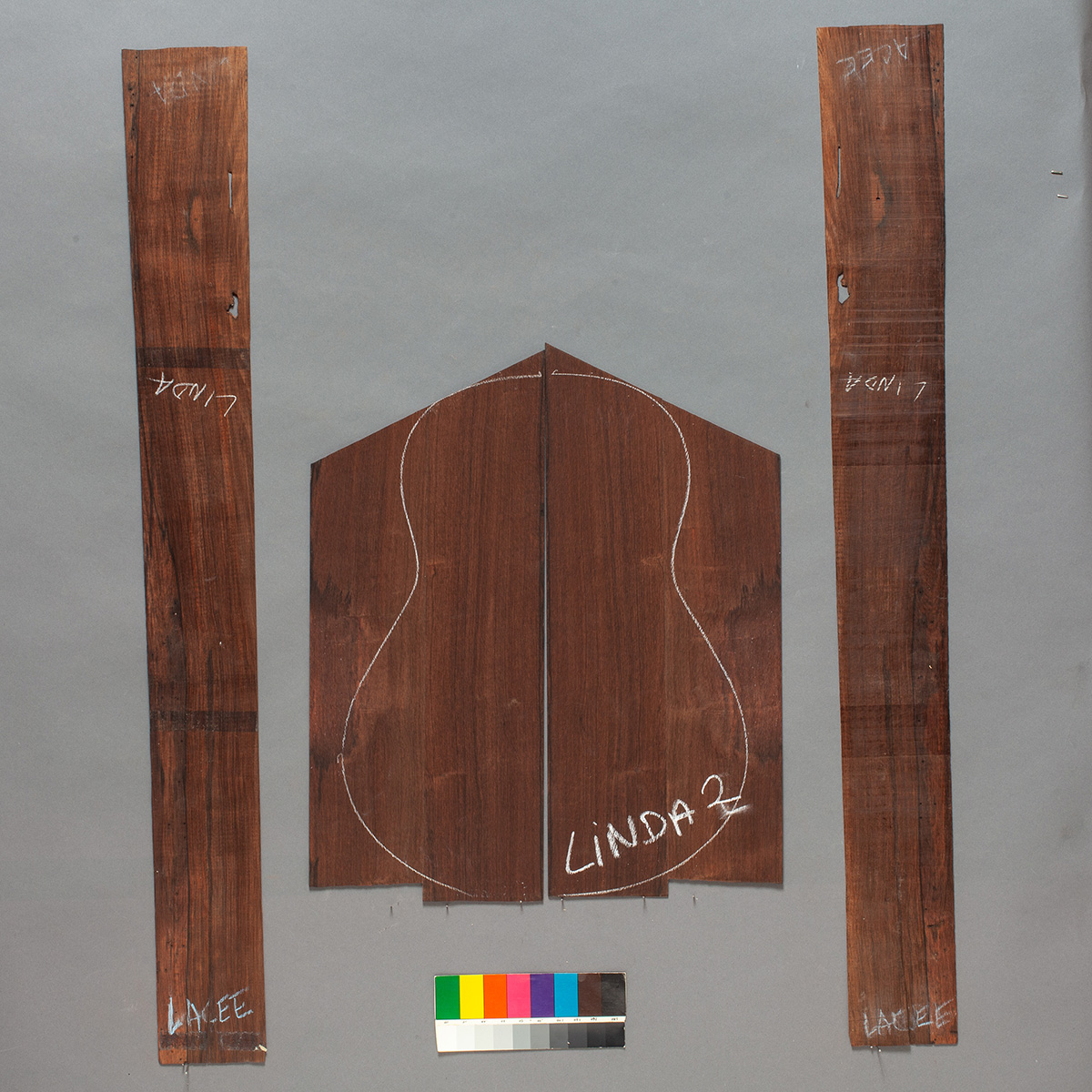
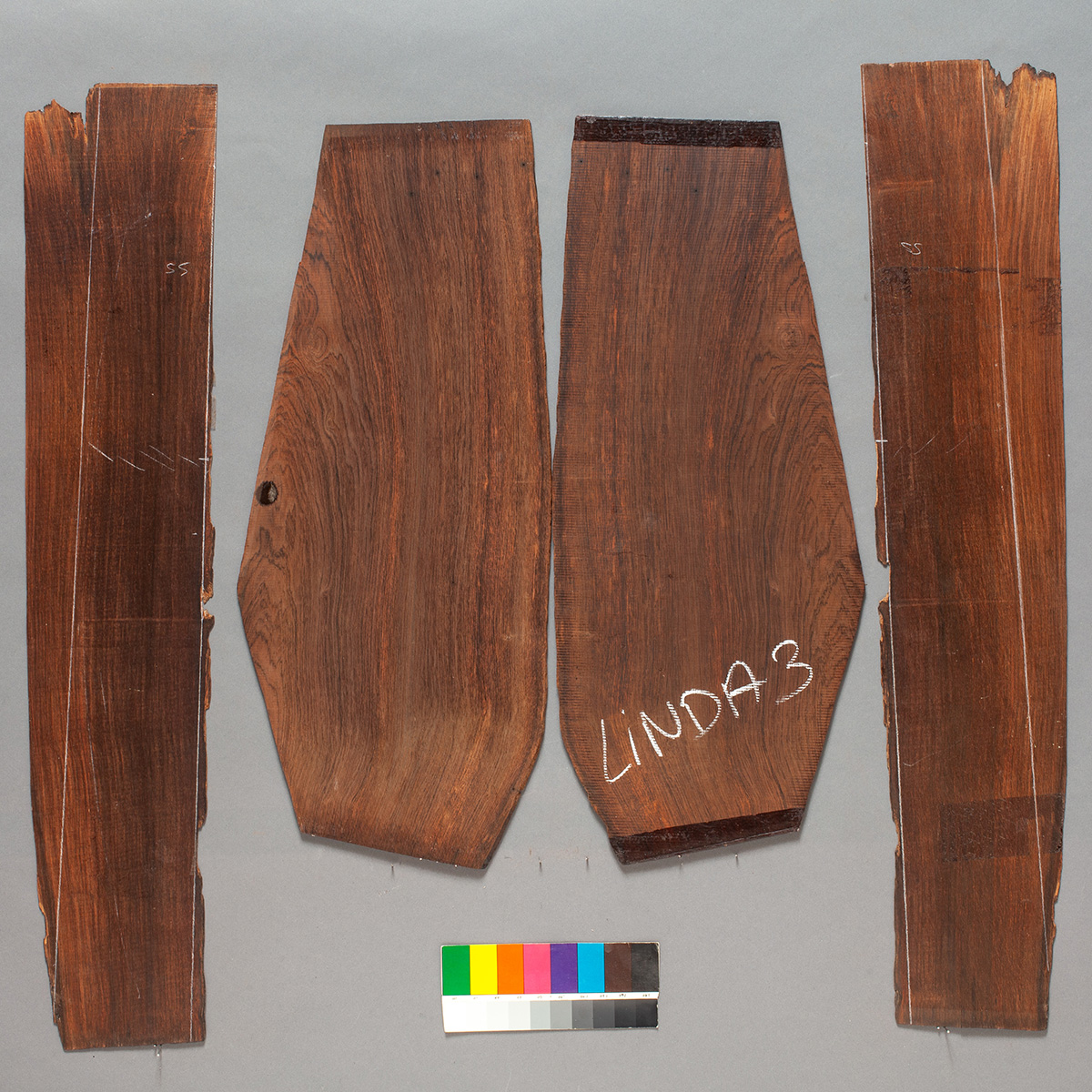
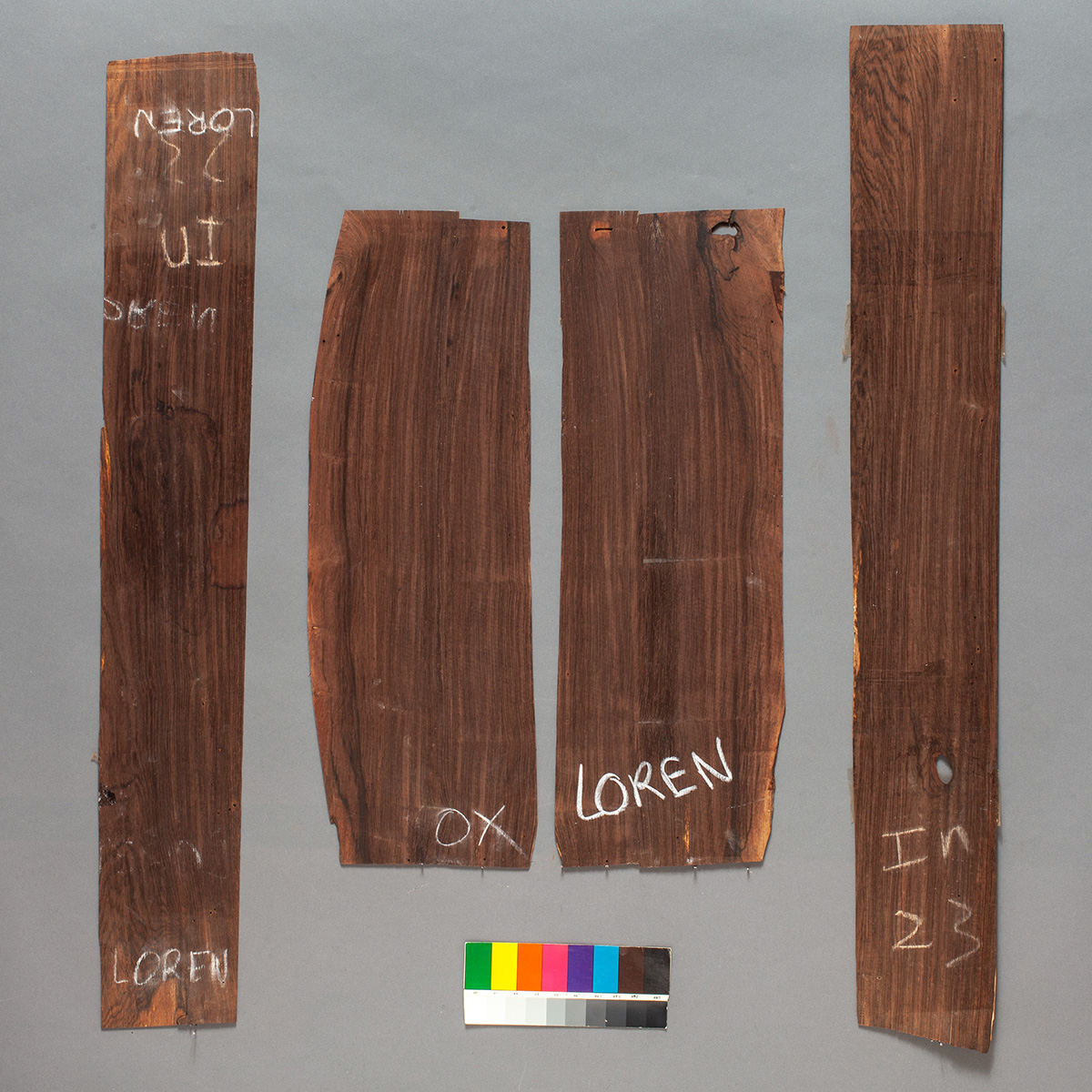
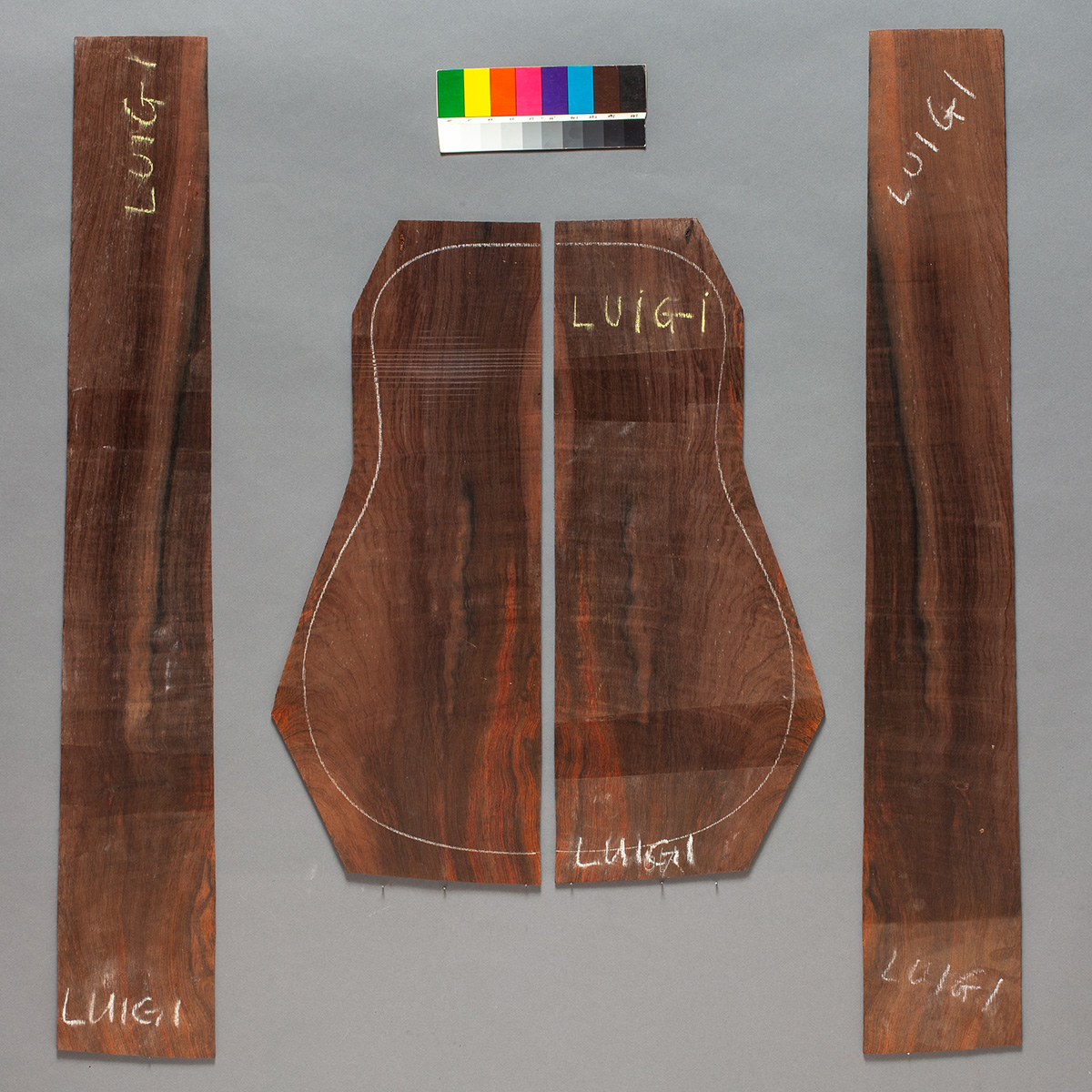
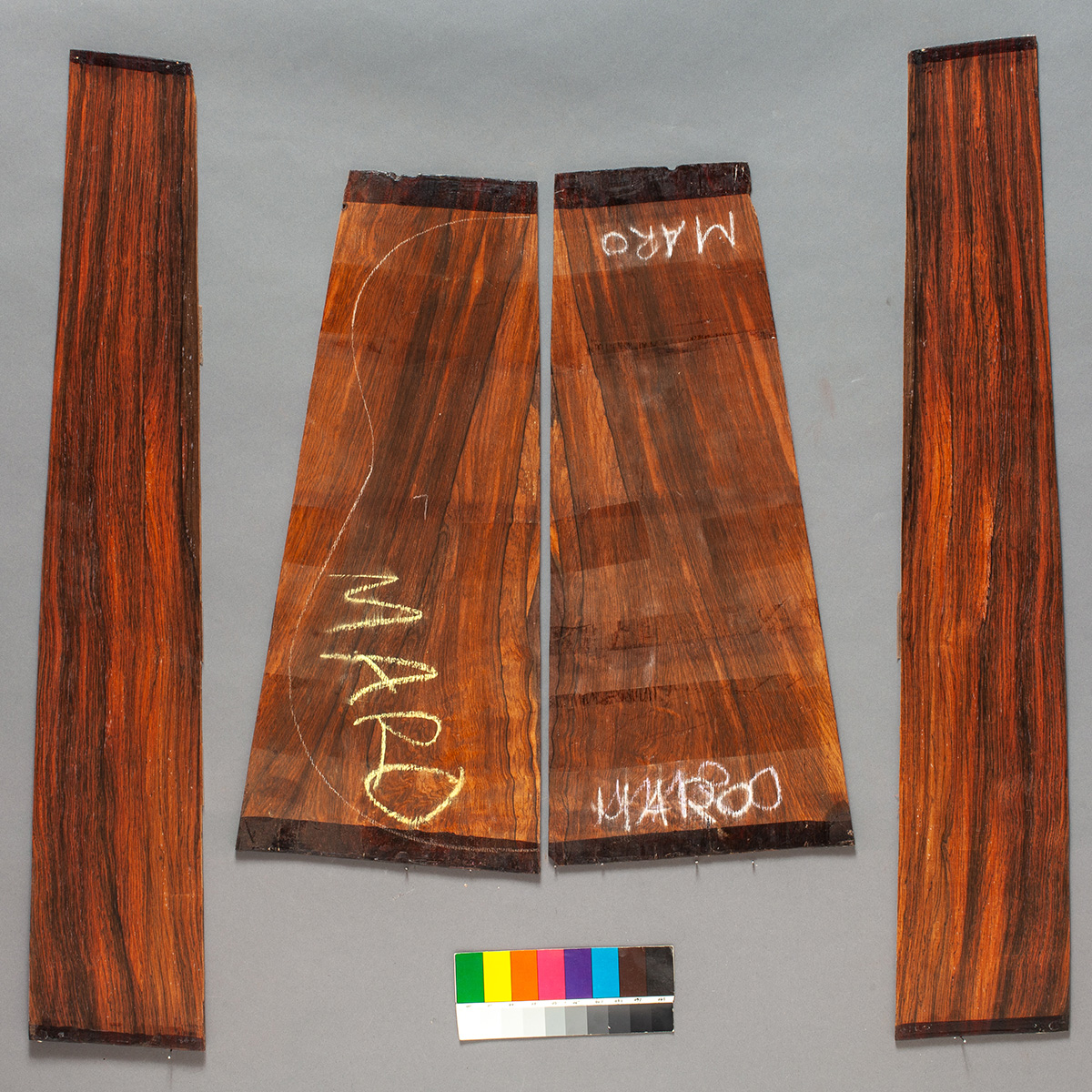
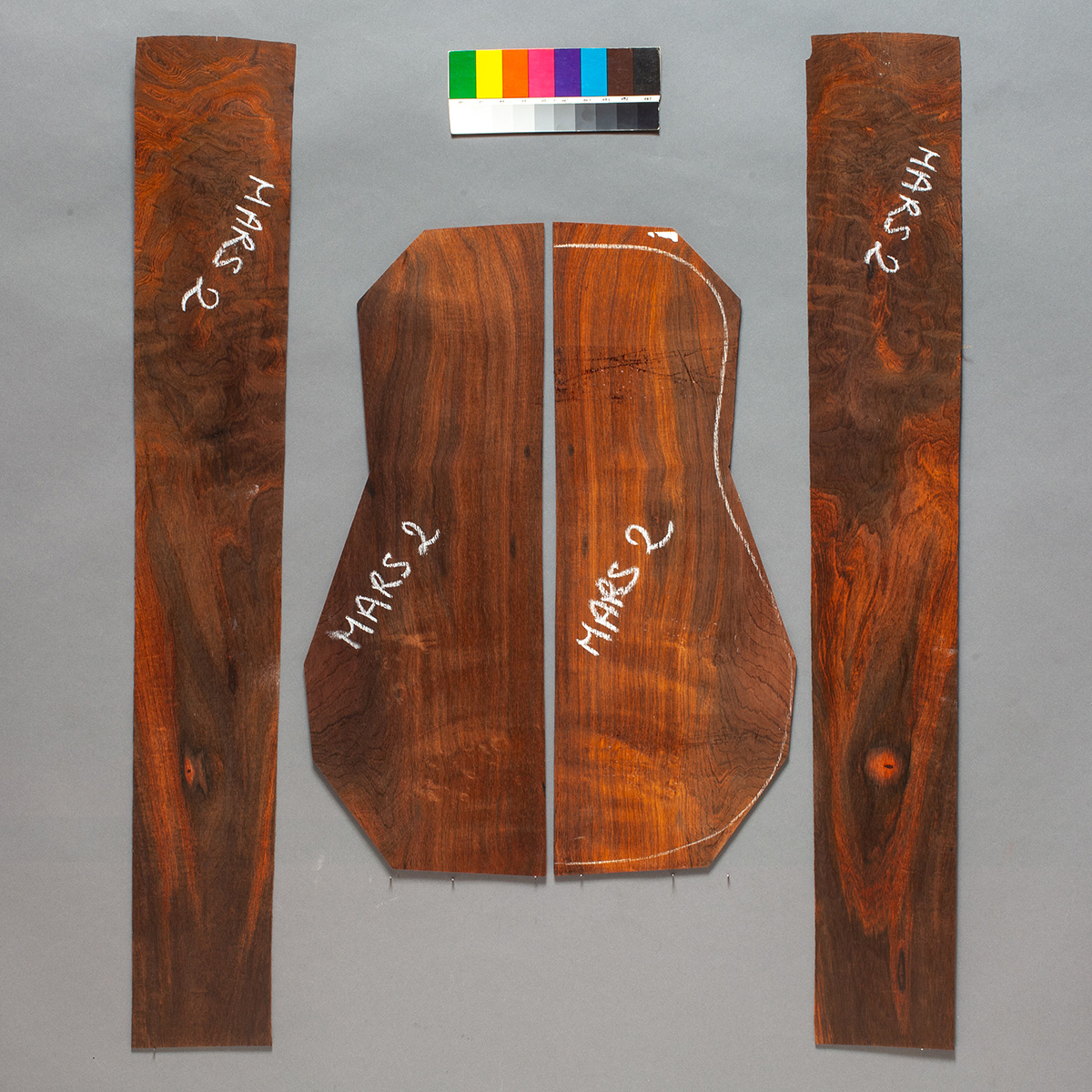
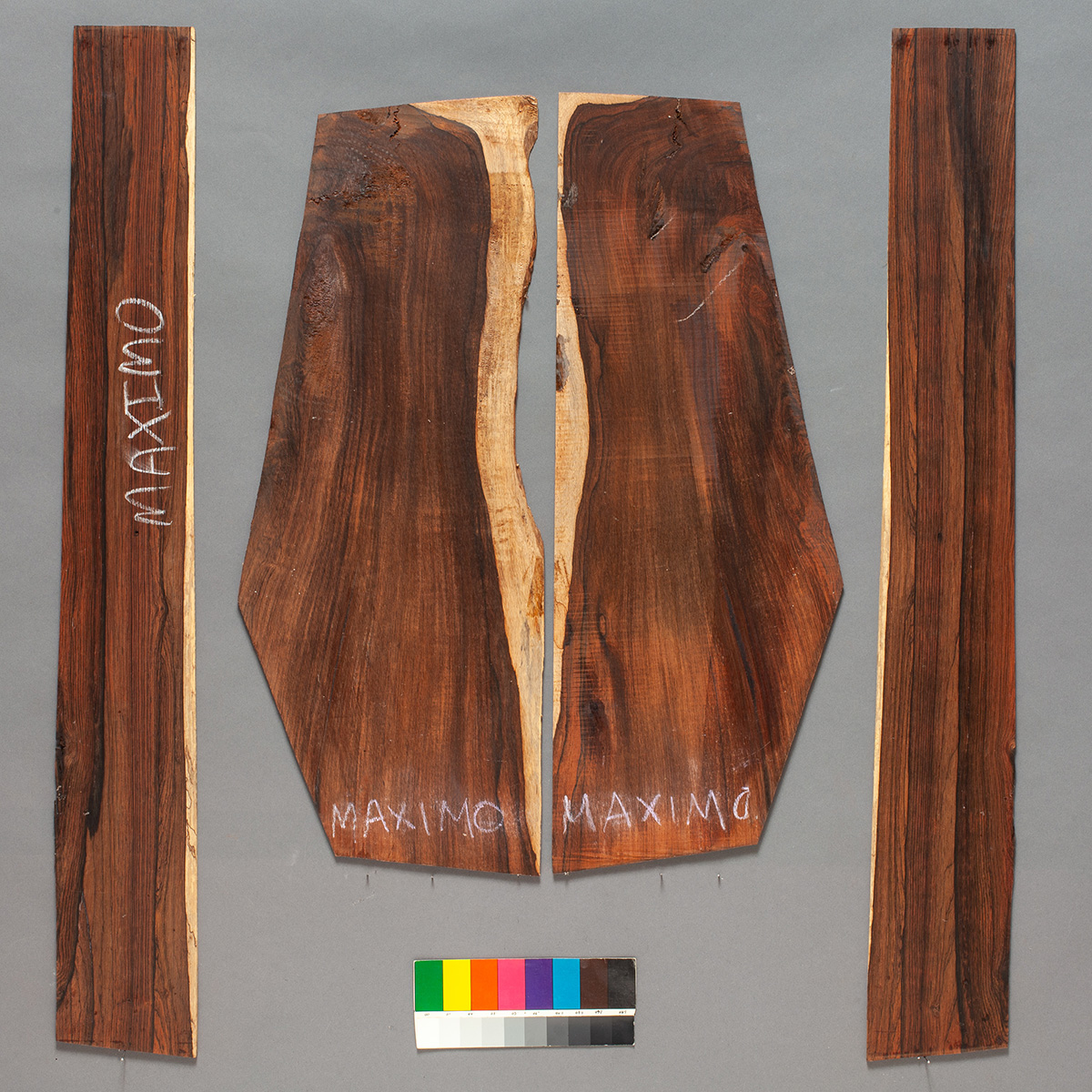
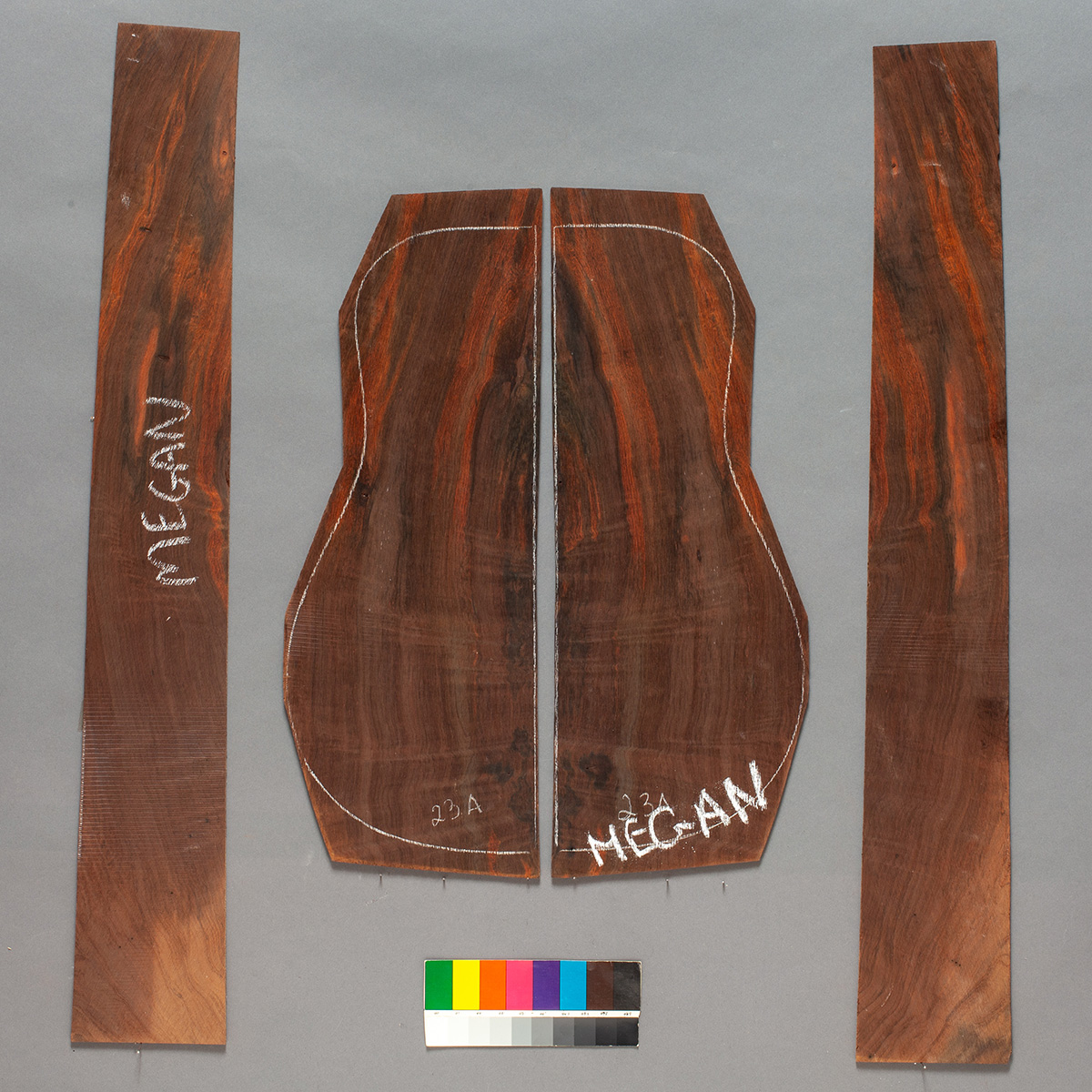
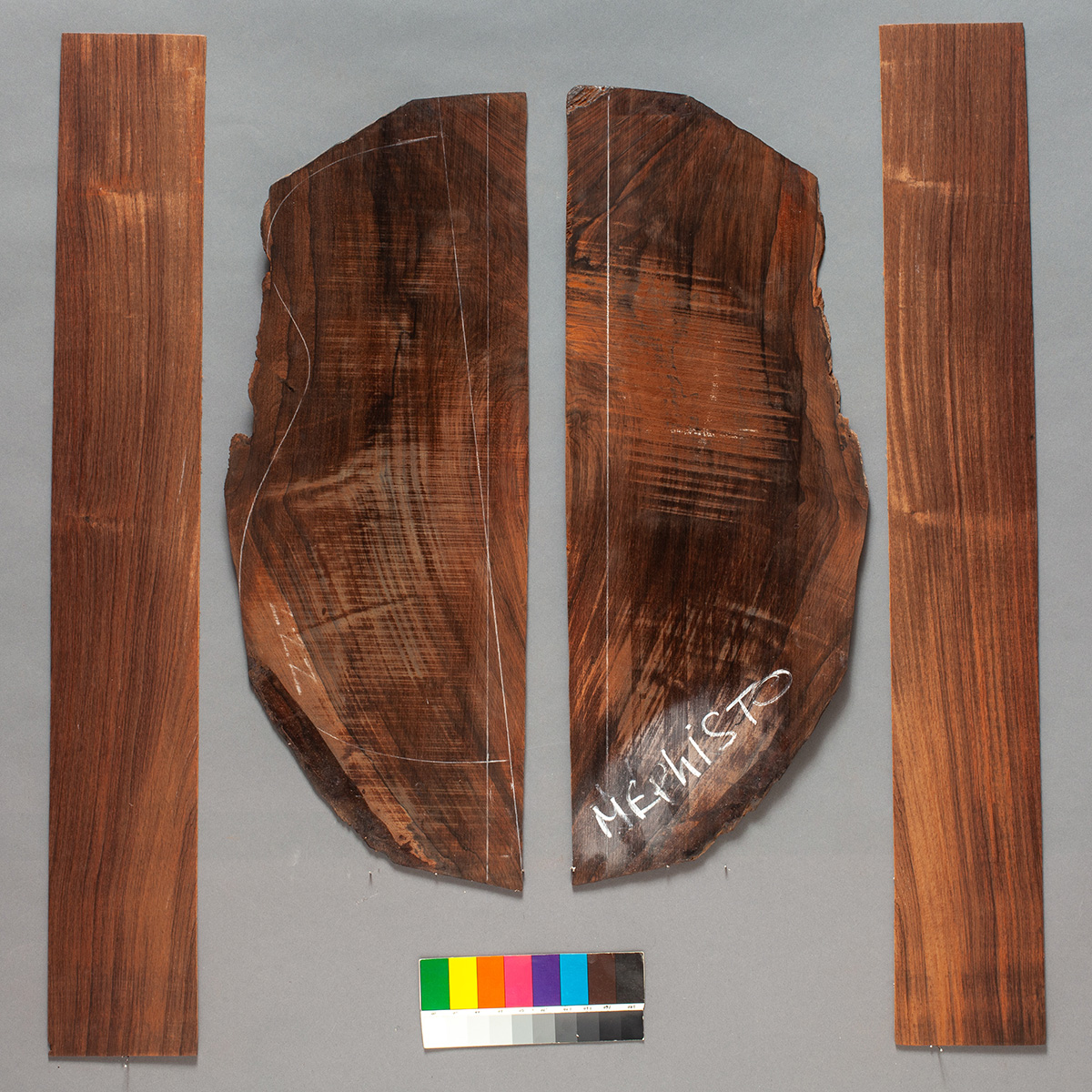
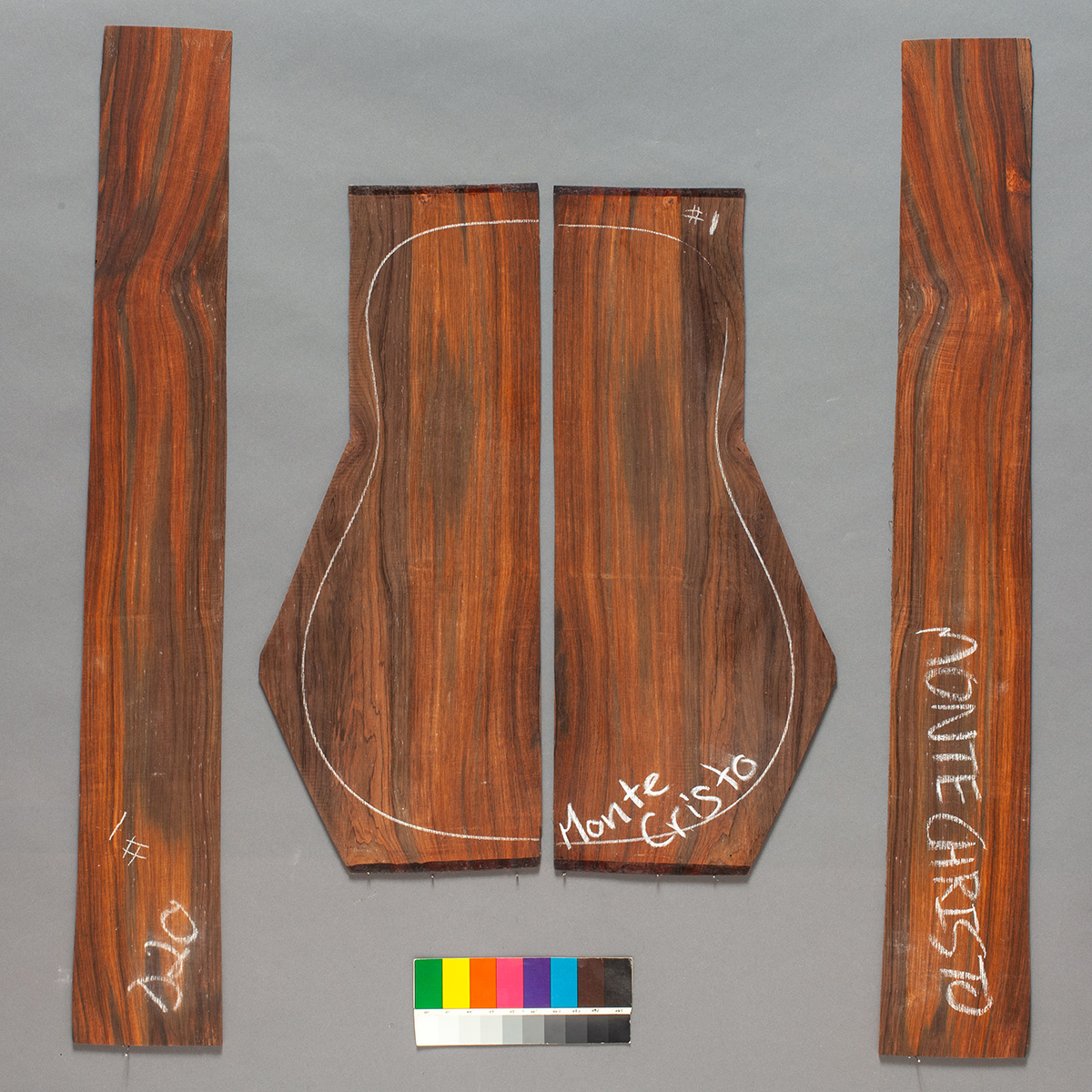
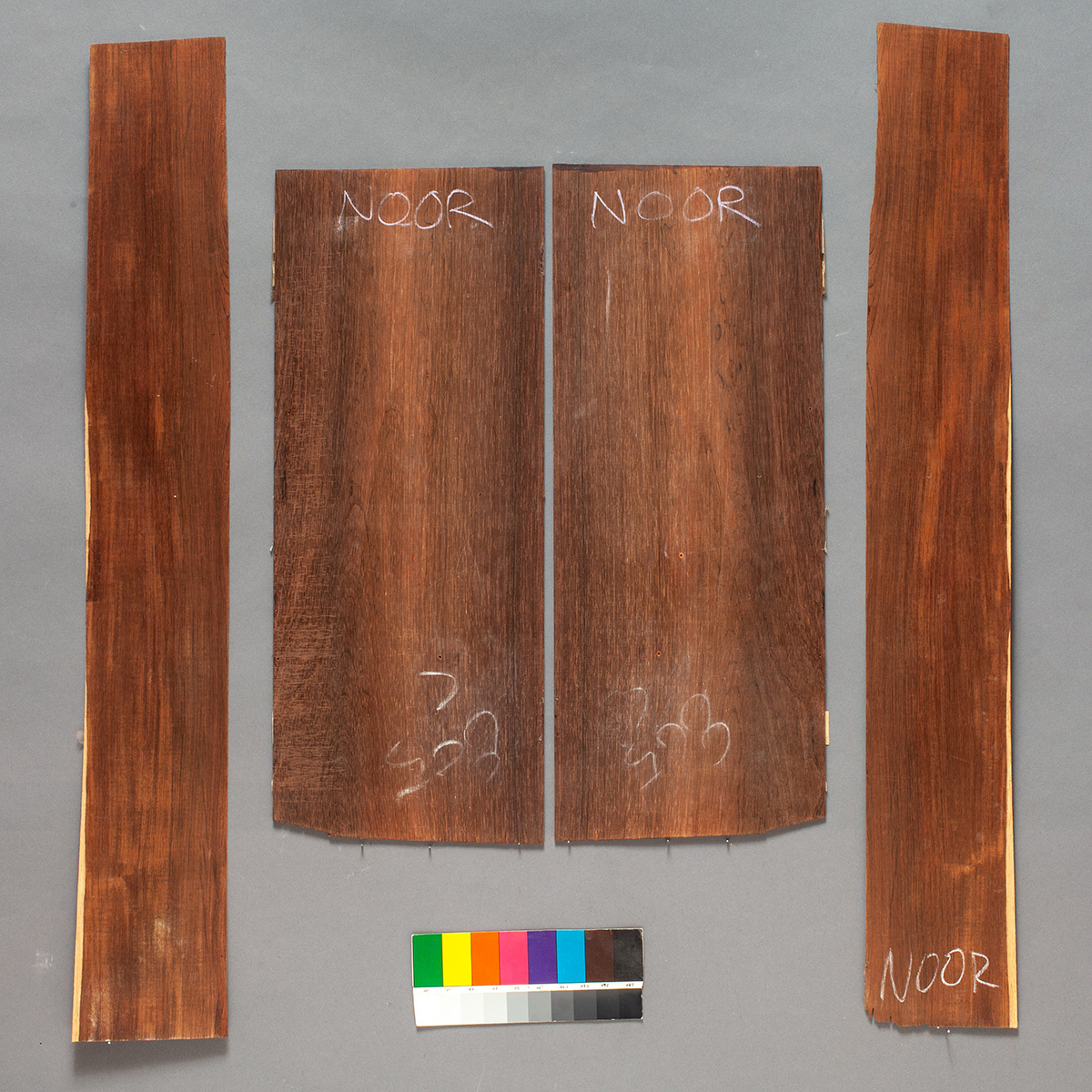
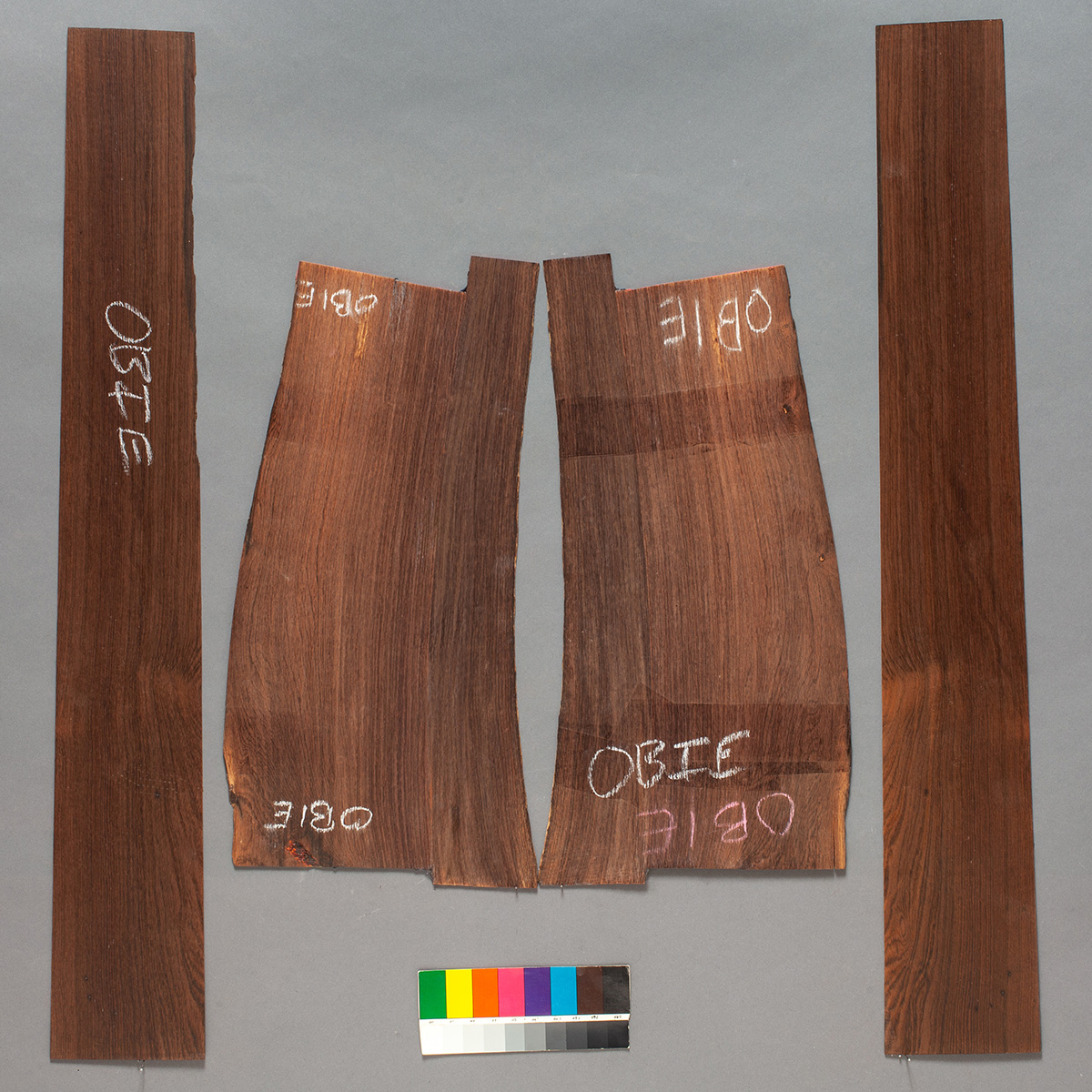
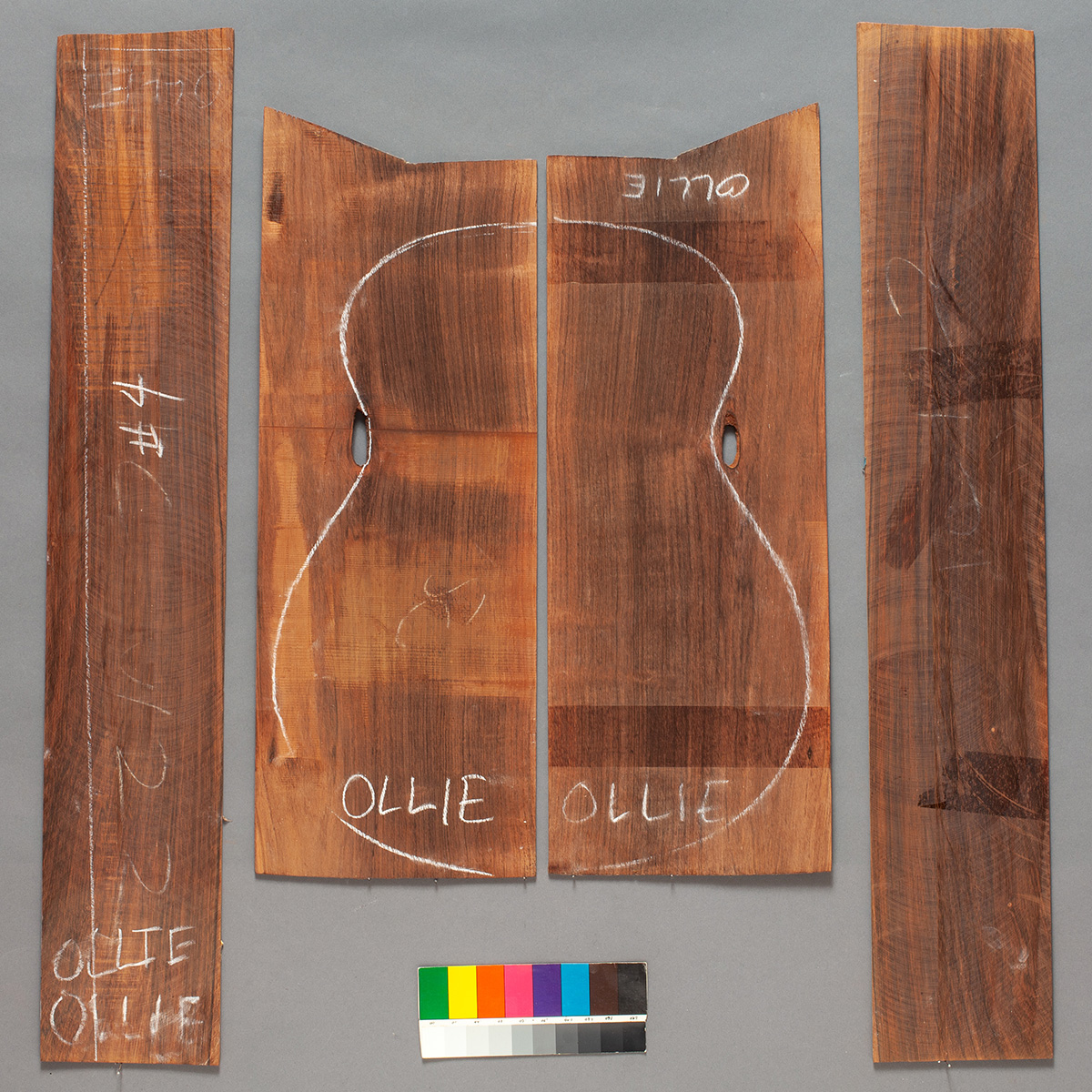
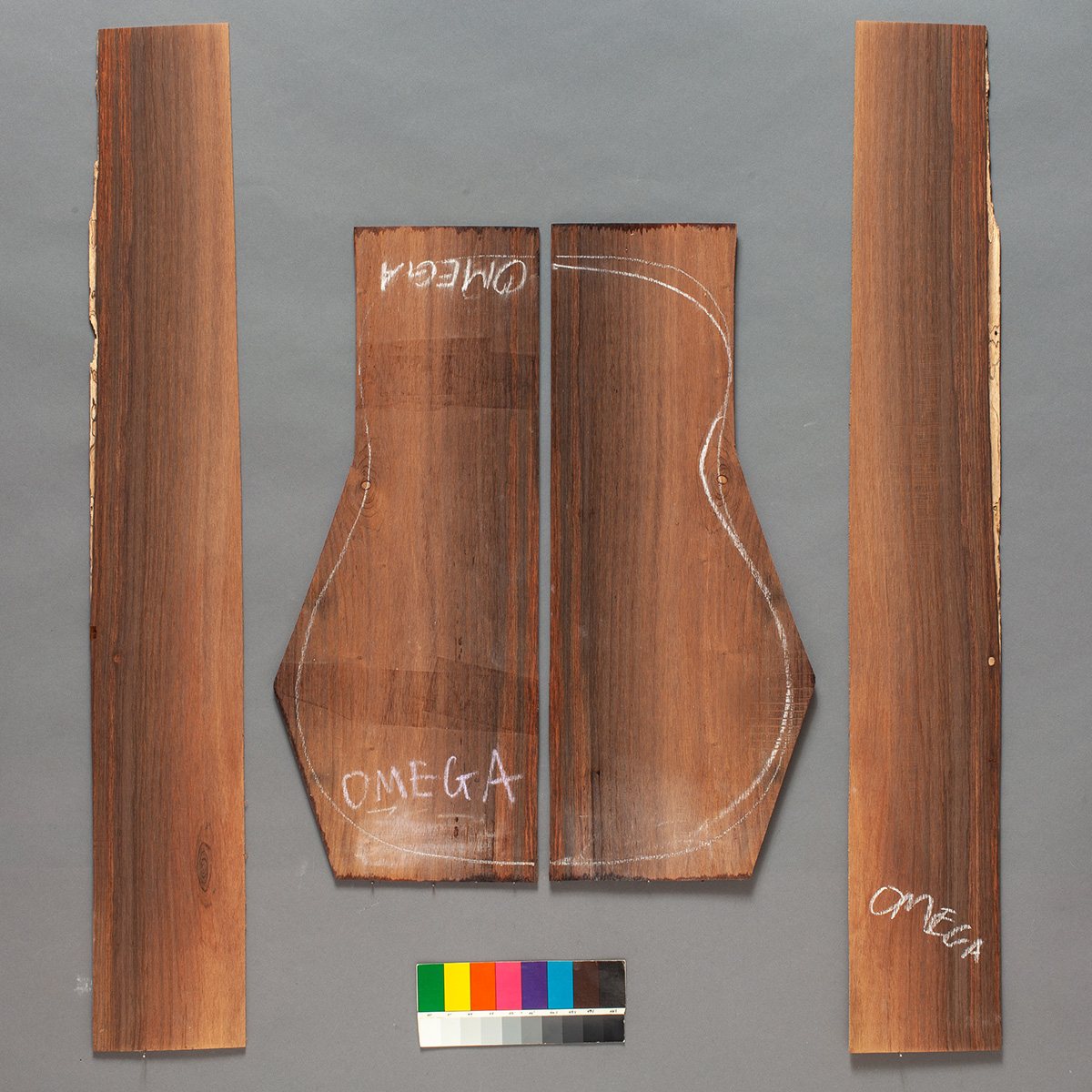
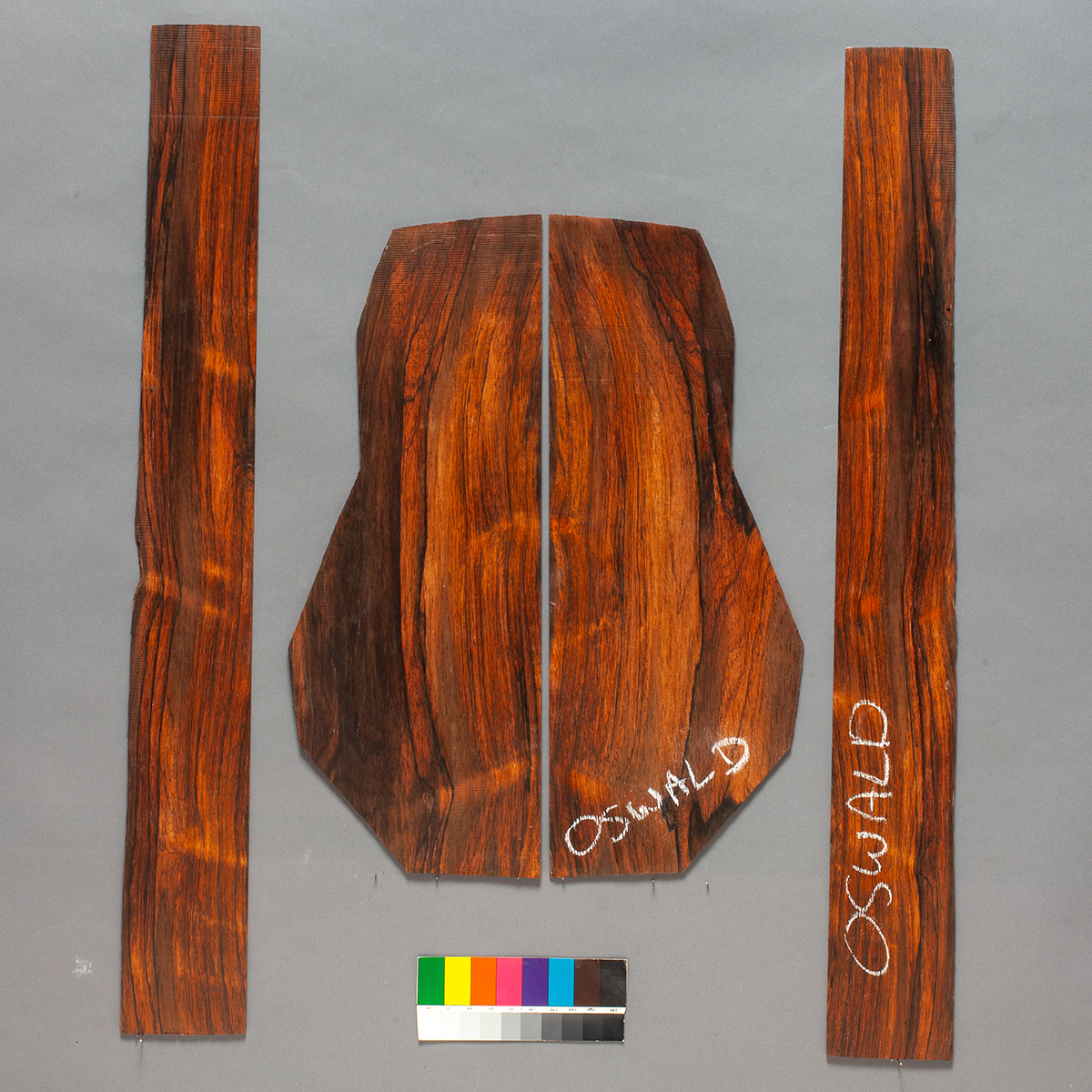
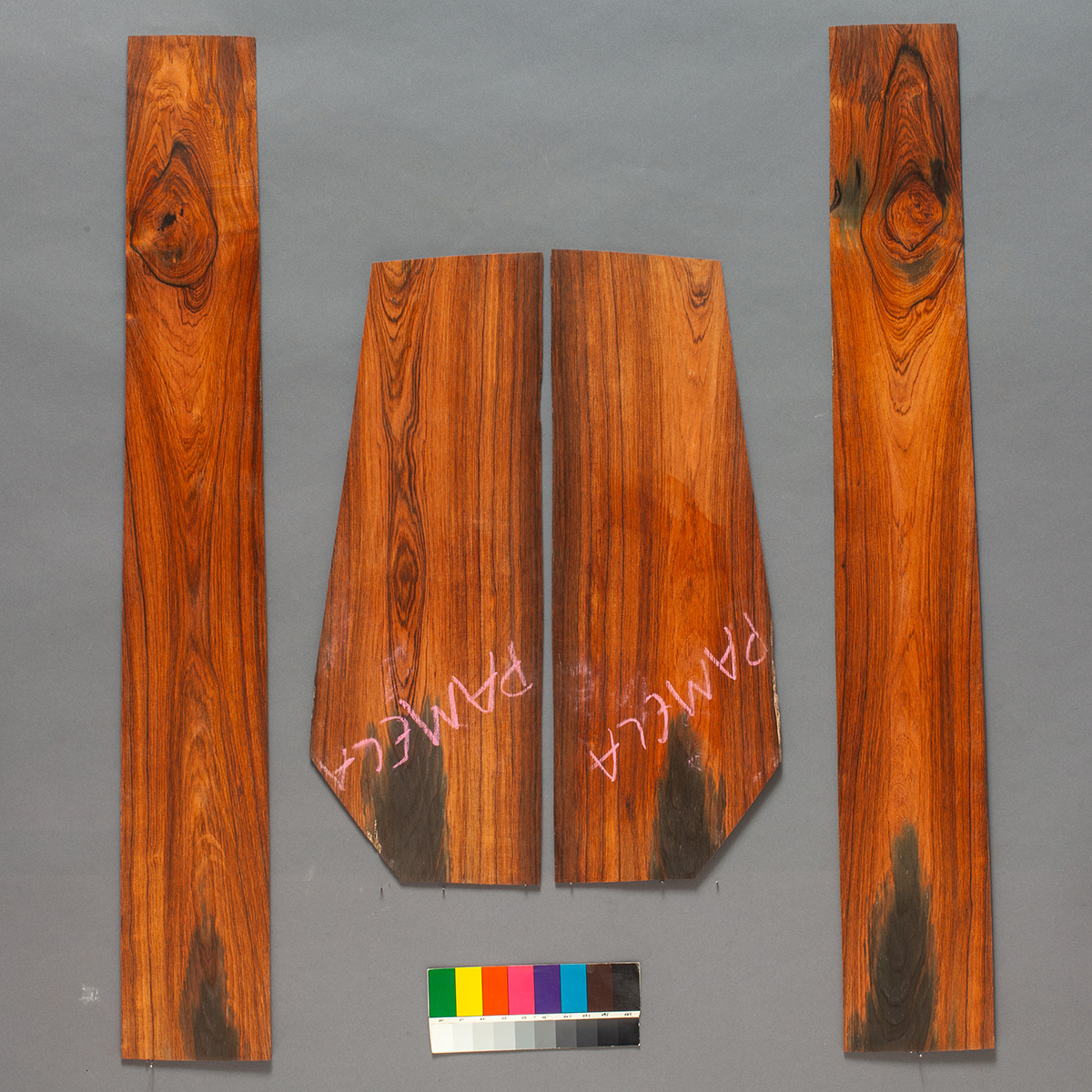
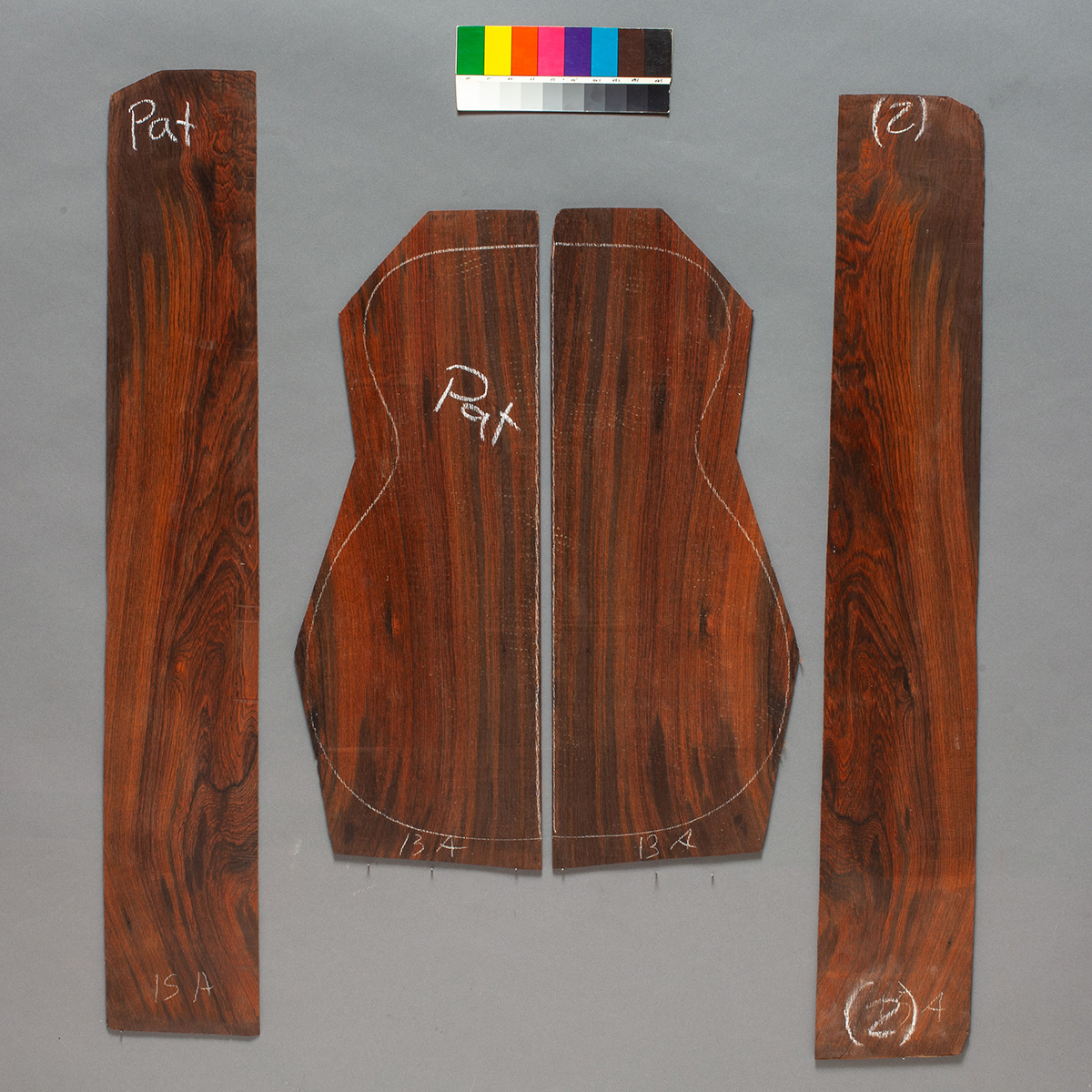
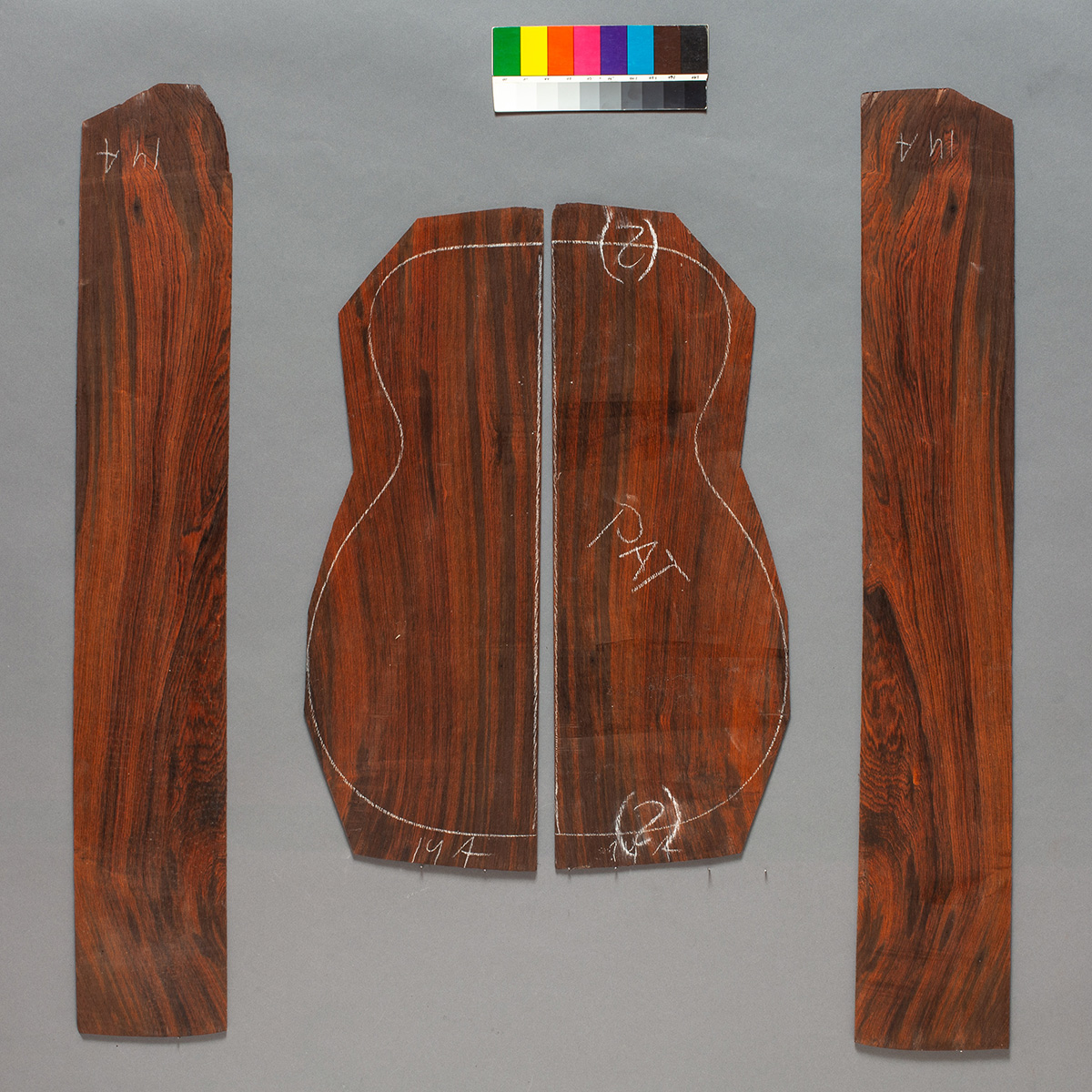
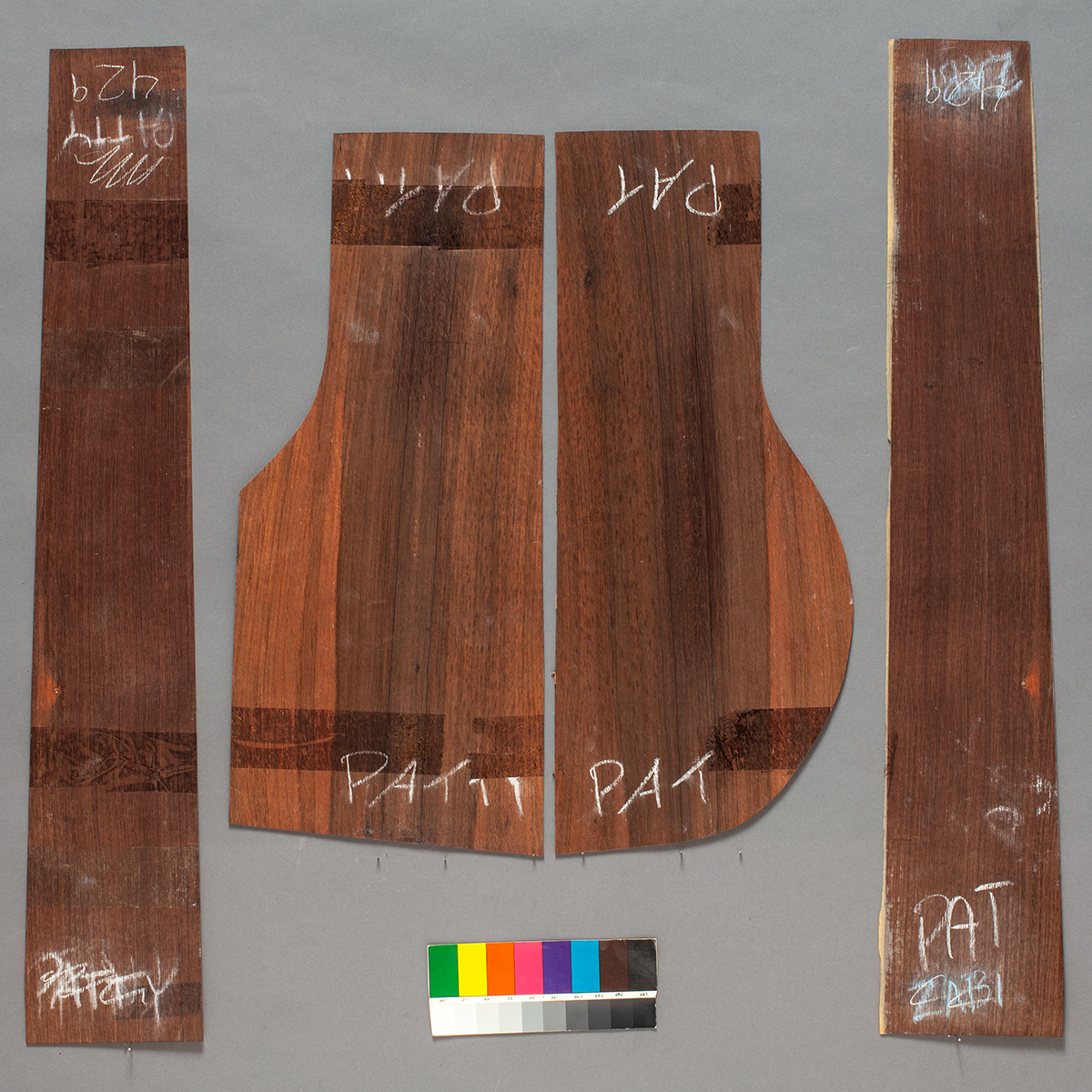
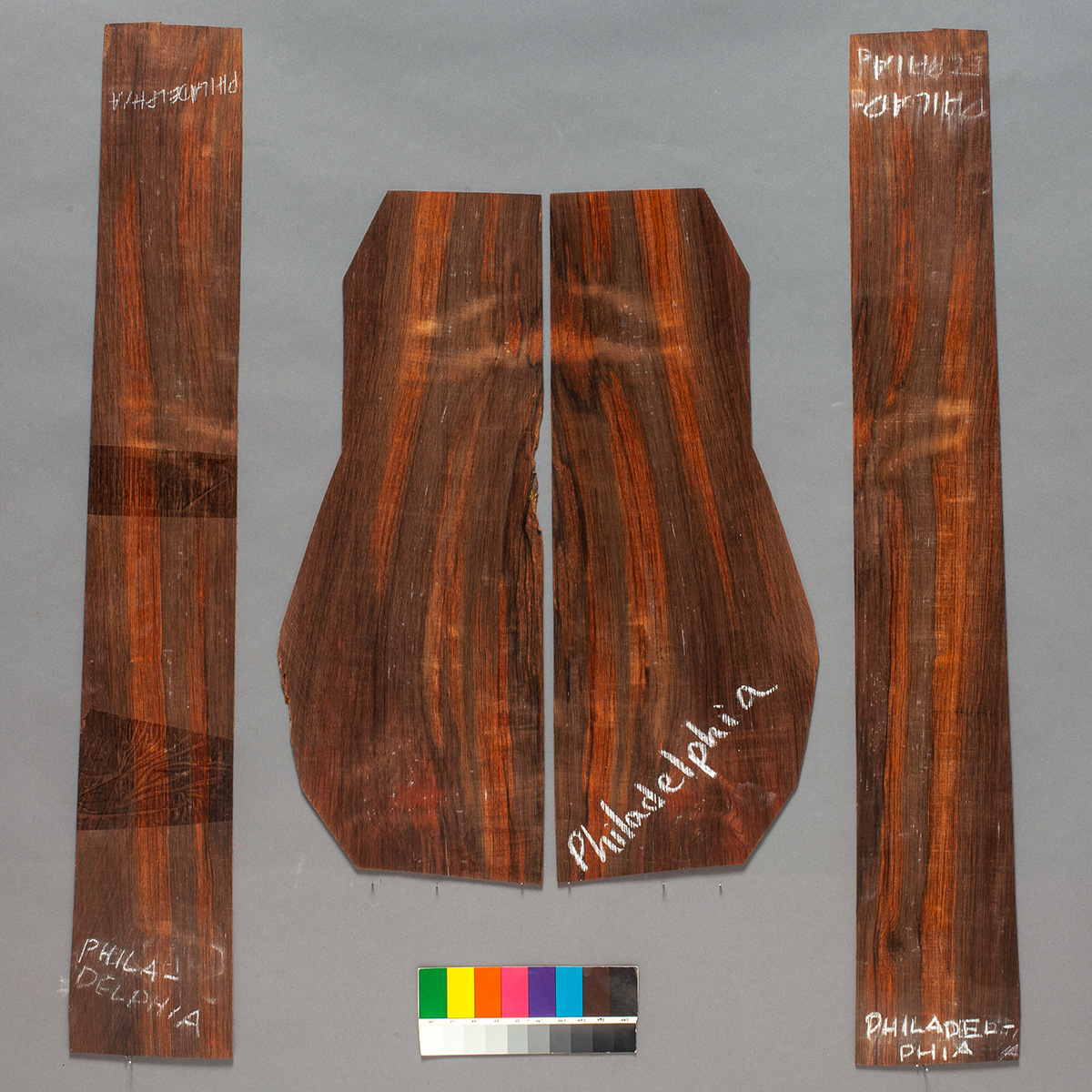
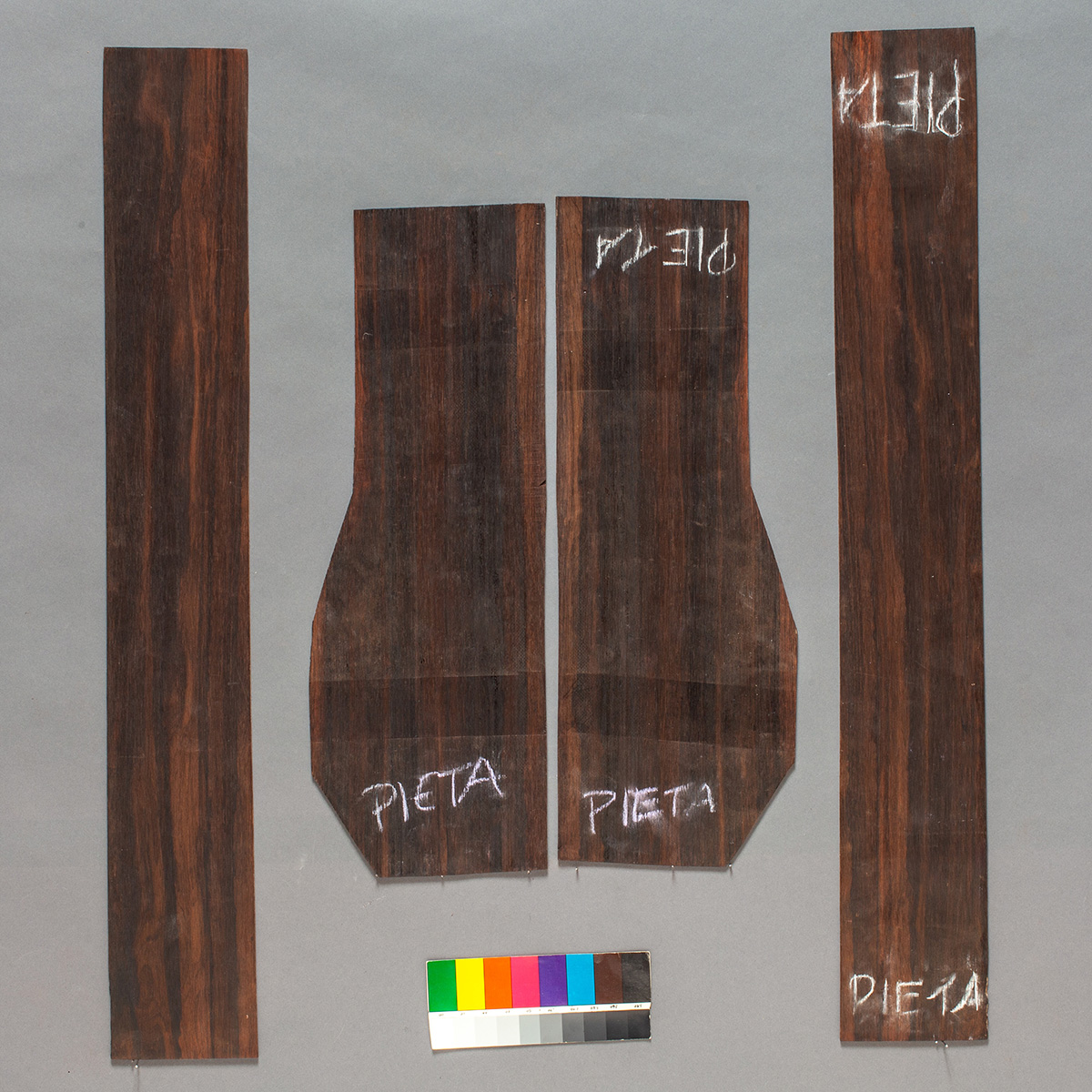
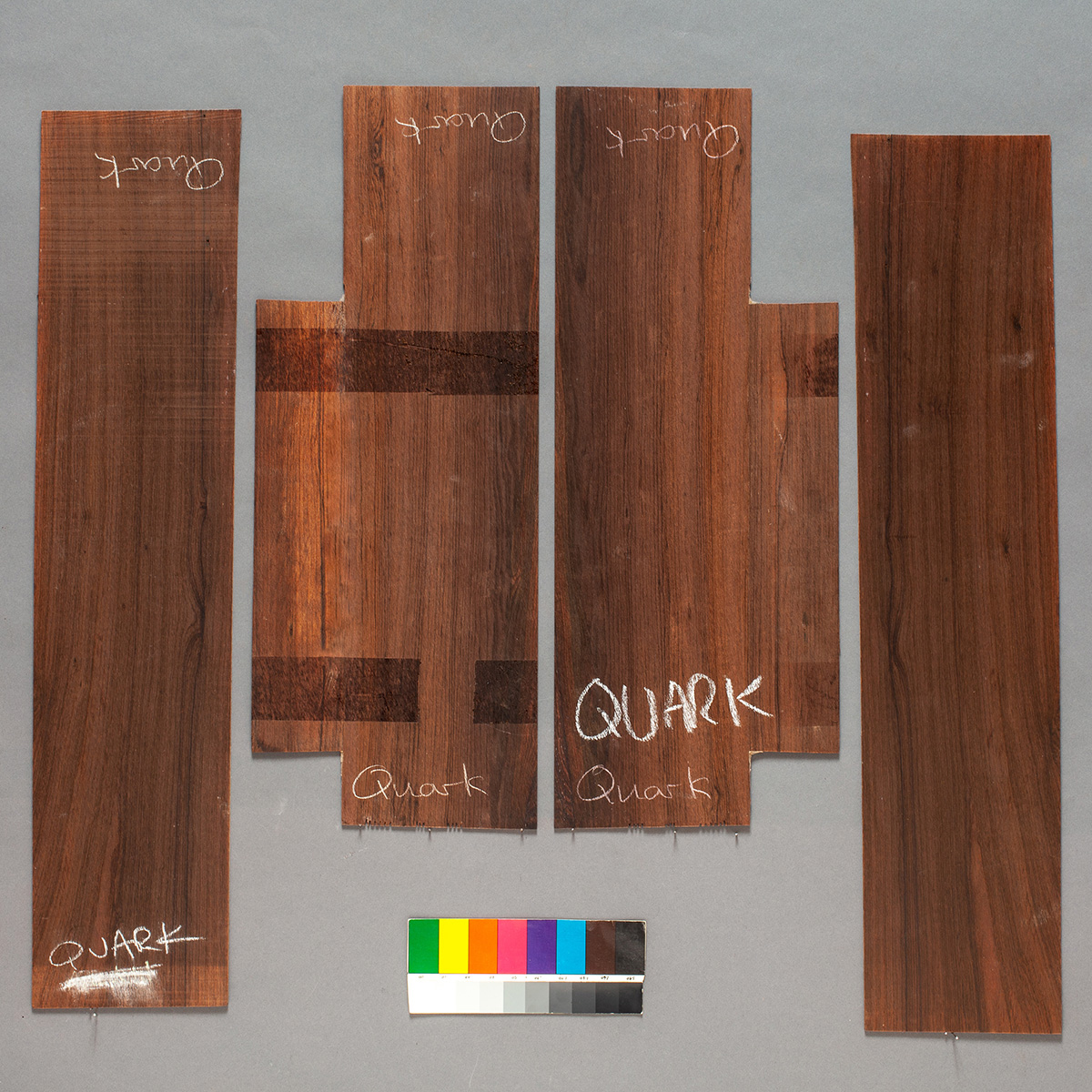
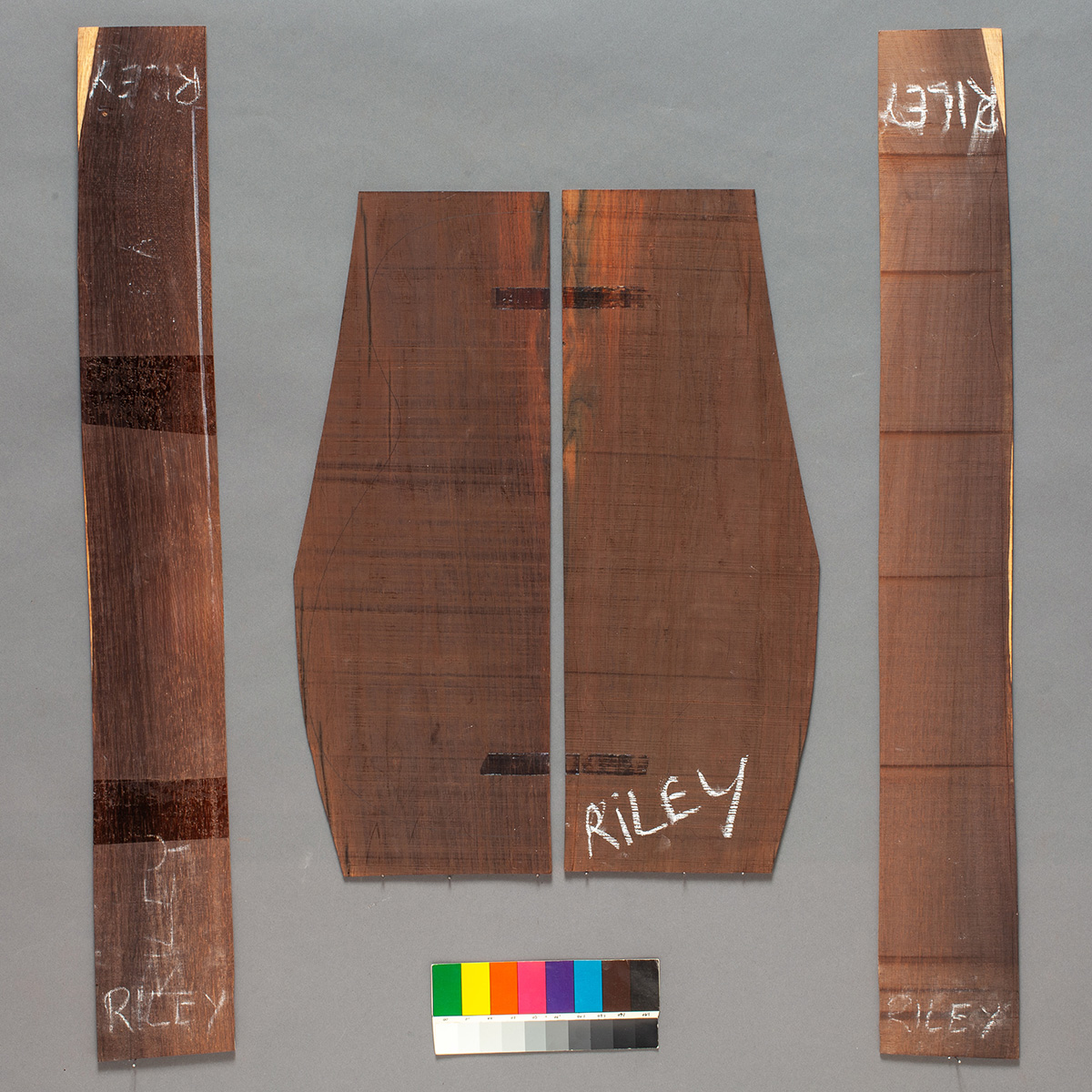
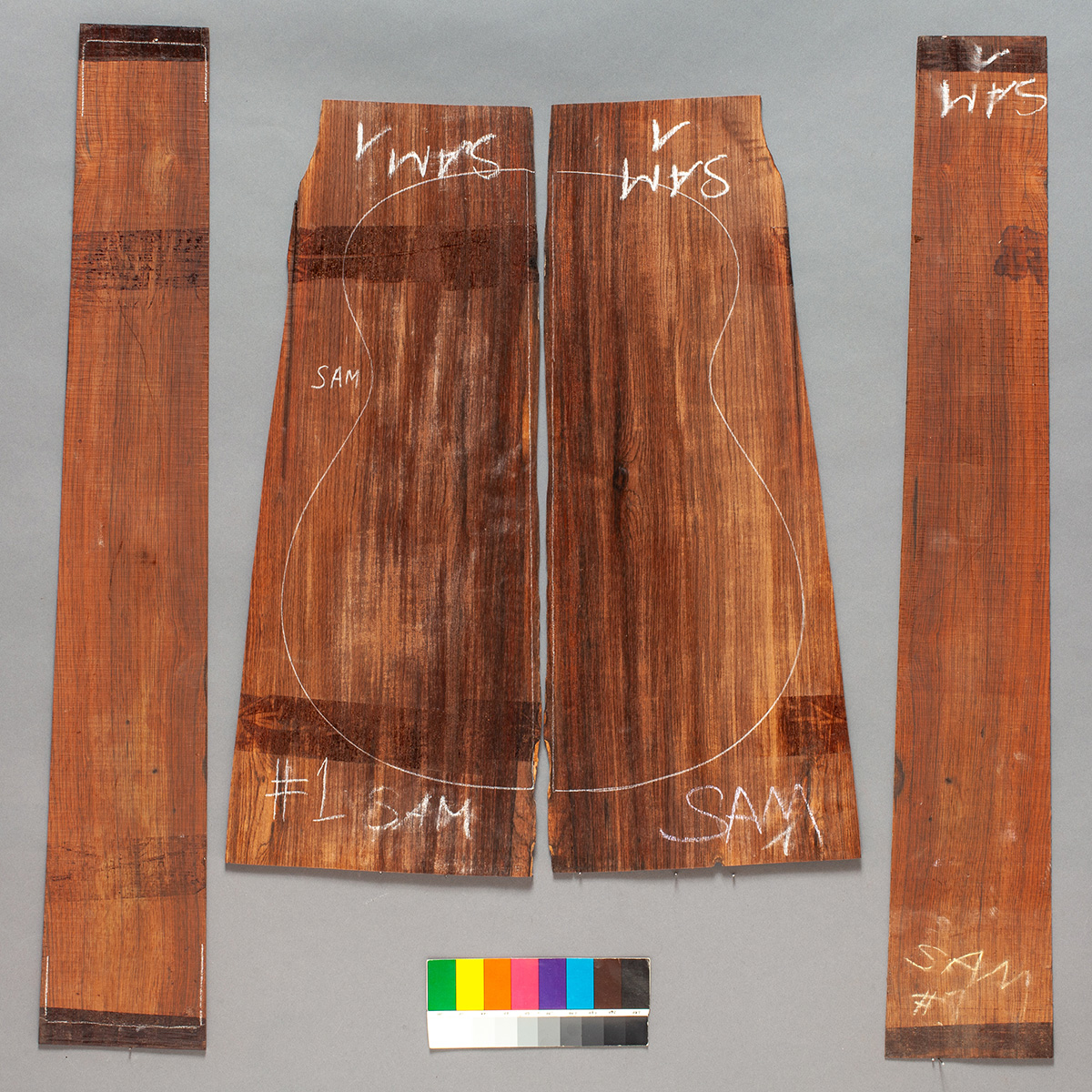
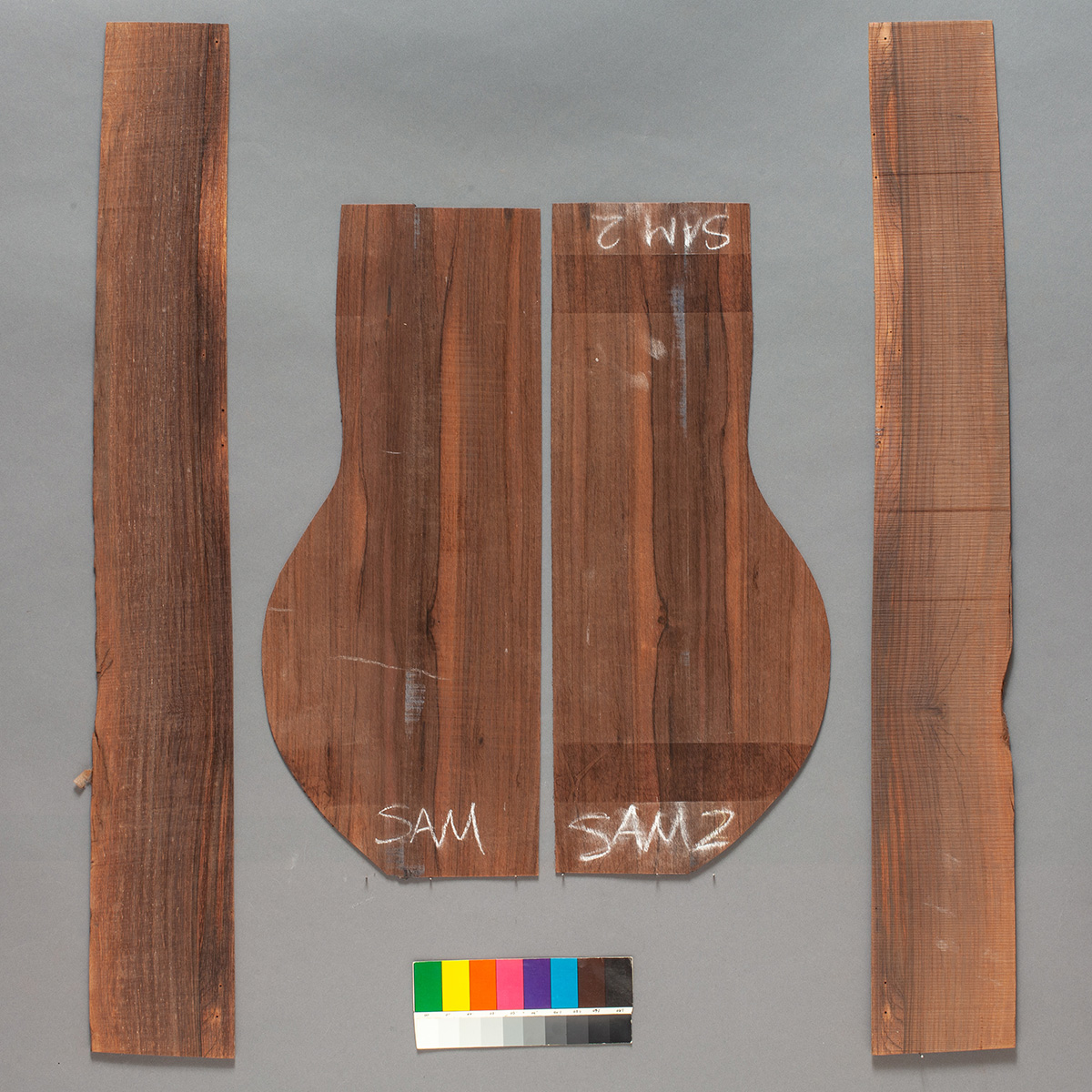
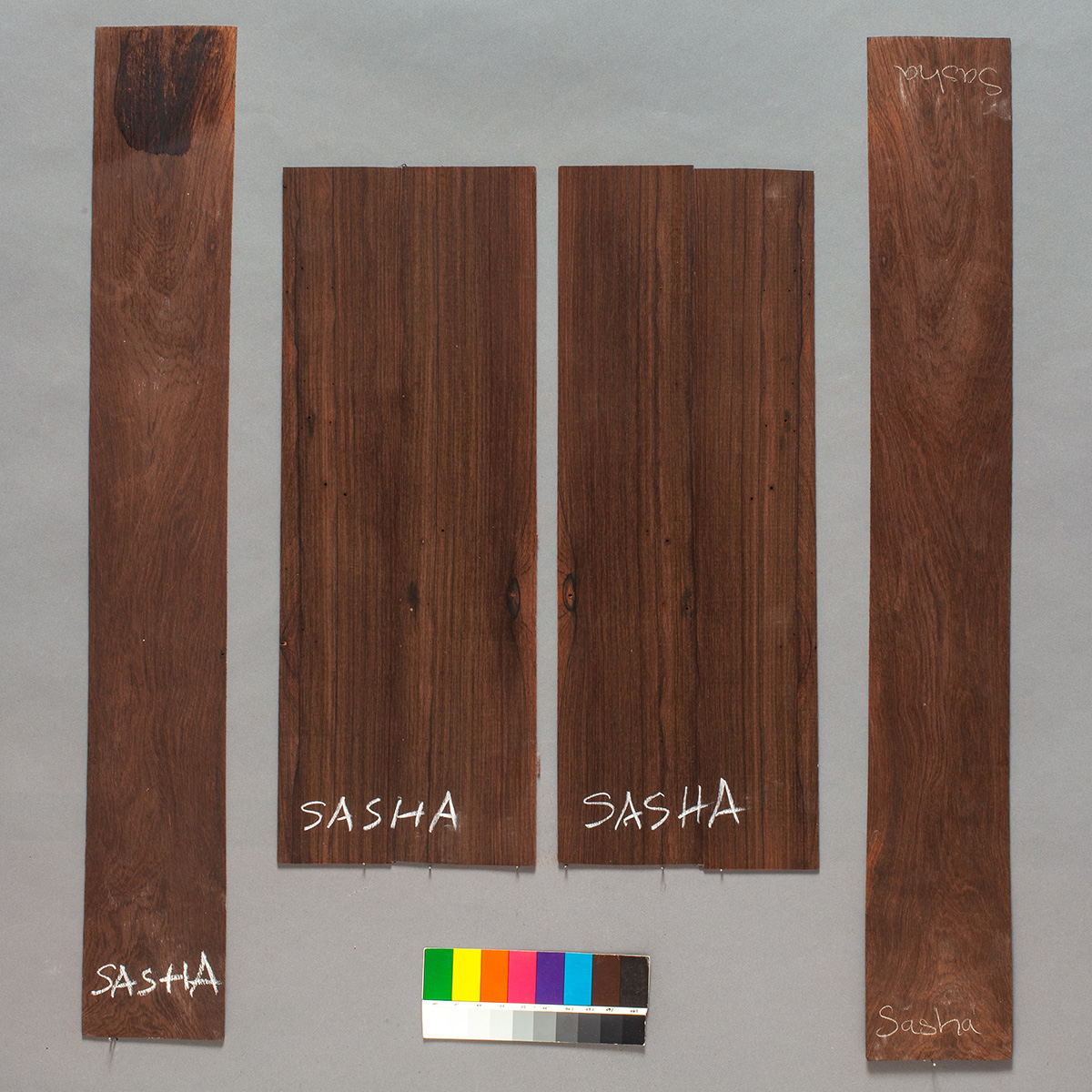
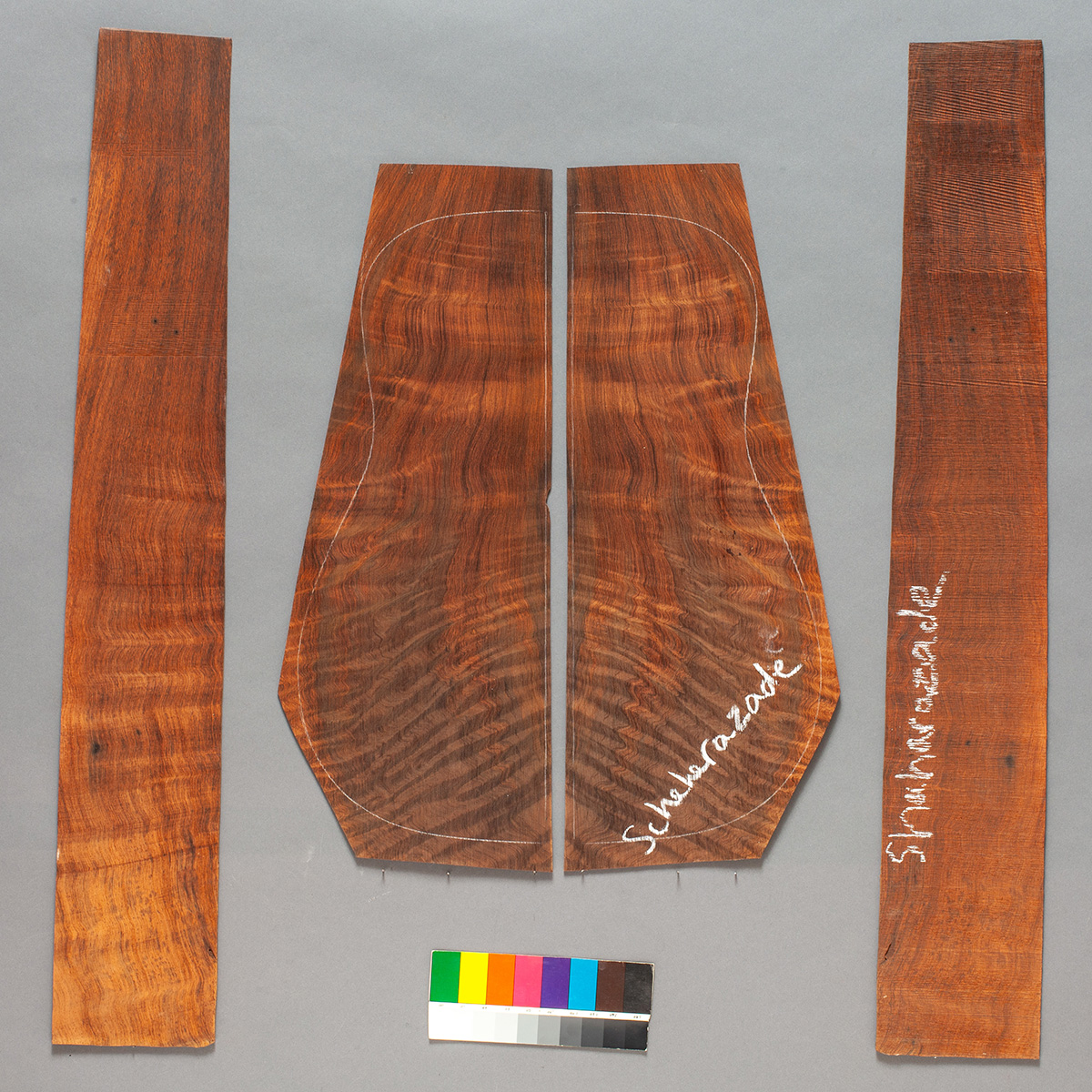
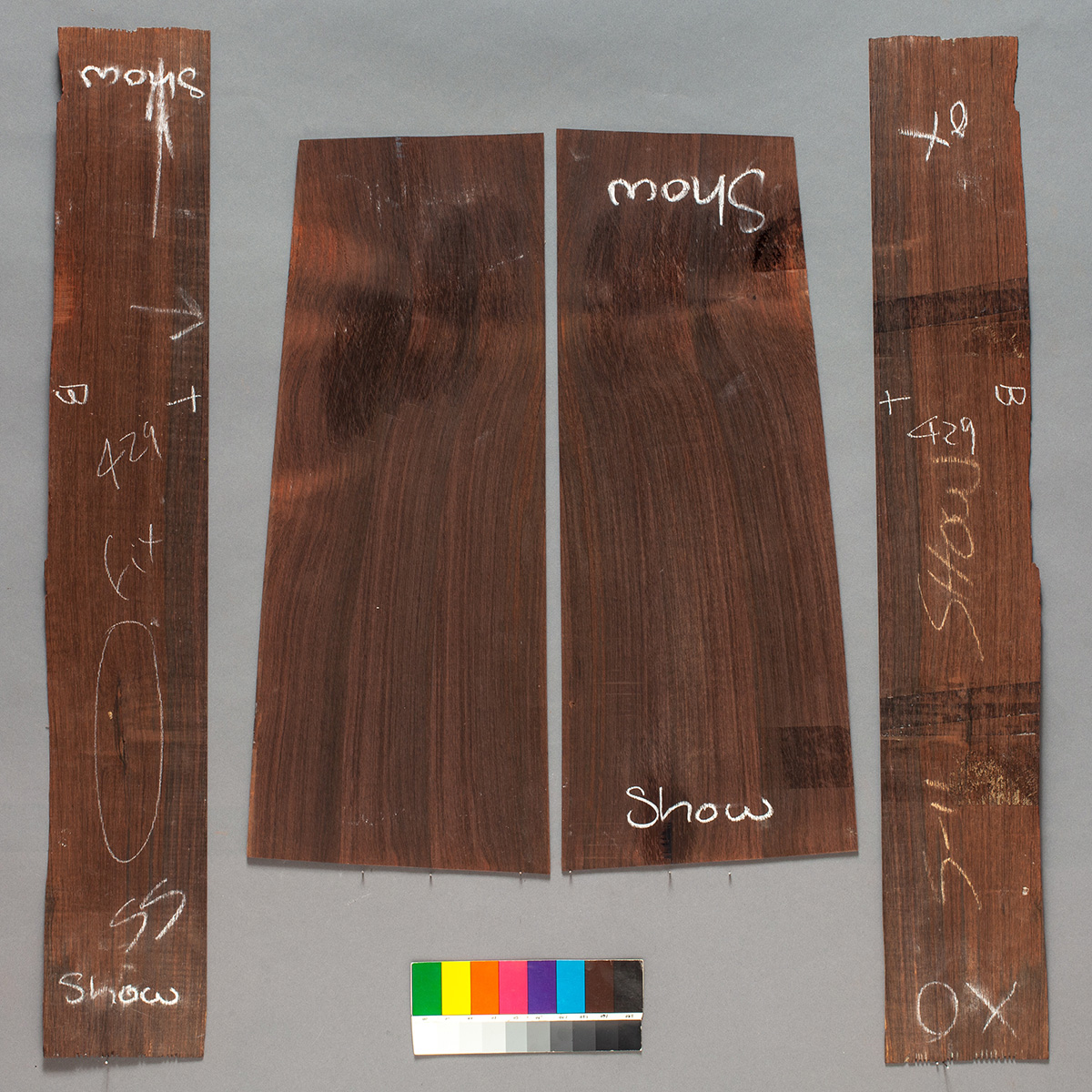
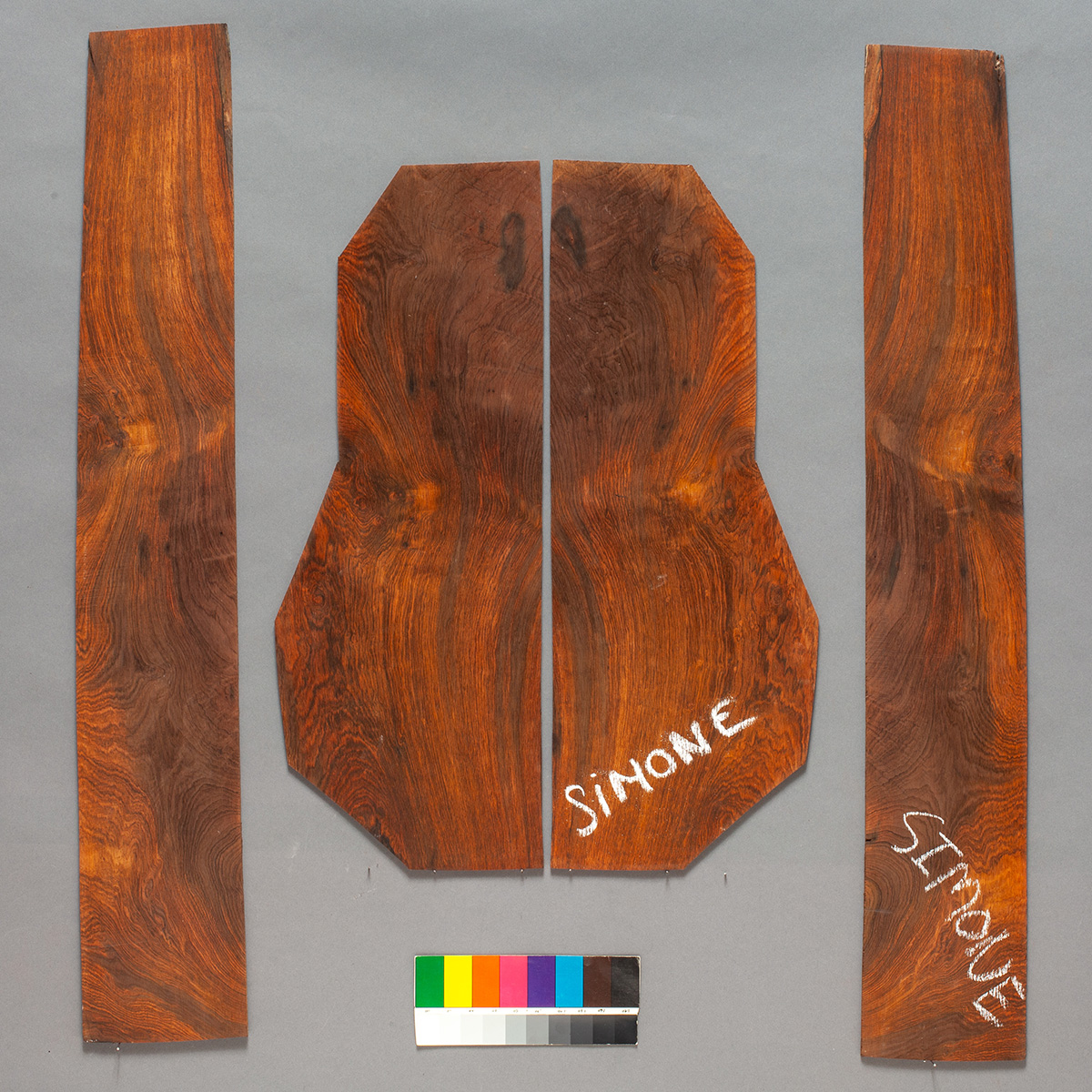
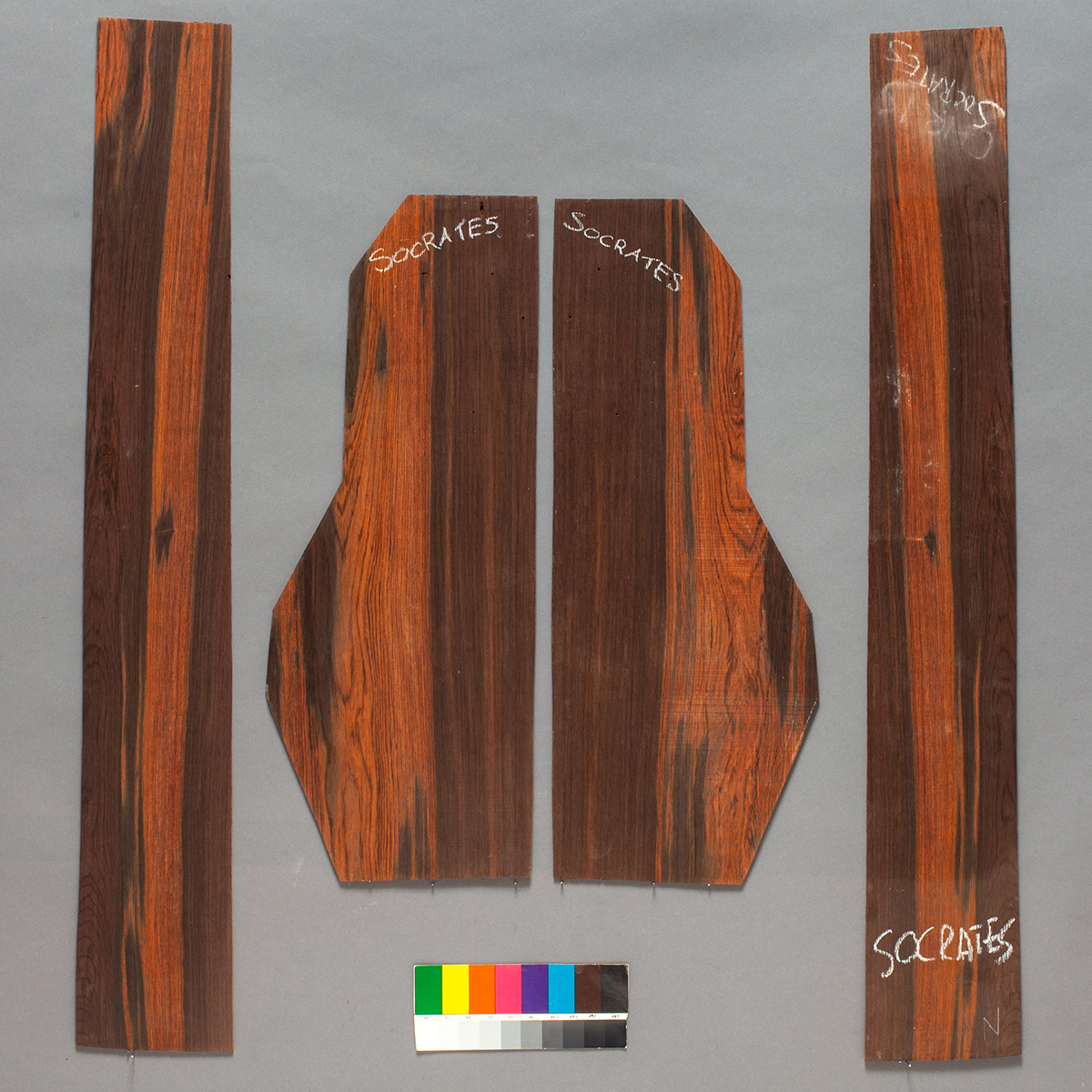
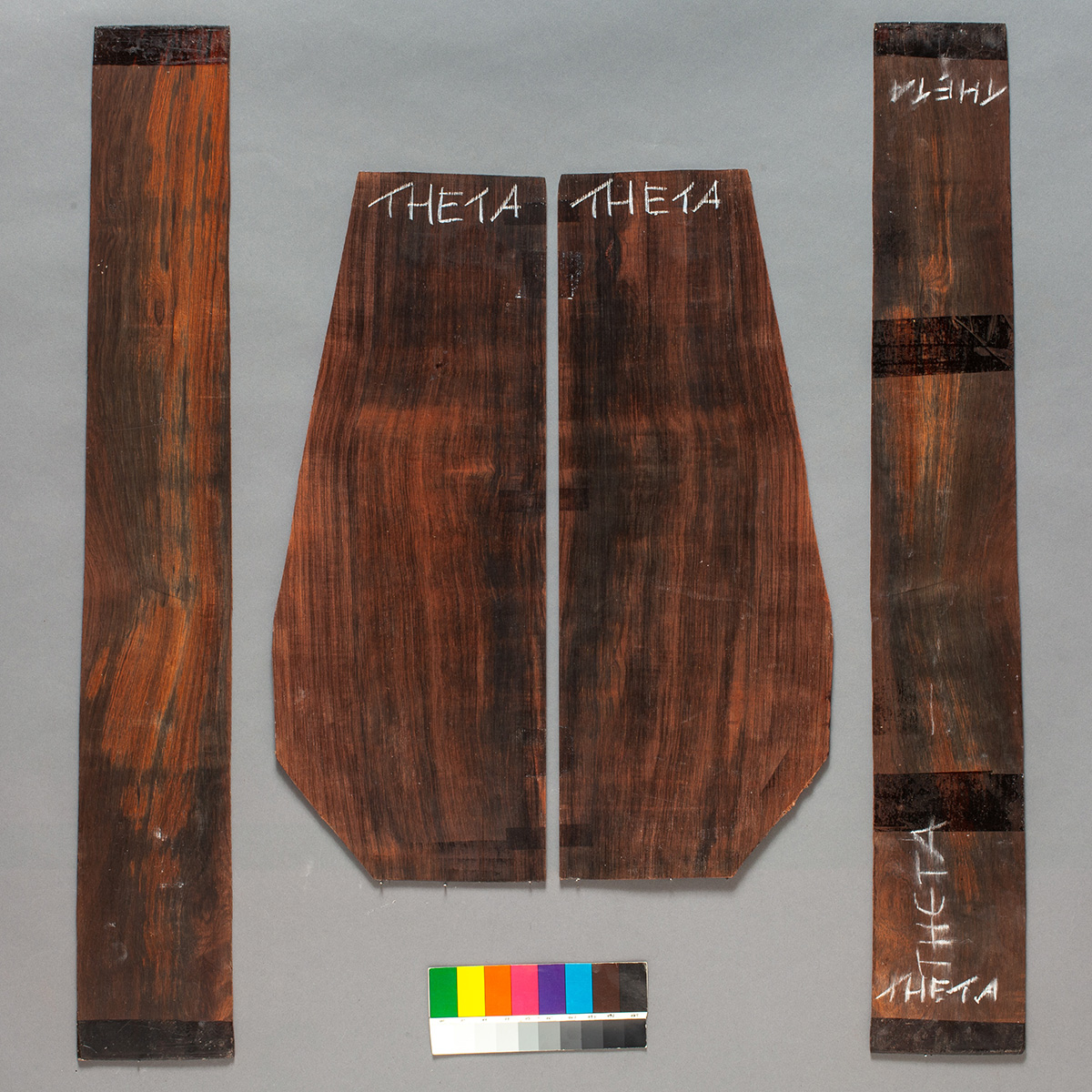
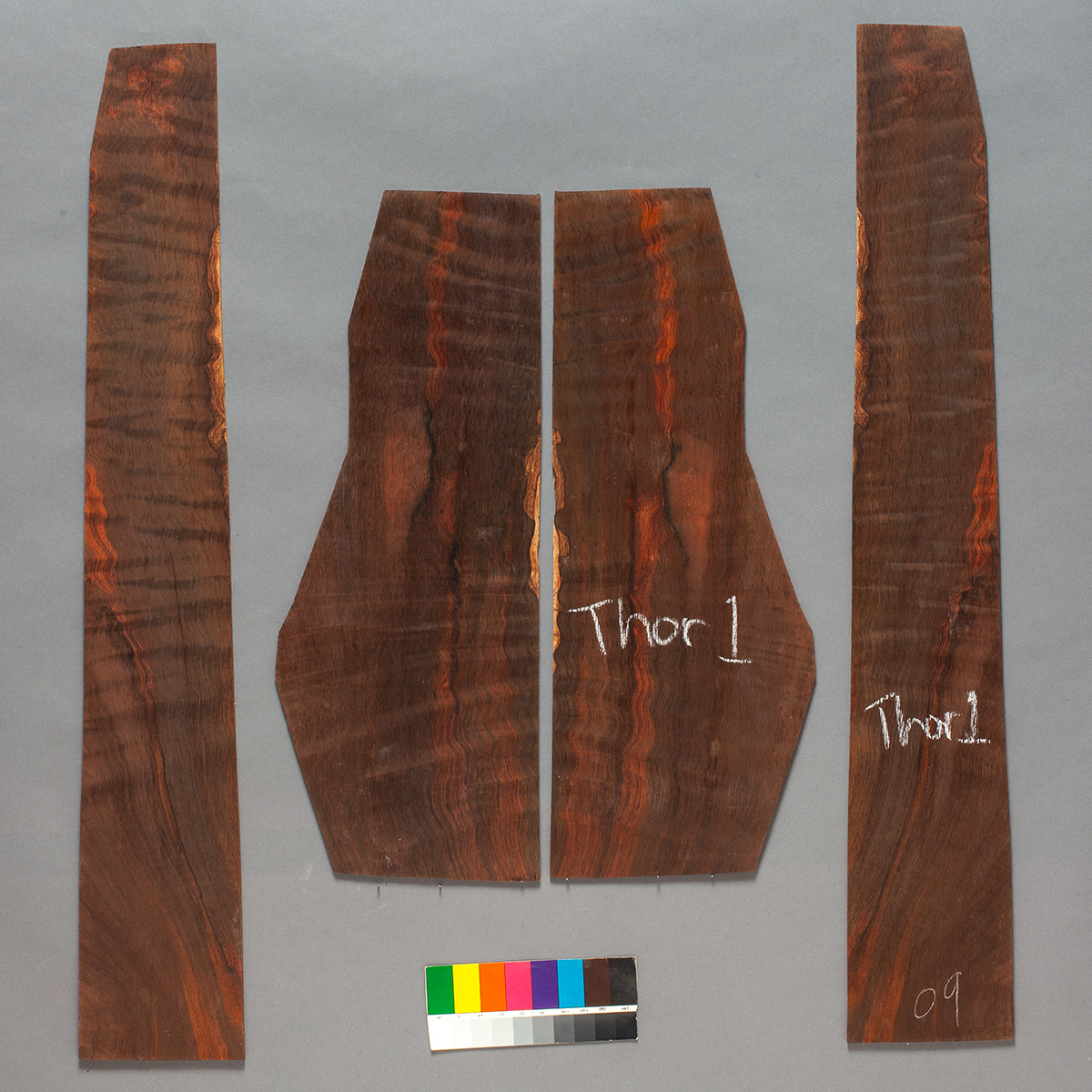
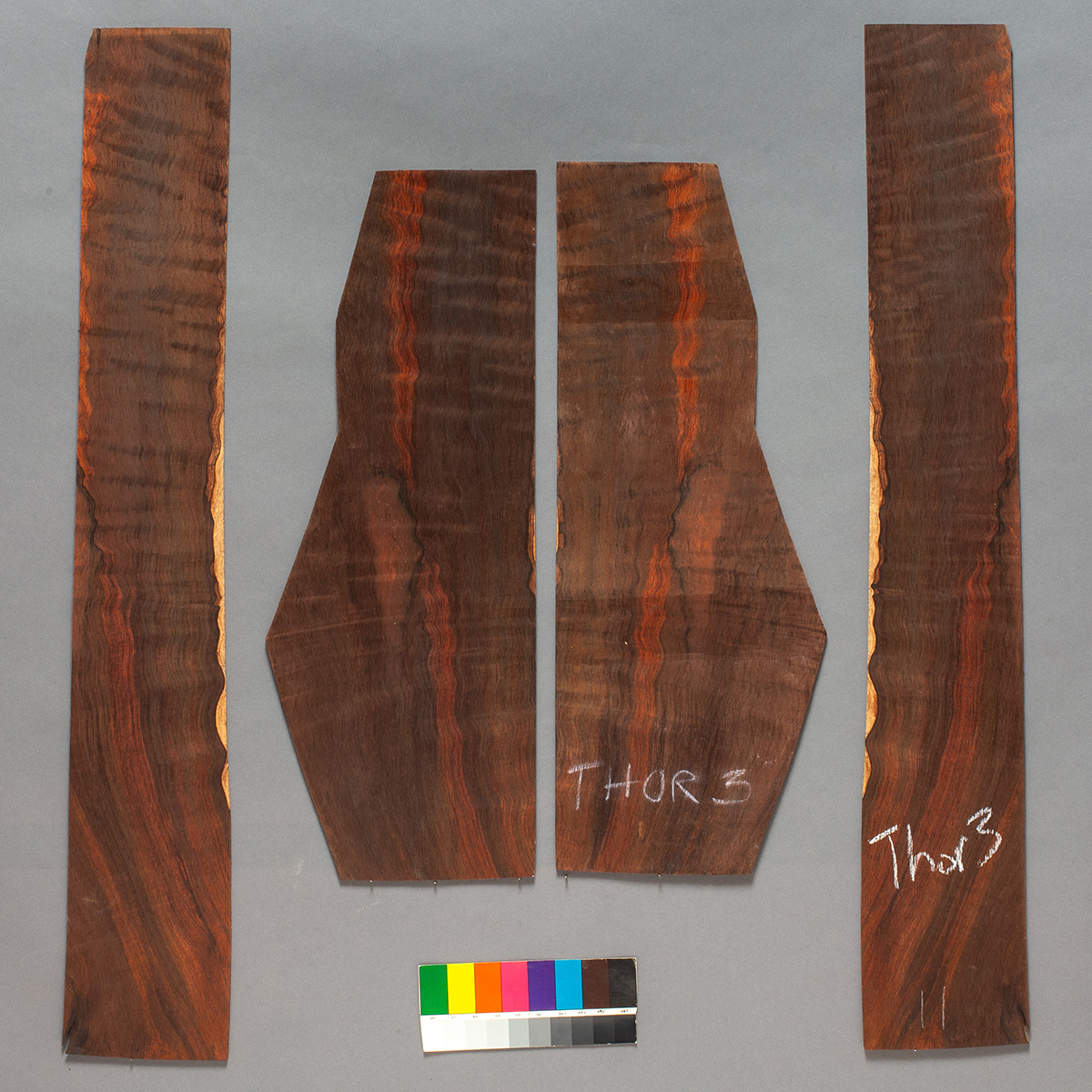
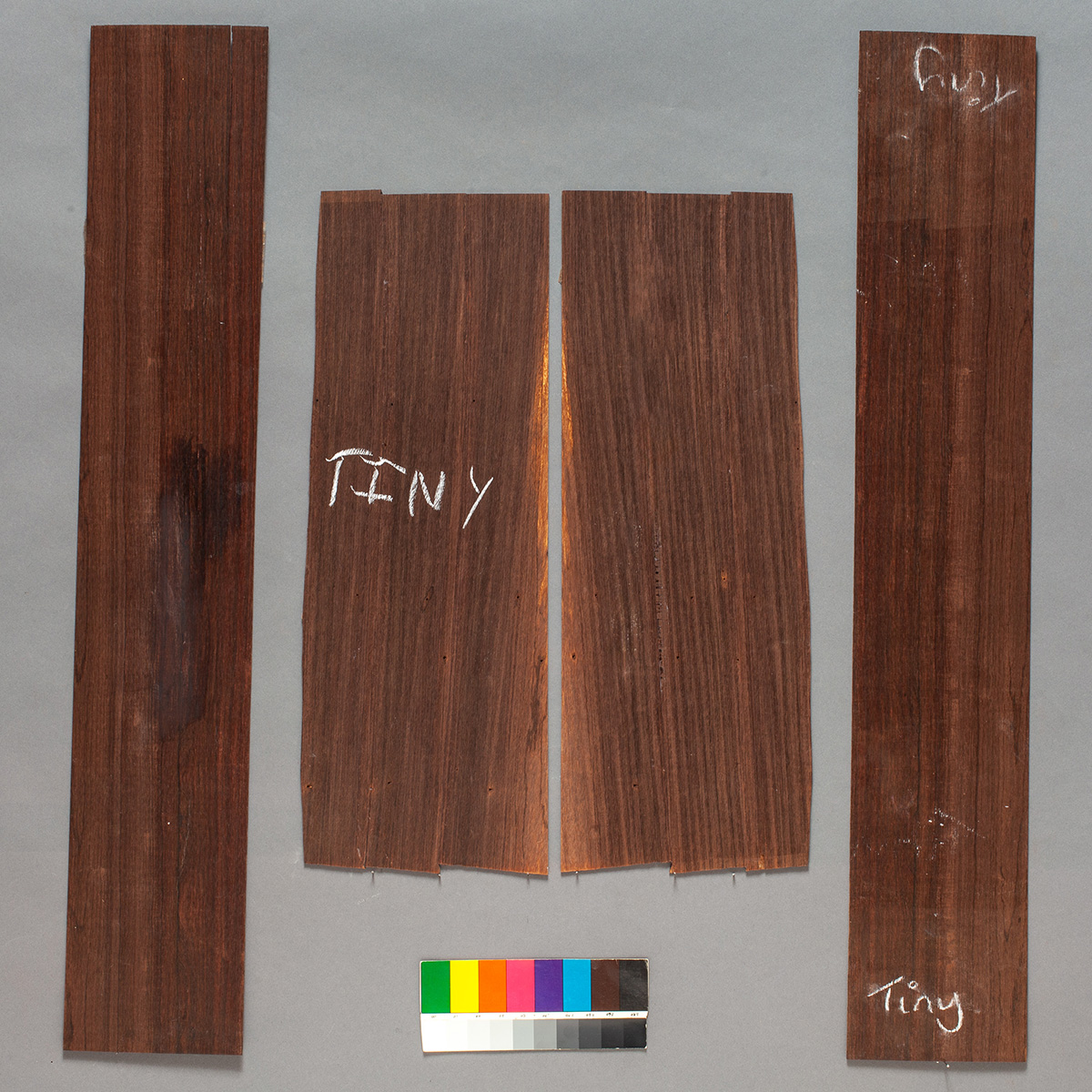
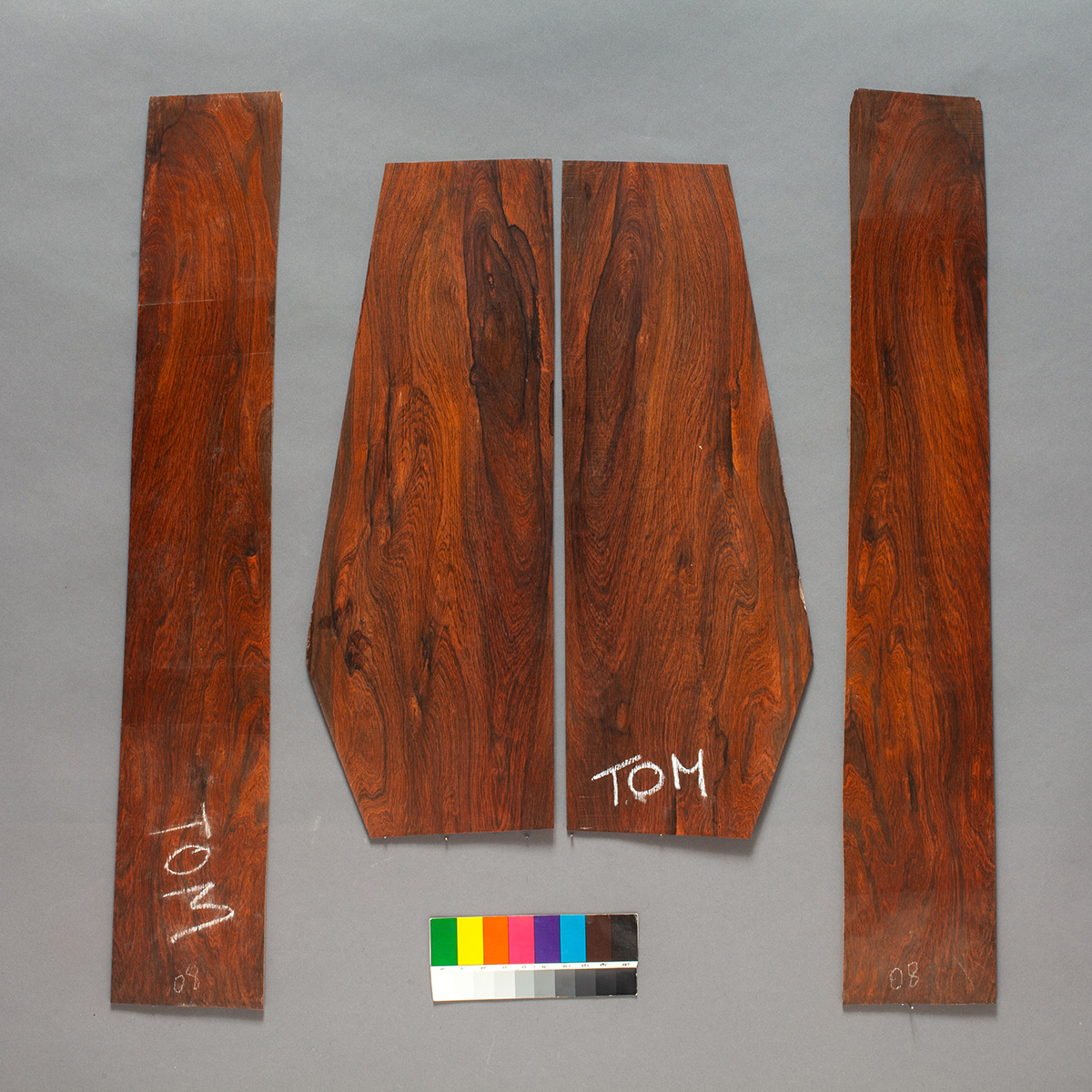
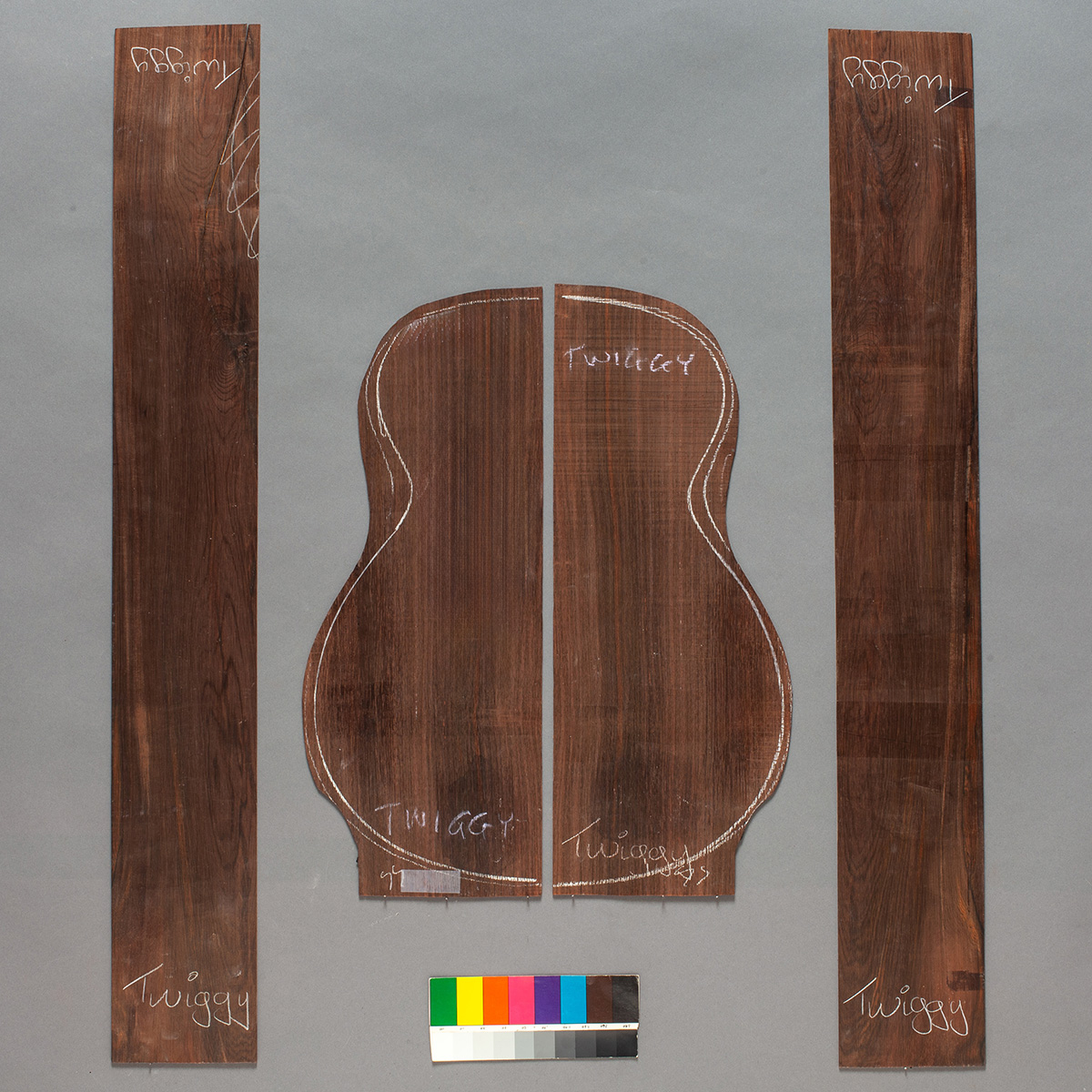
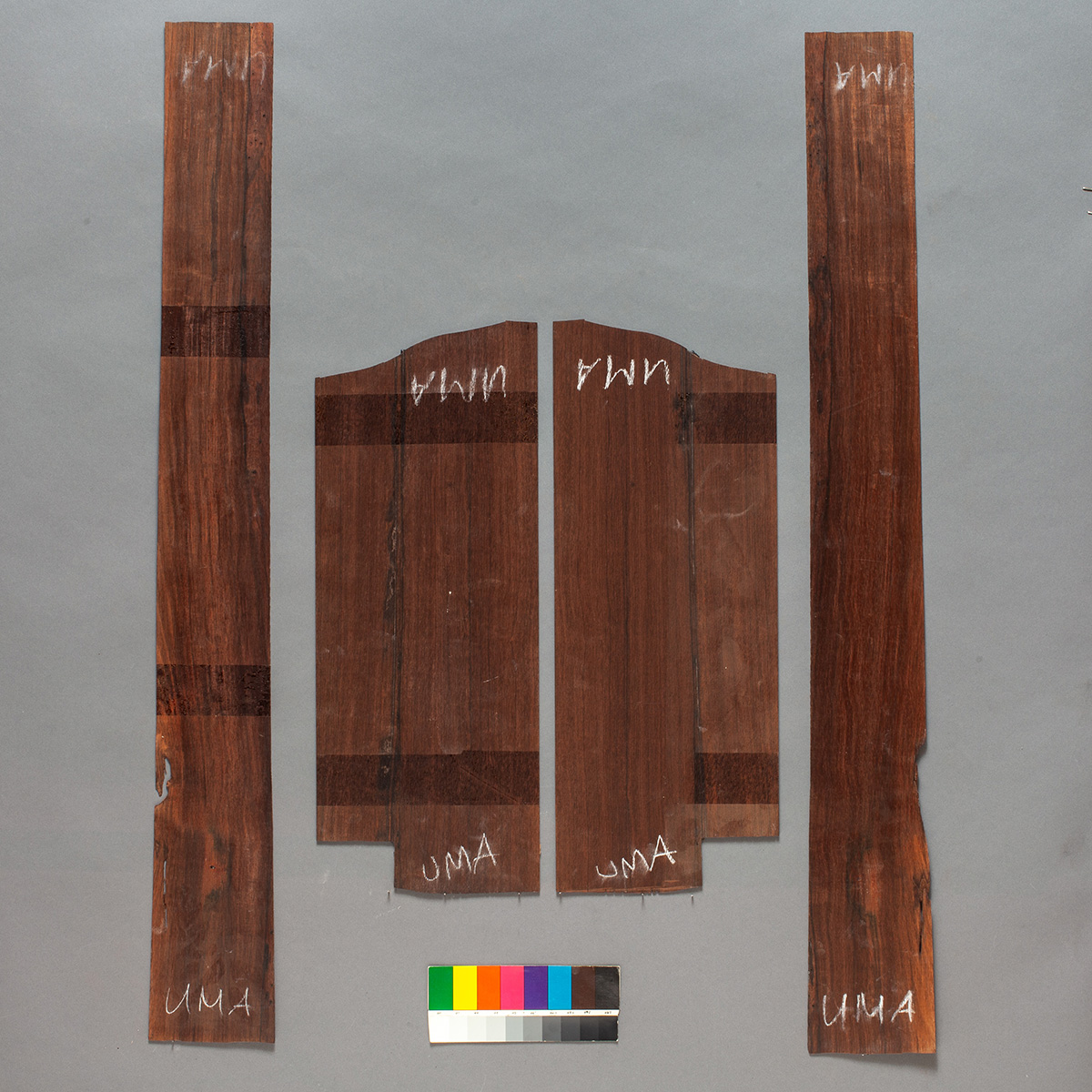
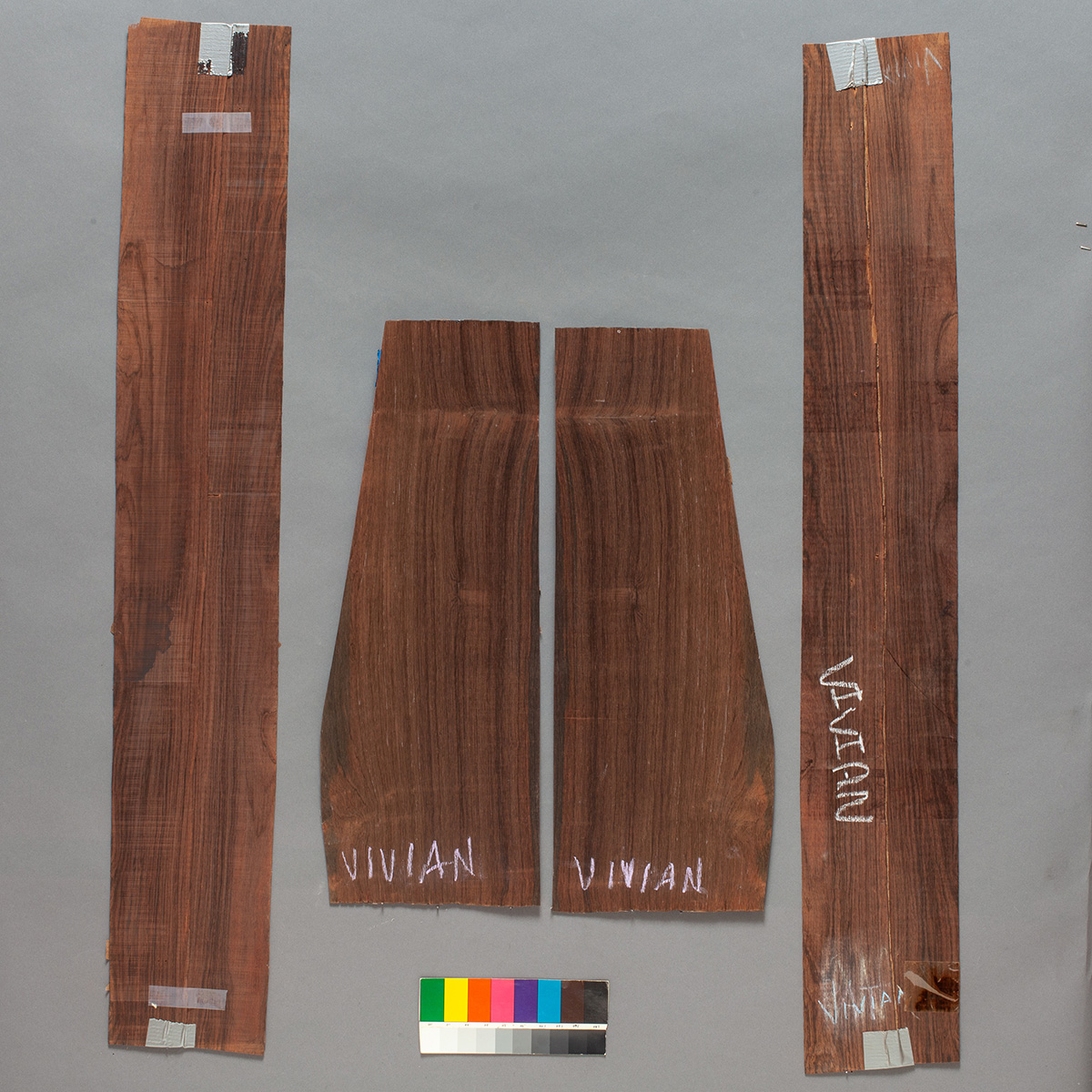
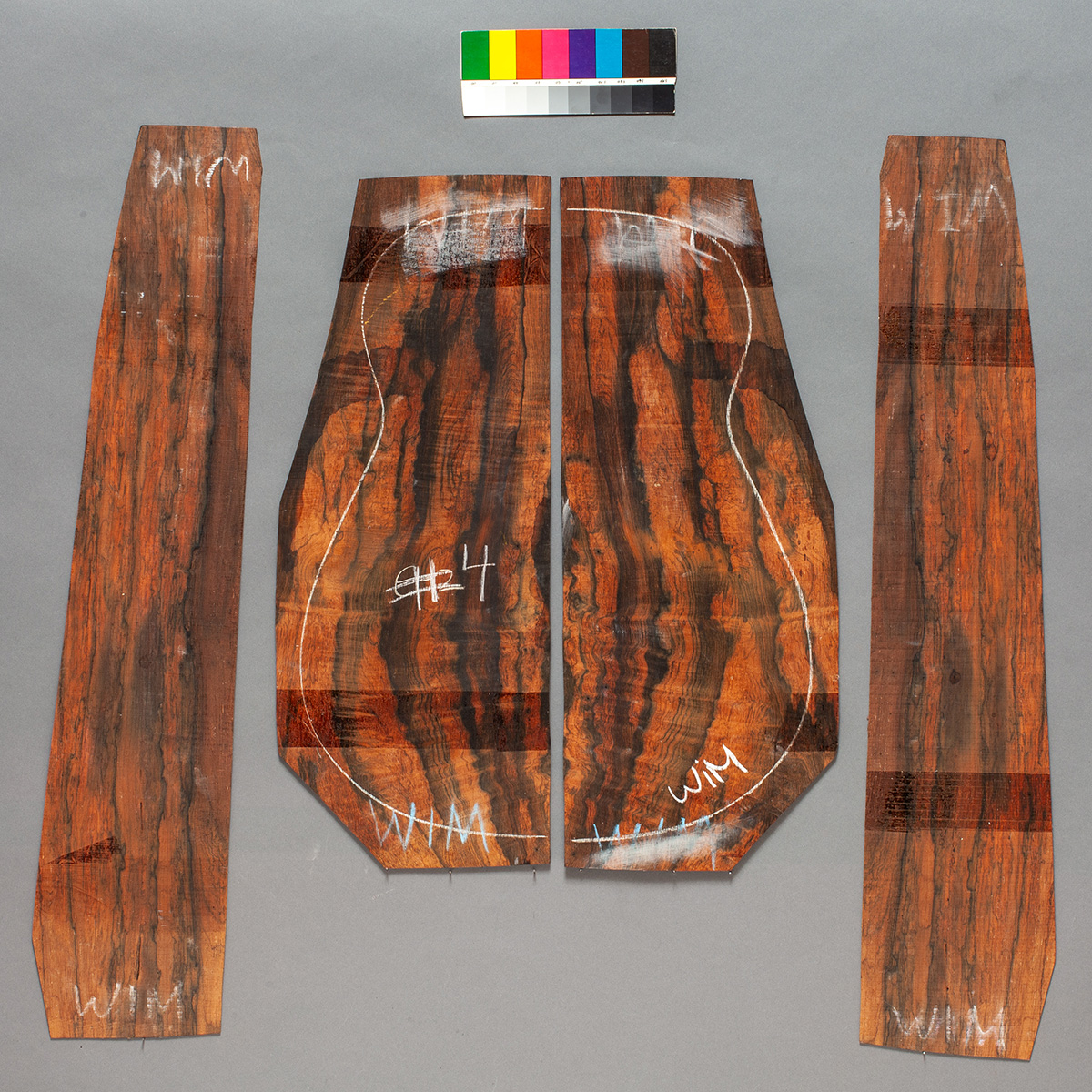
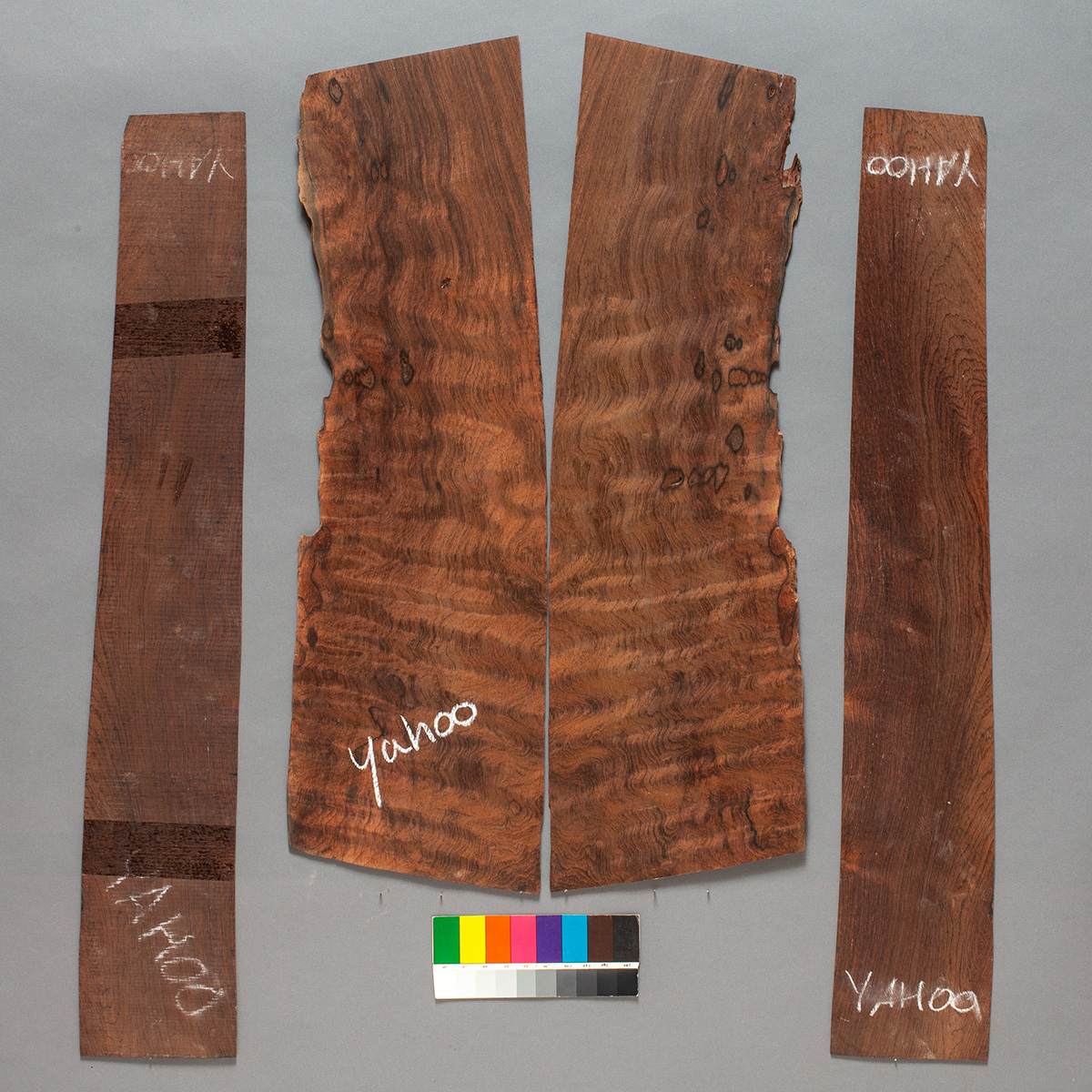
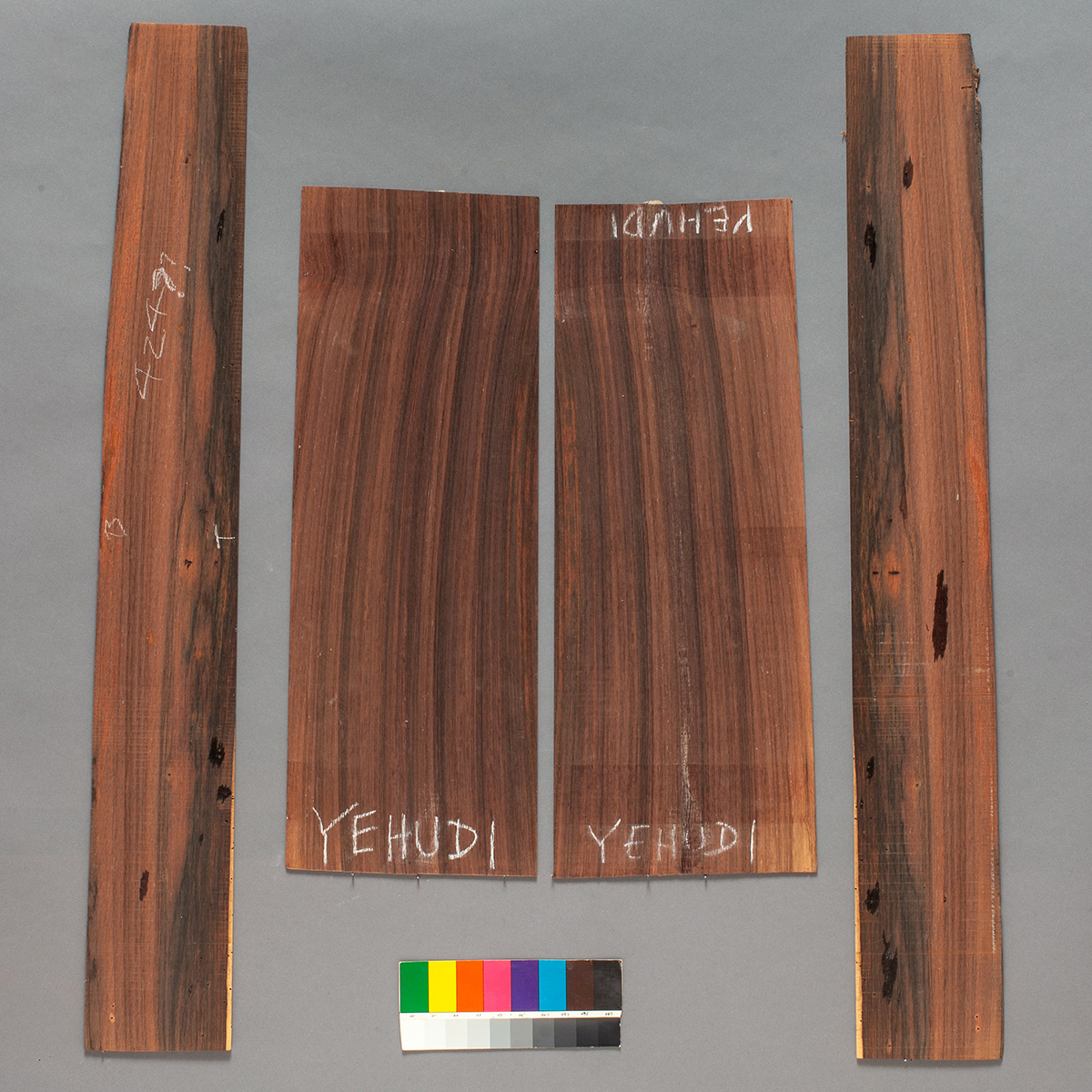
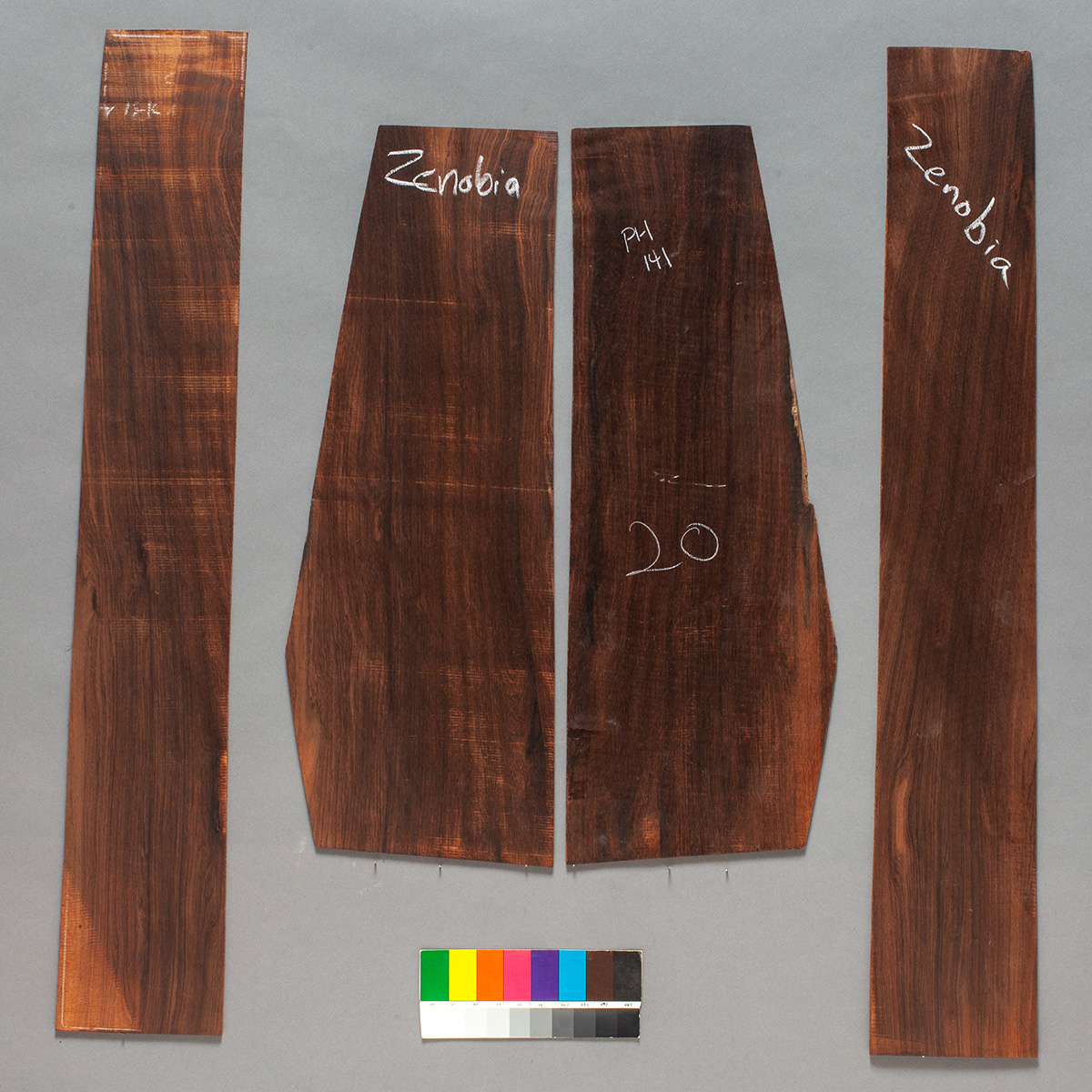
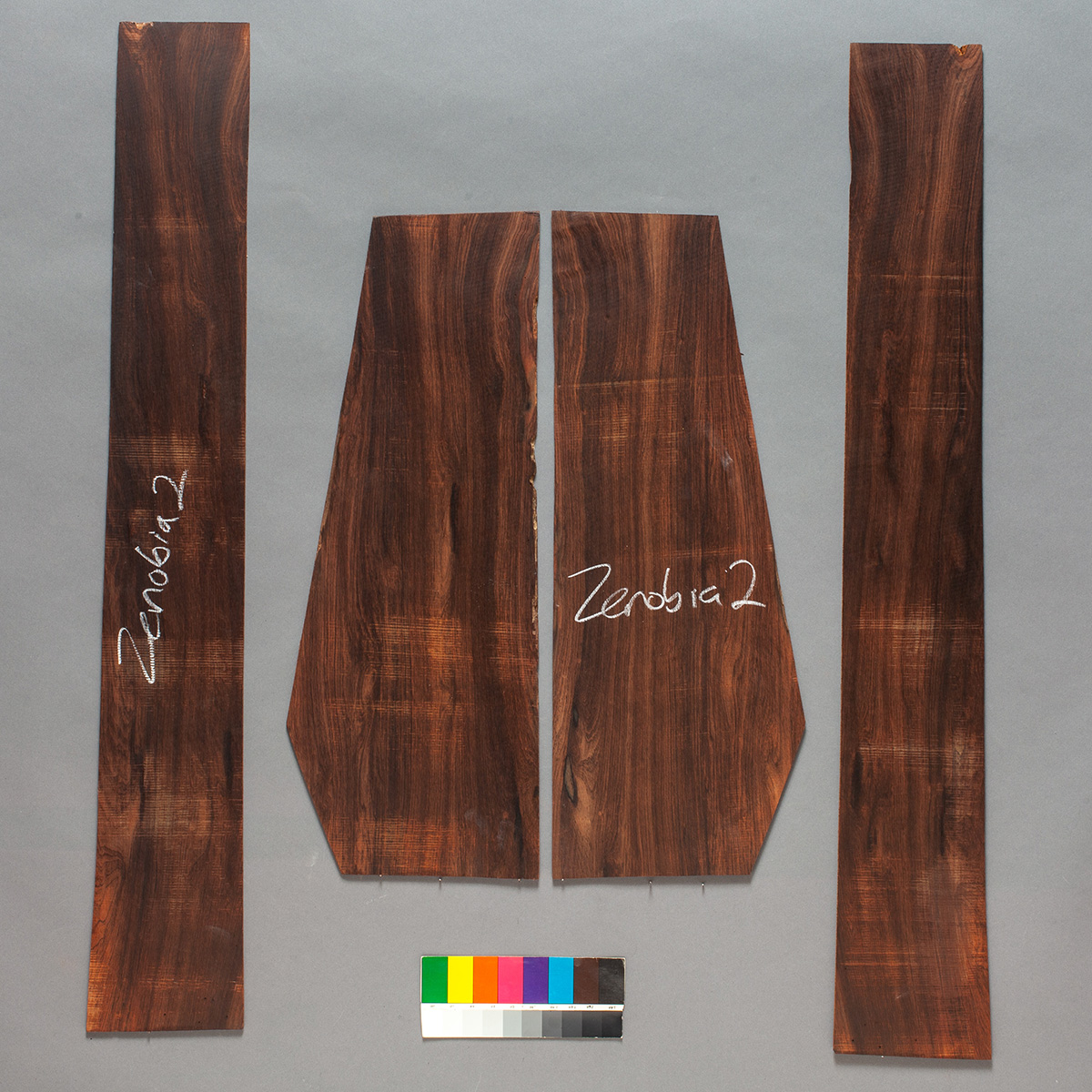
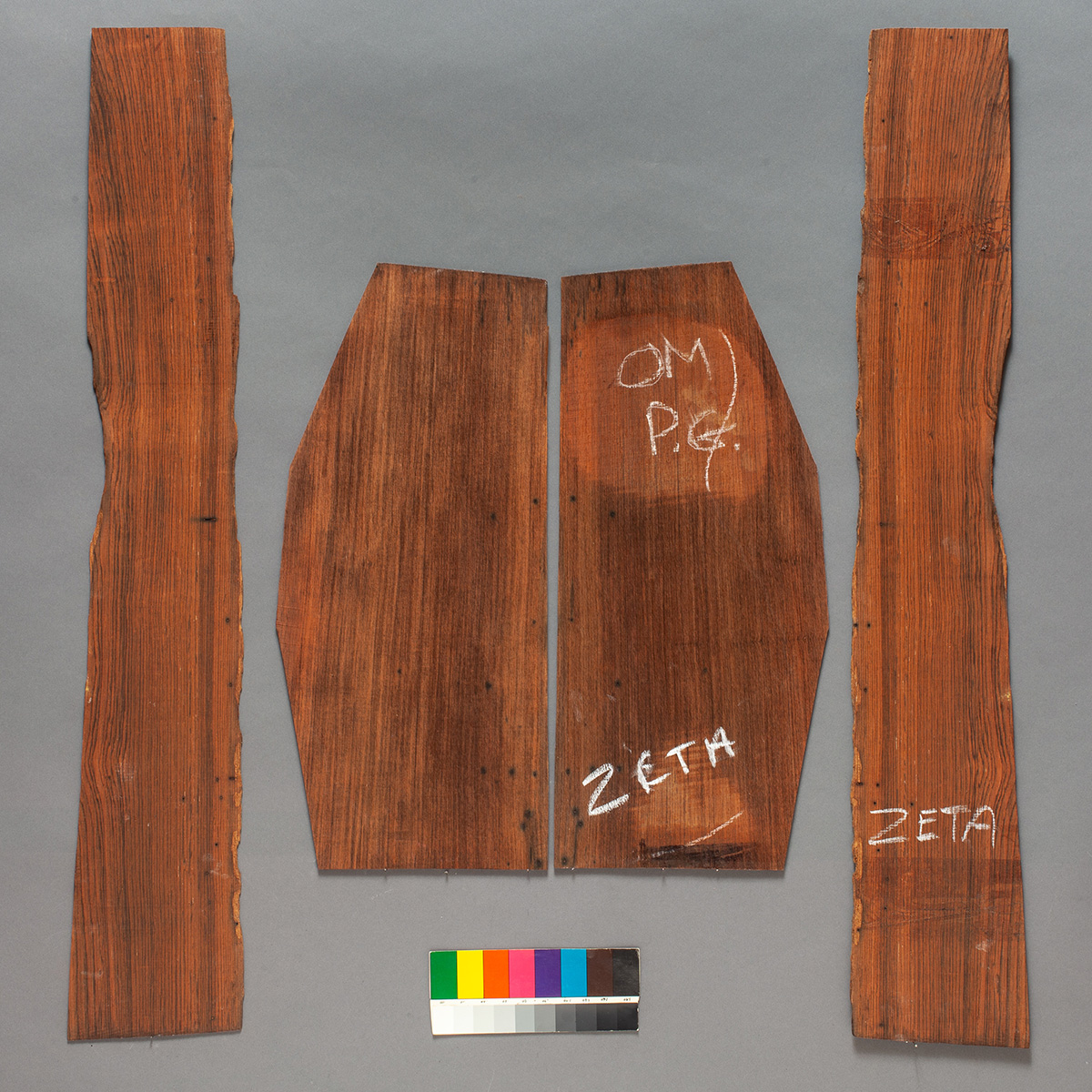
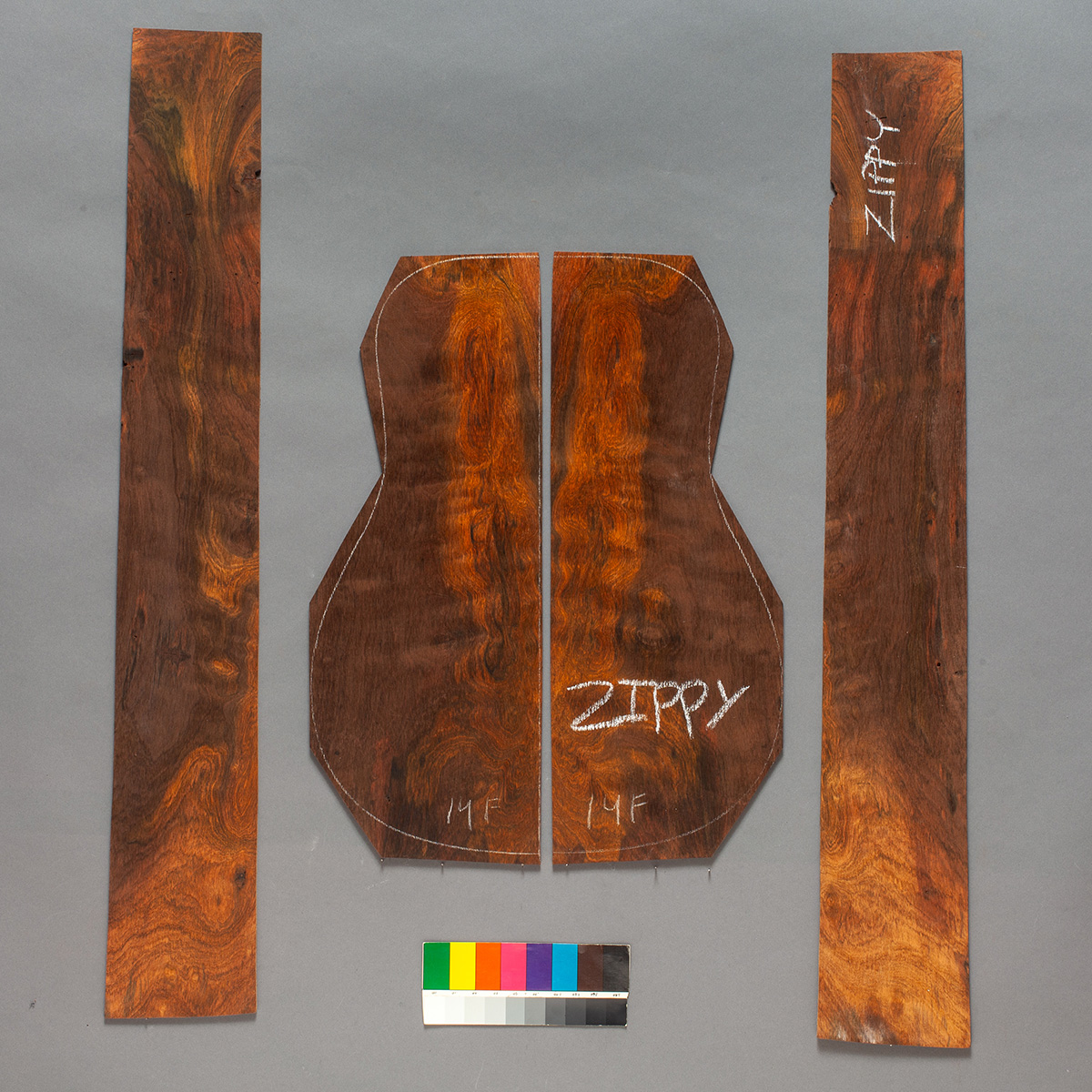
The second thing is that it’s in quite good condition; I hand-picked every piece of it over the years. The selections include everything from straight-grained to wildly crazy and figured and colorful, and I consider these to be very attractive. Some of these woods have been lying around for decades and have gotten oxidized from it. What that means is that when these darkened pieces get sanded down their natural color returns. I have single sets, and a few matching-twin sets, and a matching triple-set. Just look at the photos below. At one point MacBeath Hardwoods was selling Brazilian Rosewood in planks that were 4″ wide; I bought some of the straight-grained ones and carefully made some 4-piece backs out of them, each half being 8″ wide. Some of the joints are barely visible; others aren’t.
And the third thing is that without Cites certification I can only ship to addresses within the U.S.; if someone wanted to by some of these and lived outside the American borders, they’d probably have to come get them or send someone to pick up these woods and carry them back to their home. But they’d be happy with their purchase. Either way, the prices do not include shipping costs.
And the fourth thing is that most of these sets are as I bought them. A few of them have cracks that I’ve fixed. And some of them are sanded down to the thickness that I use my woods at. They are thinner than most people make theirs, but what I do gives better results. If you want to know why, then please read my books.
AND HERE ARE THOSE IMAGES:













Reach out if you are interested in purchase.