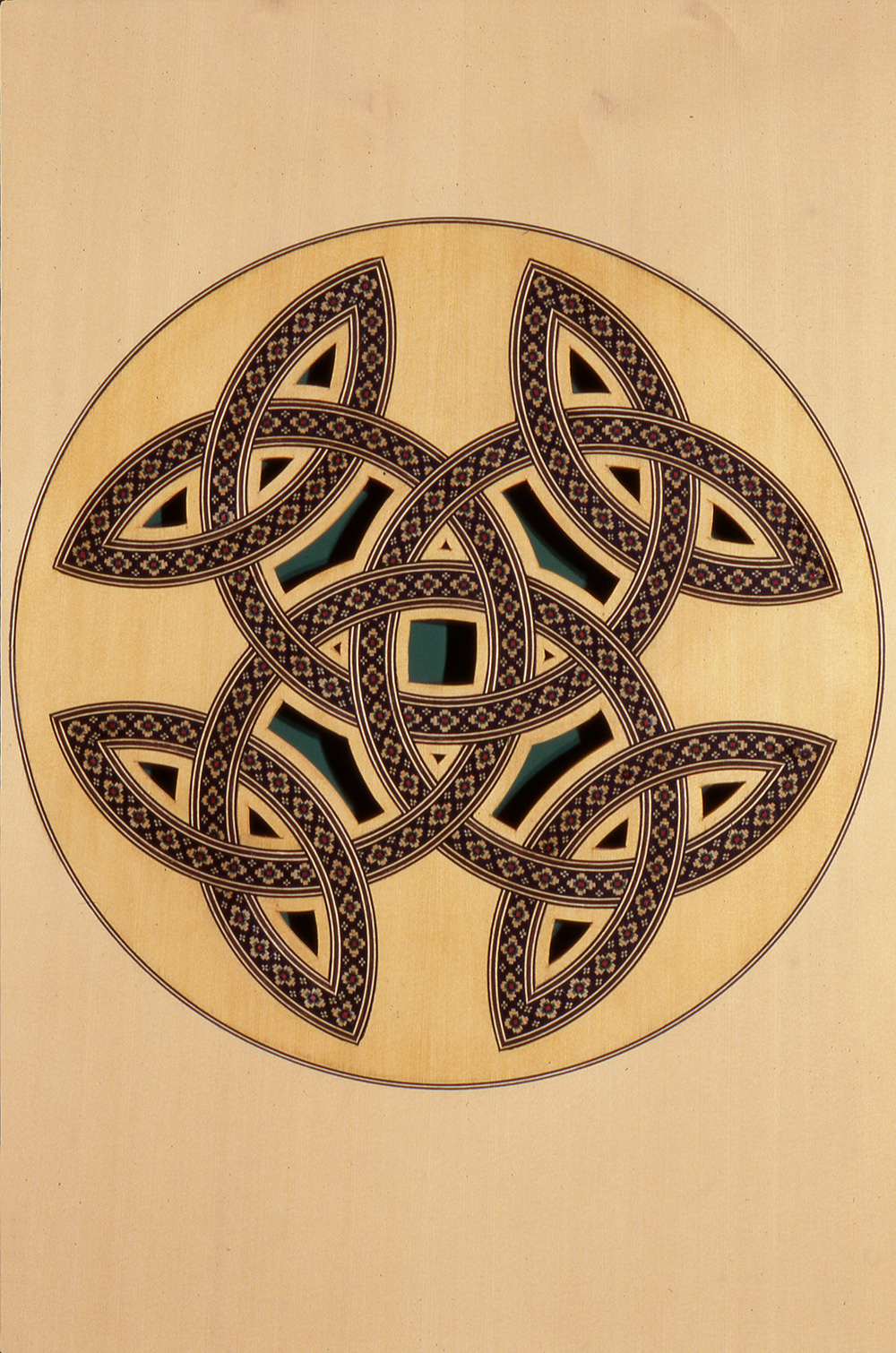
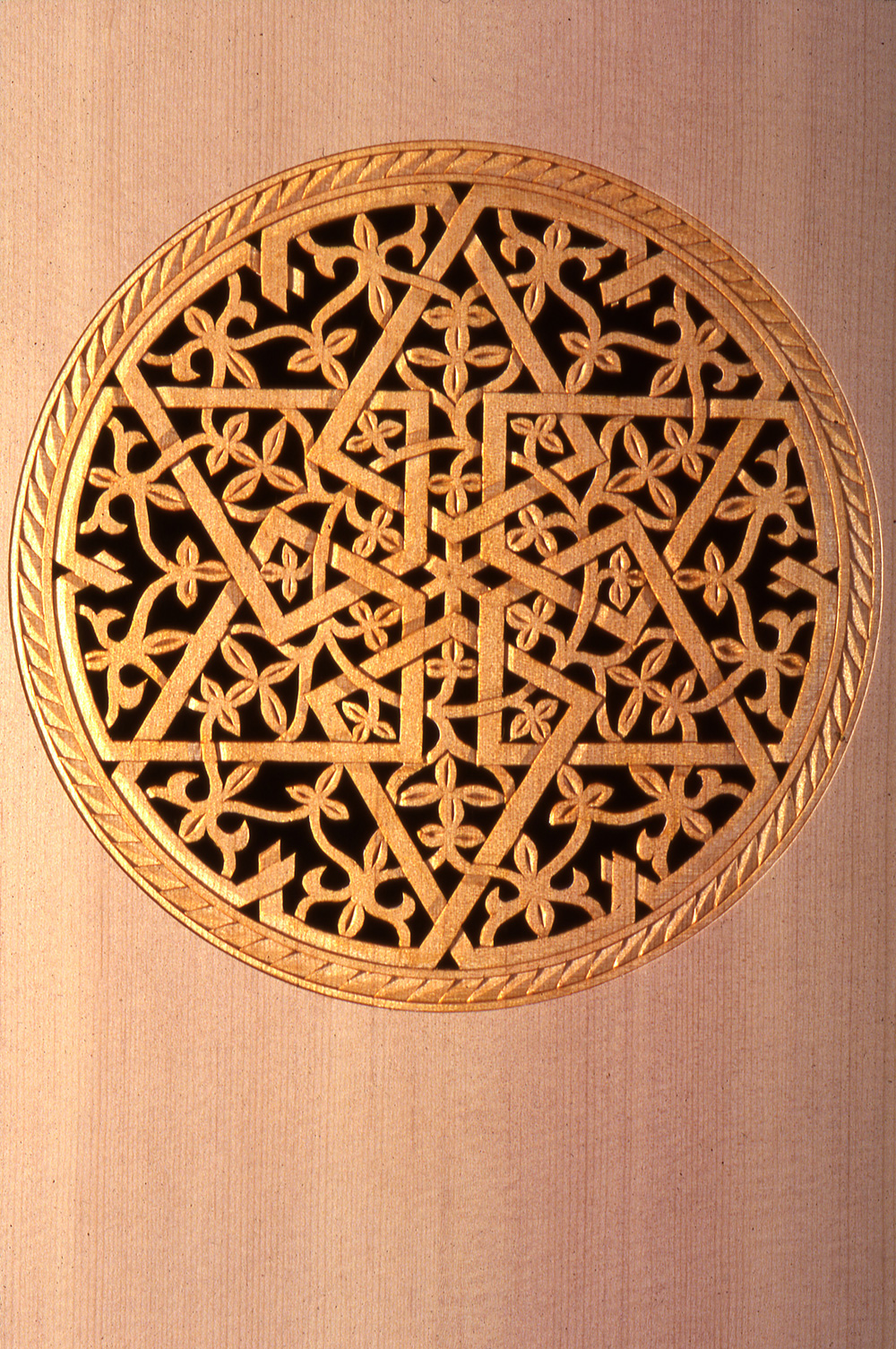
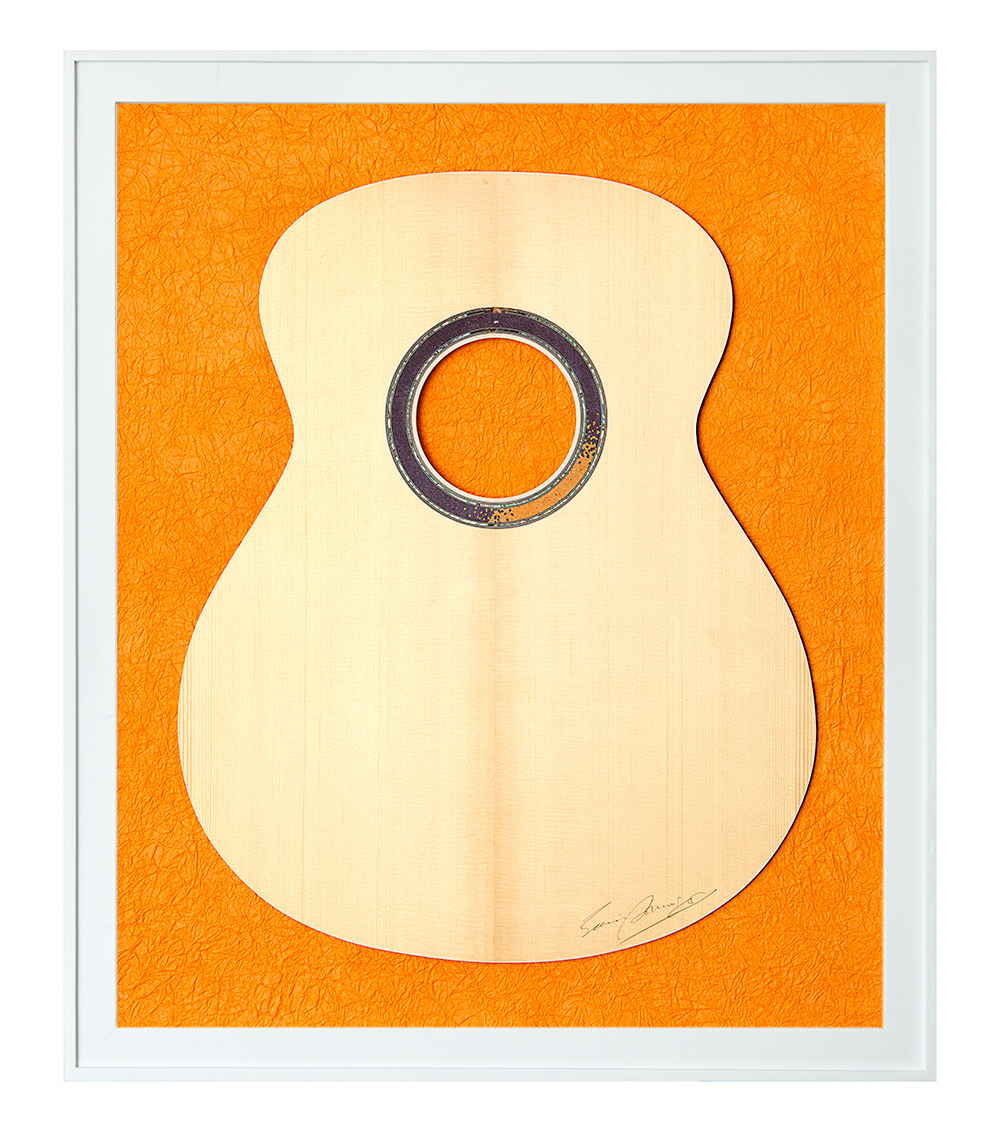
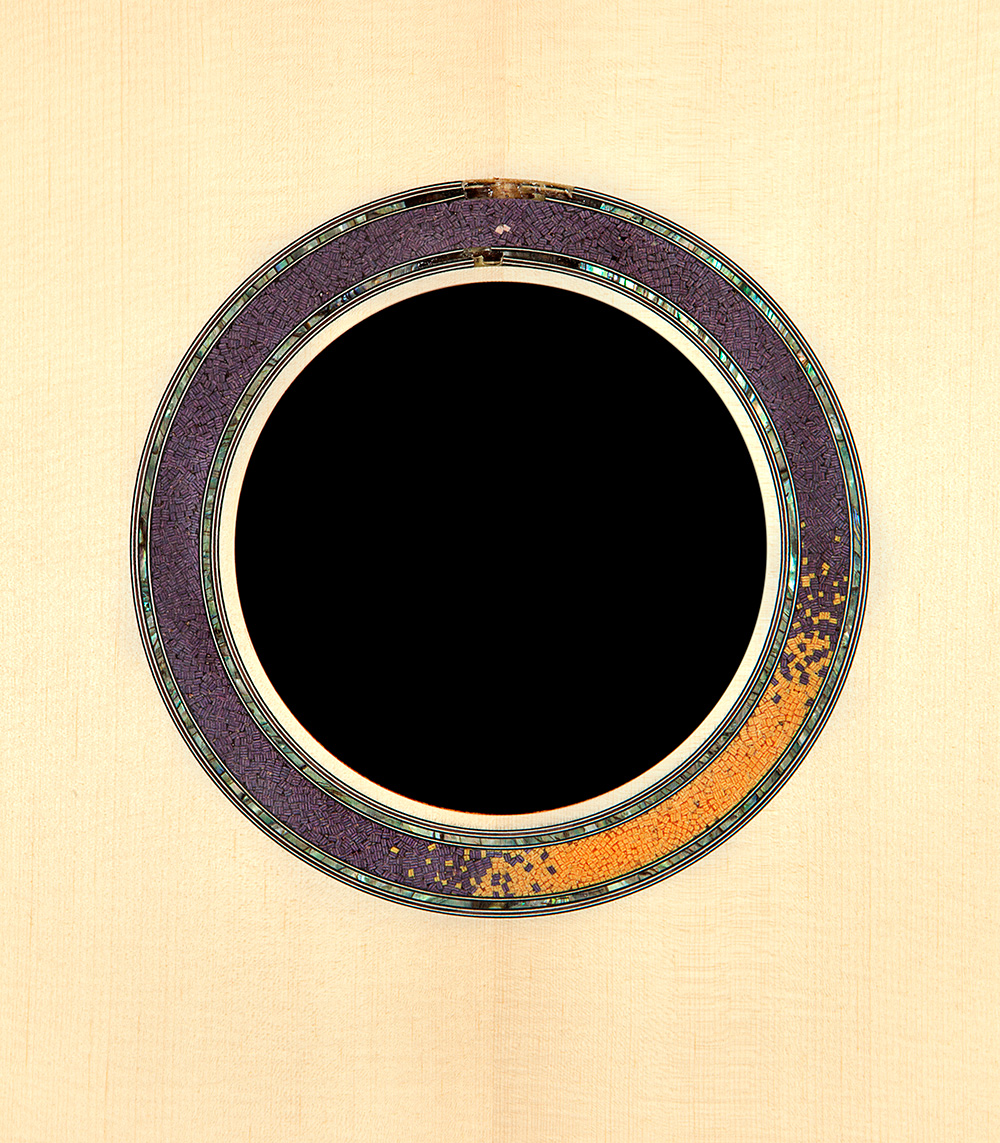
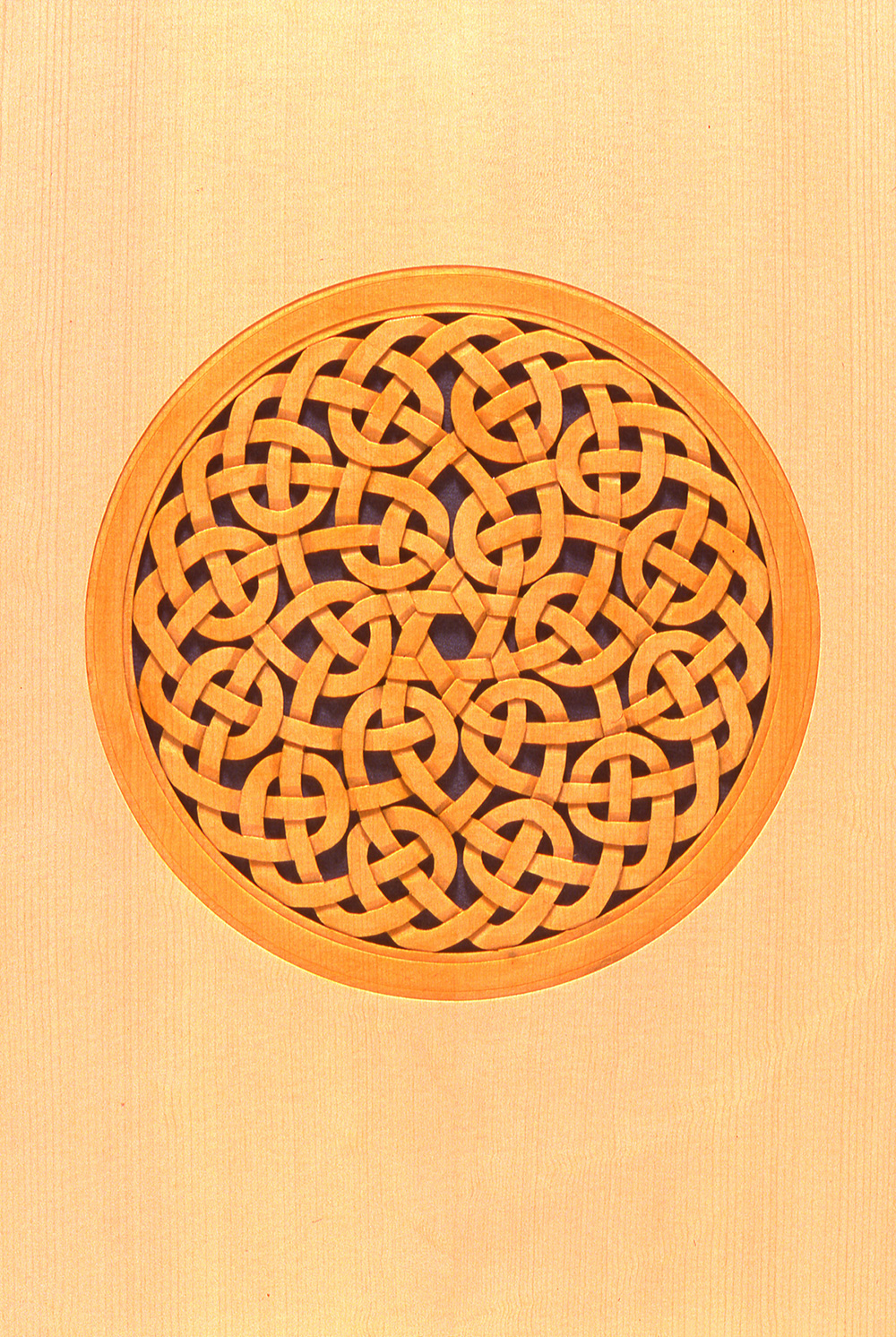
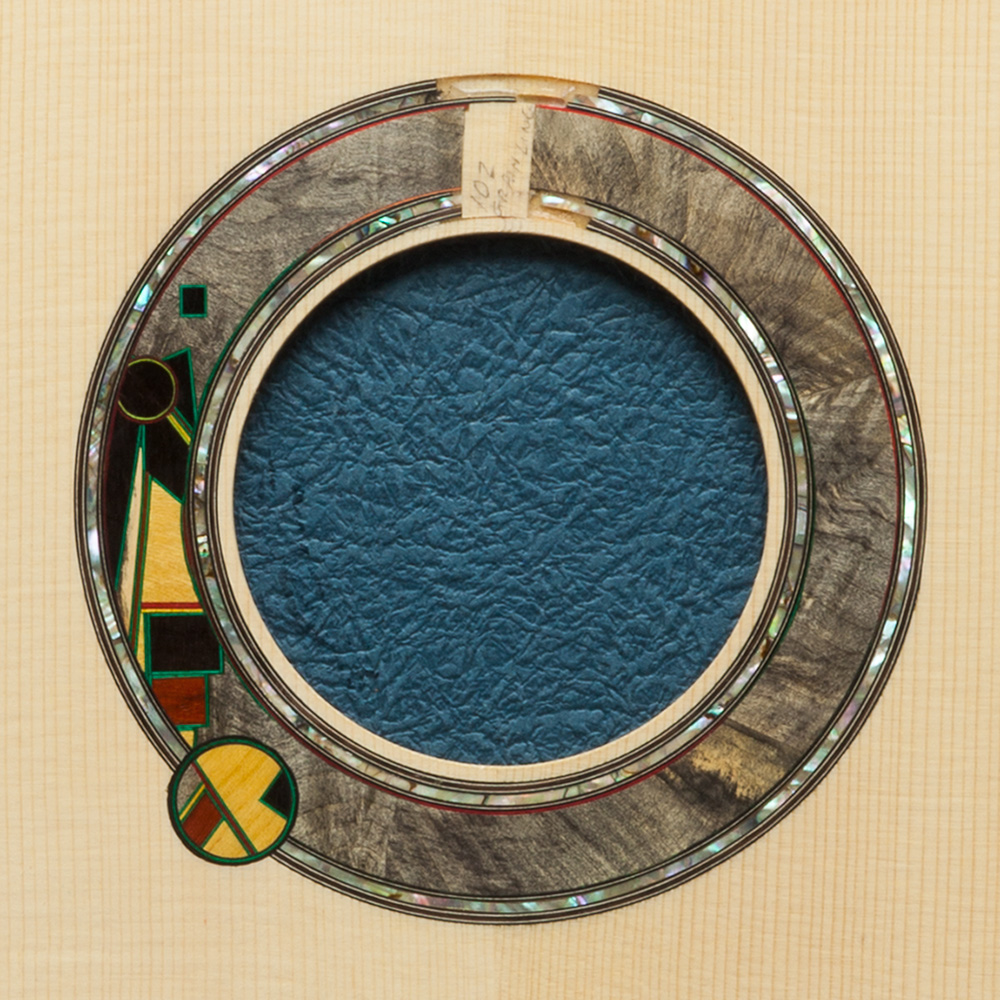
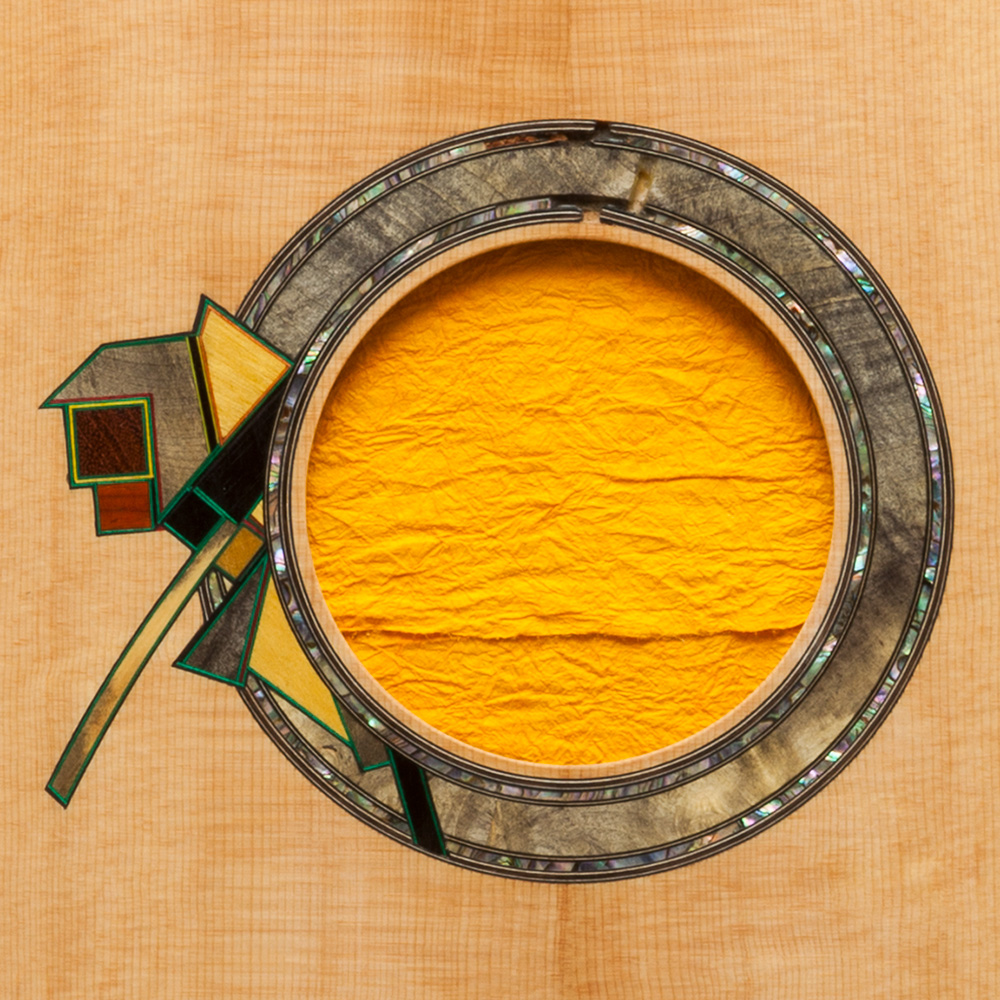
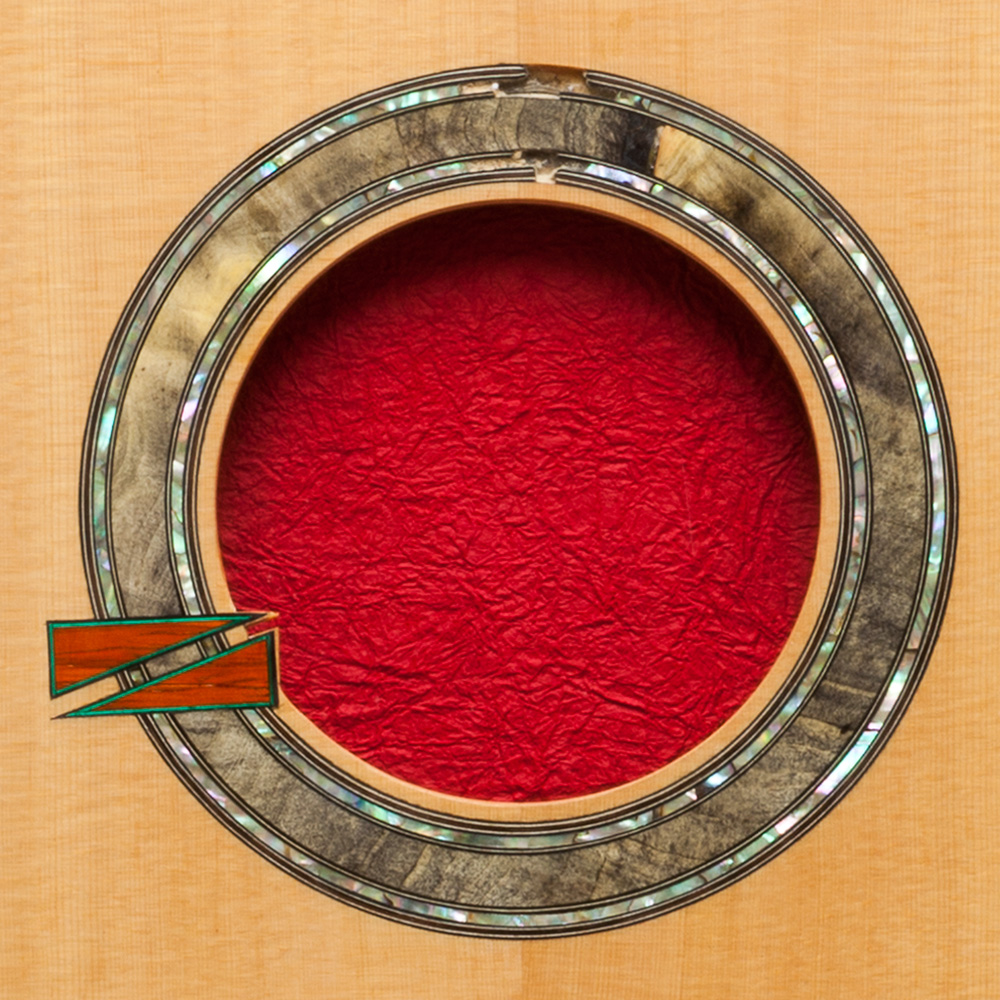
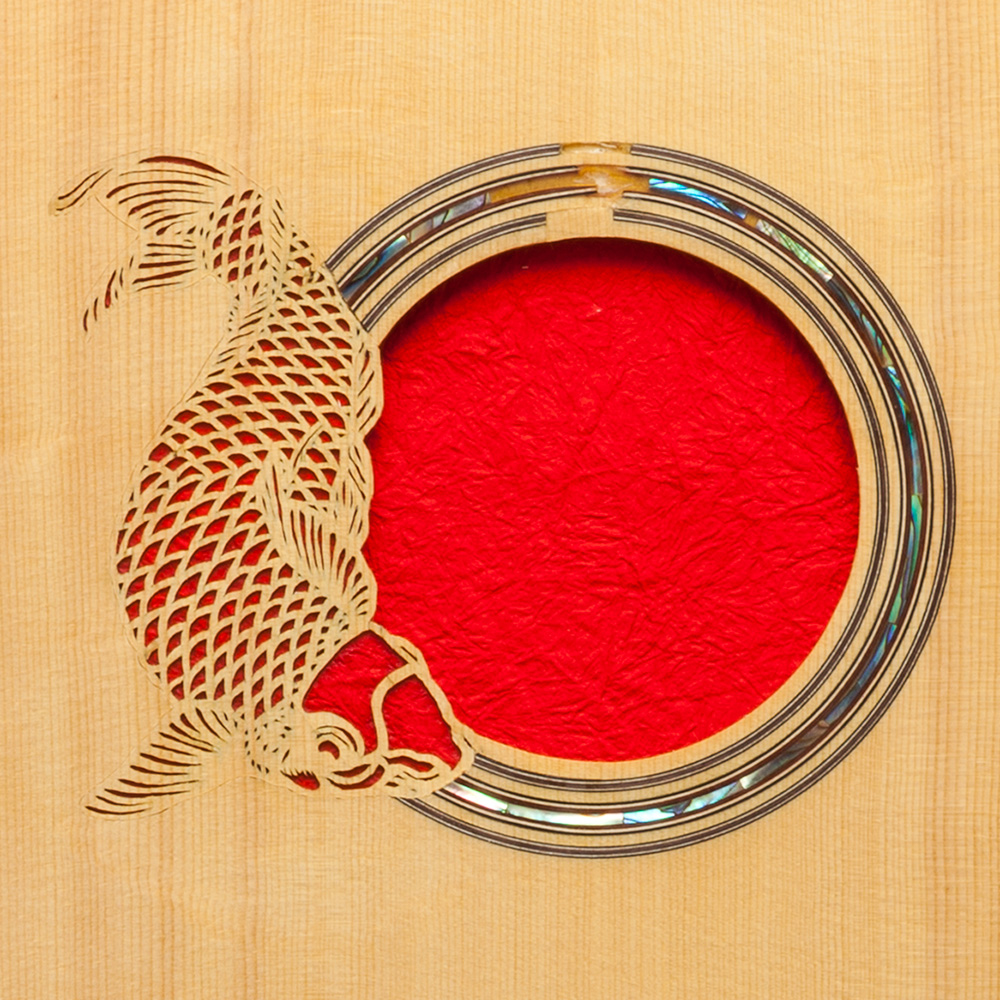
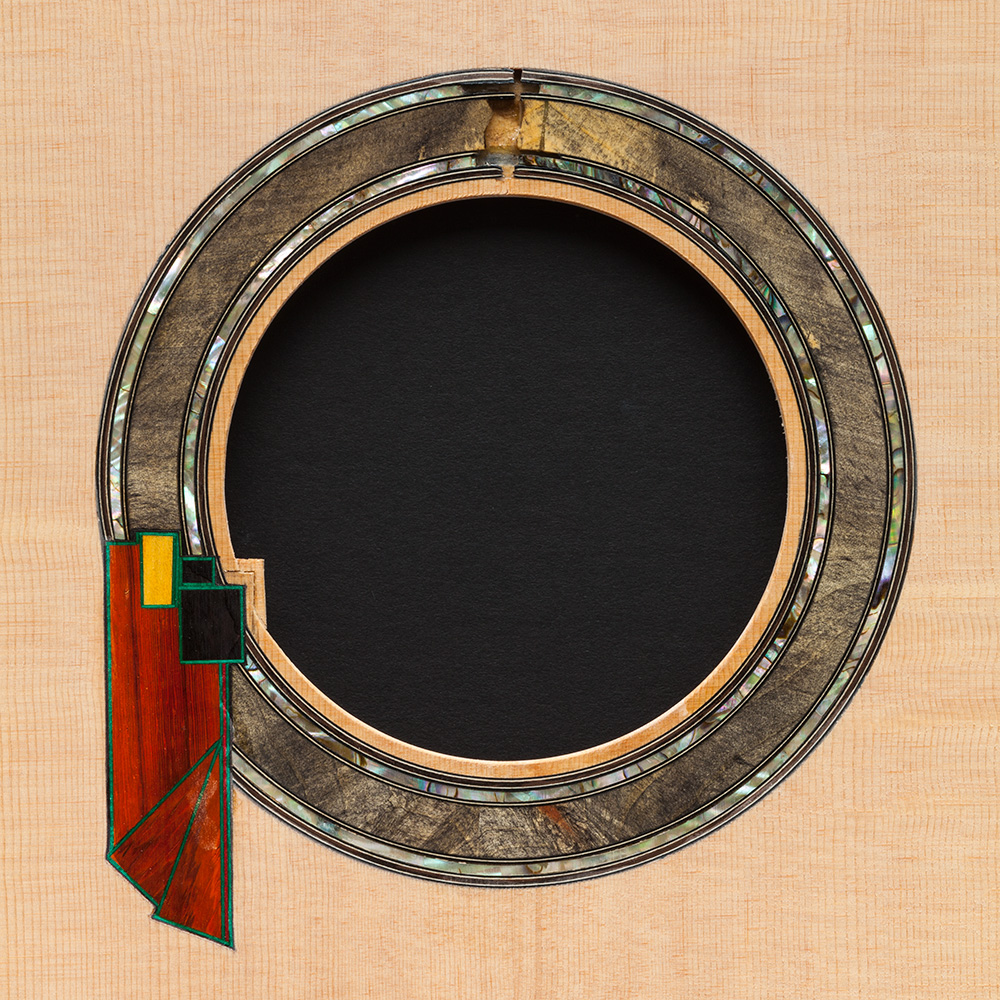
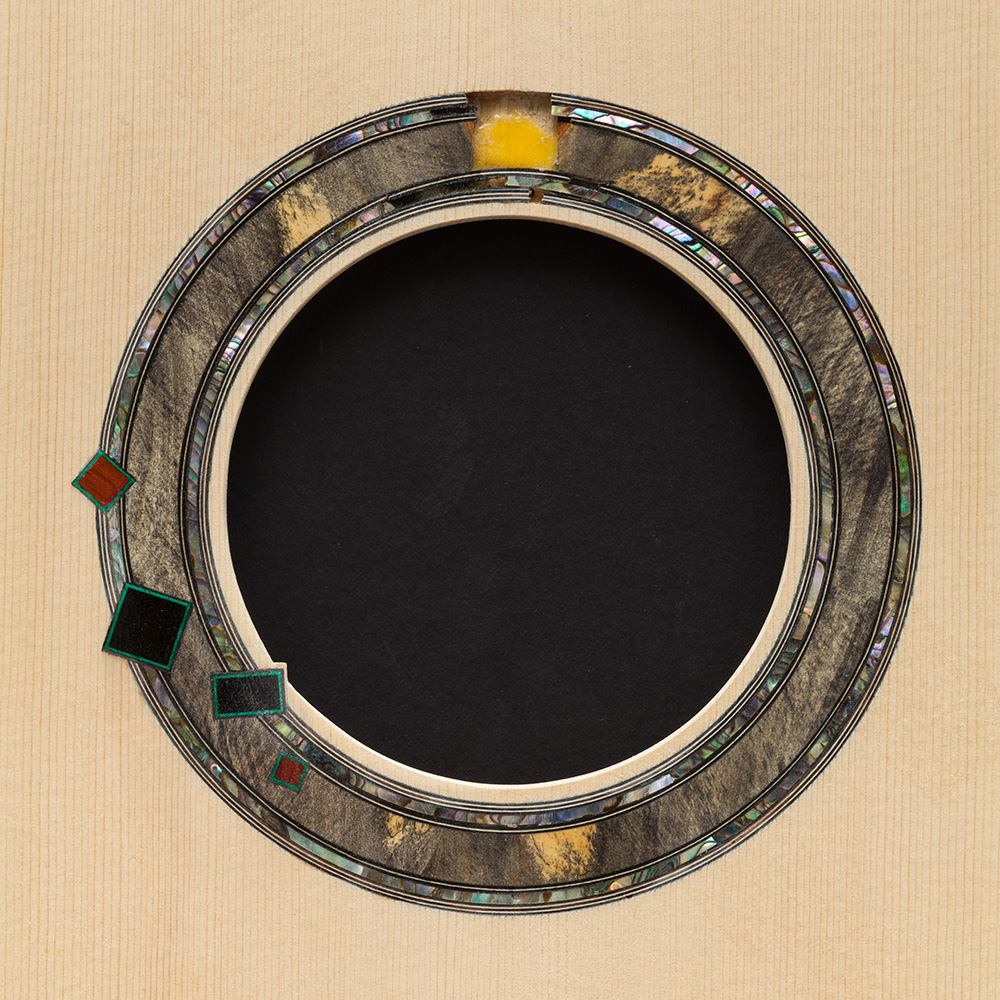
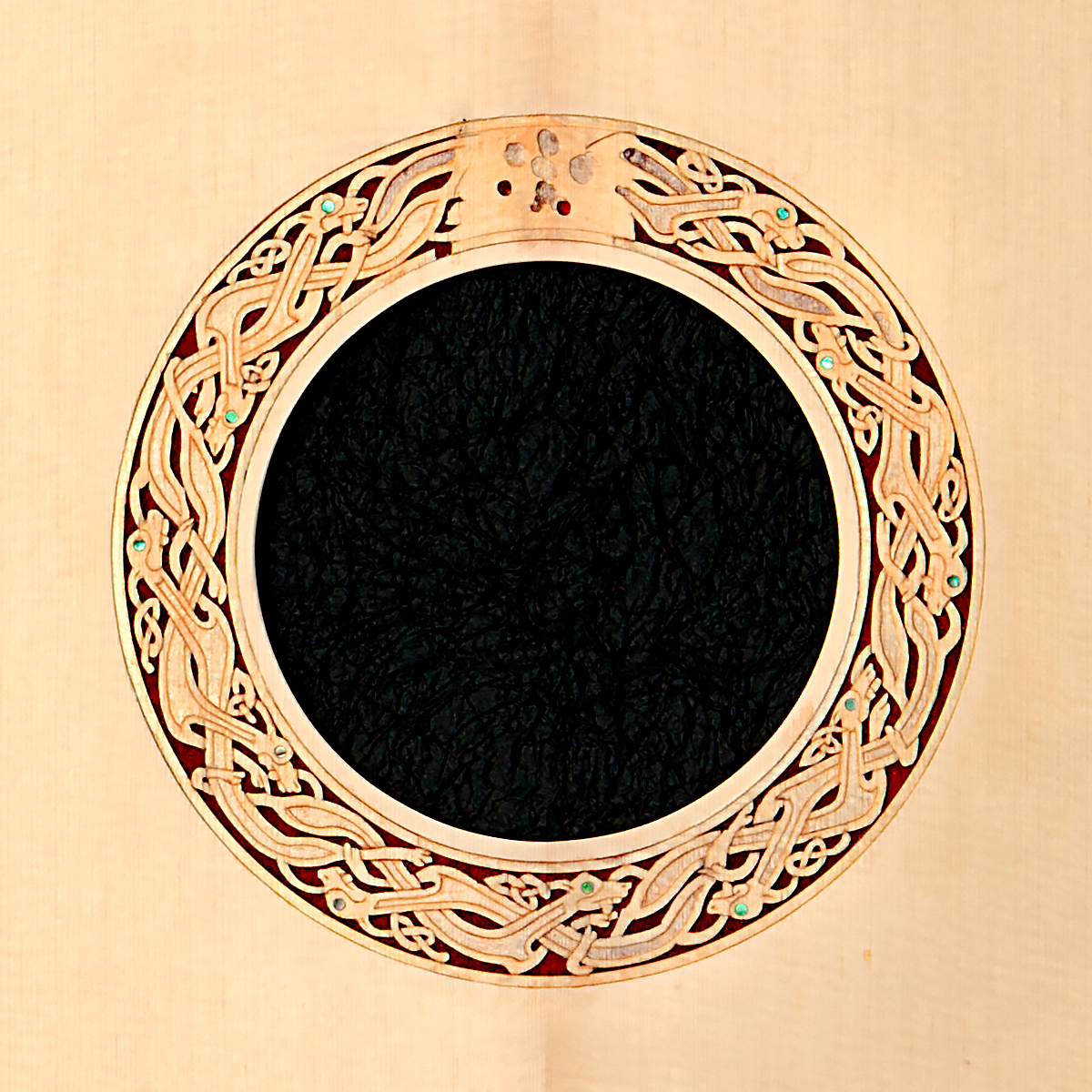
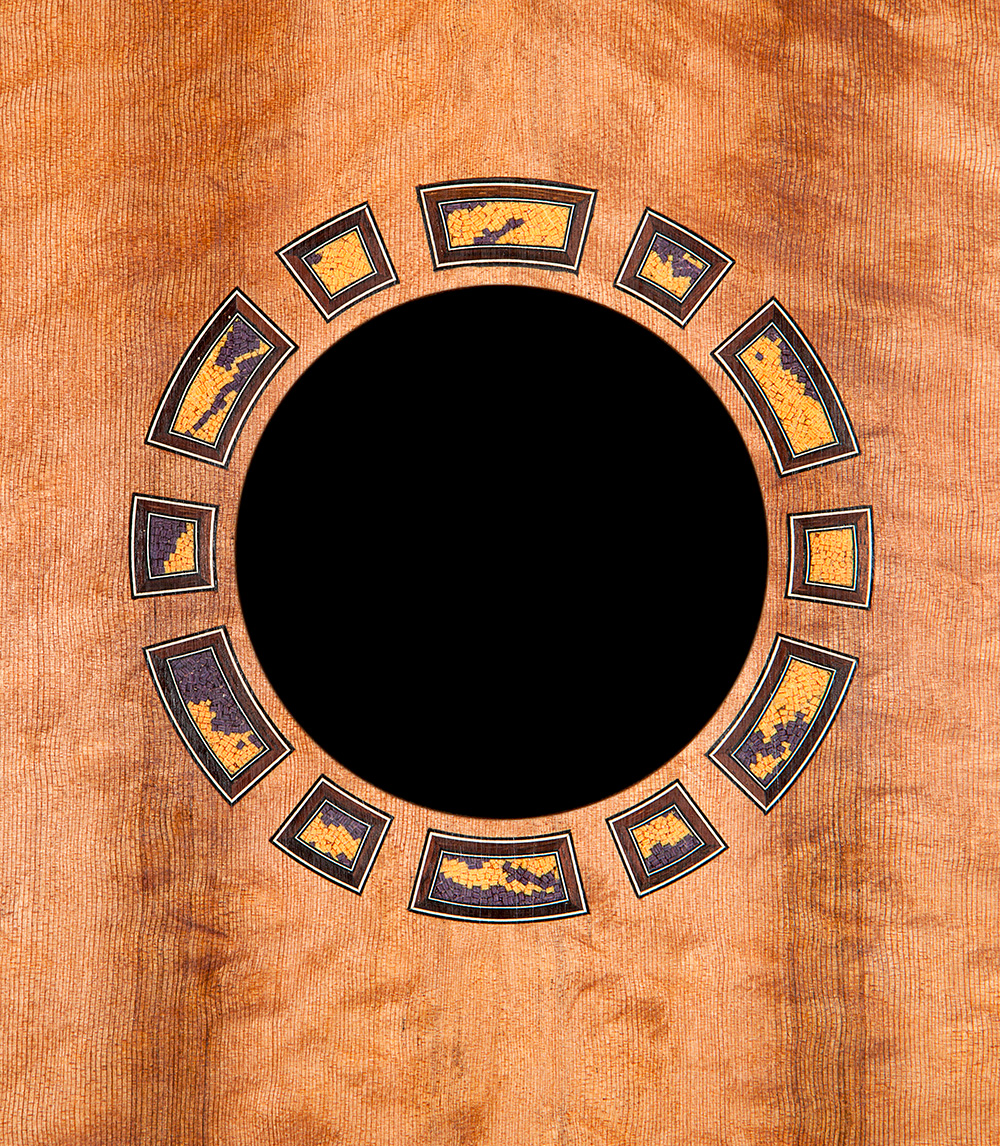
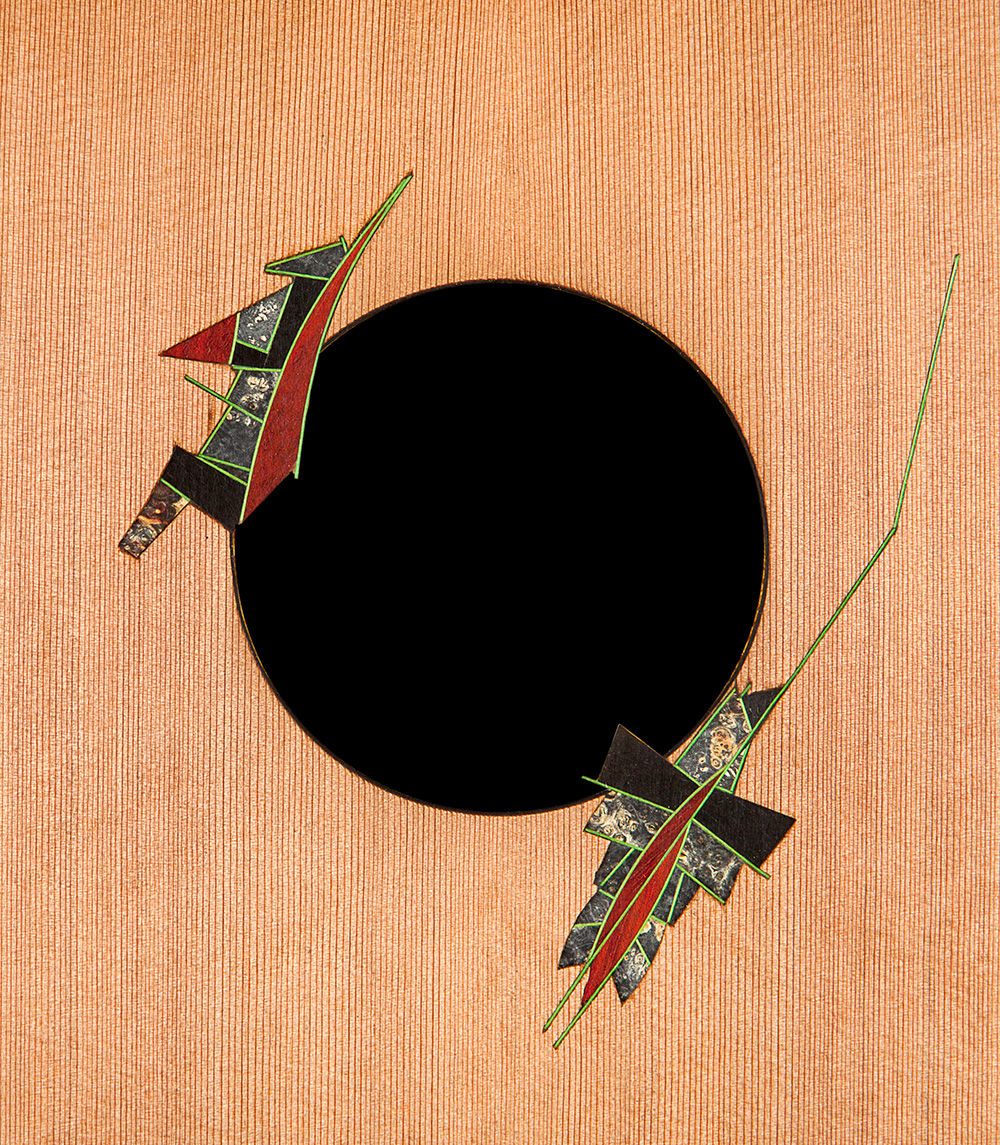
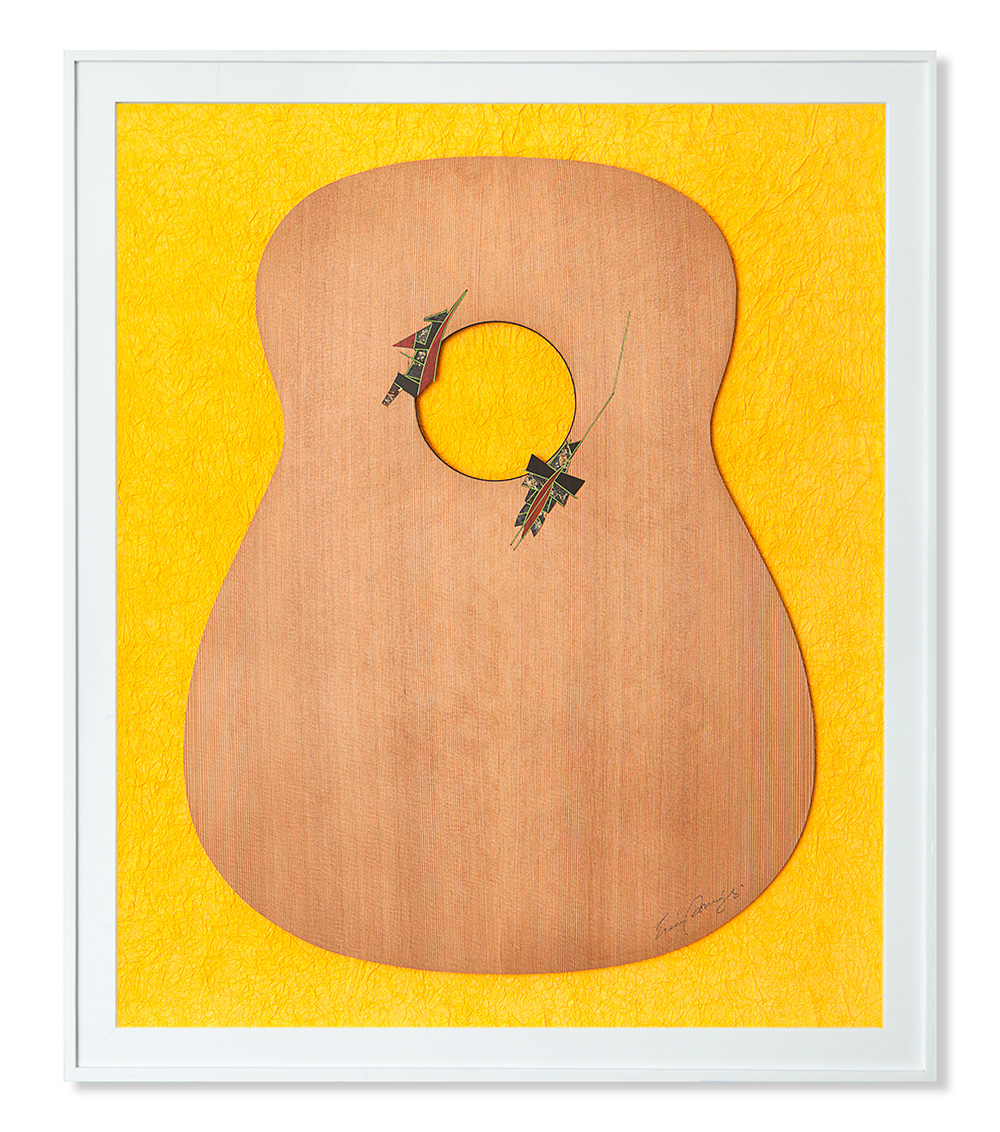
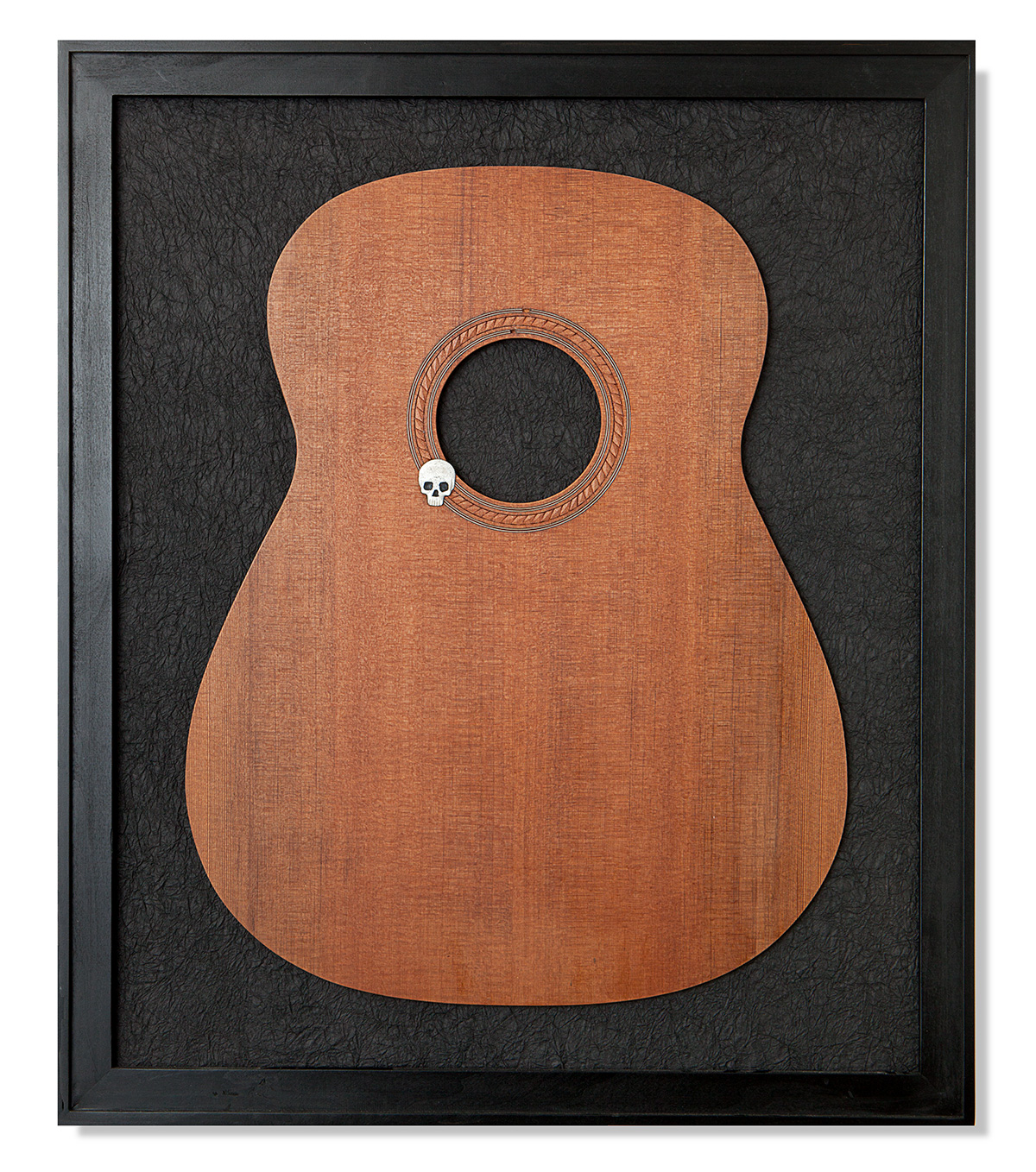
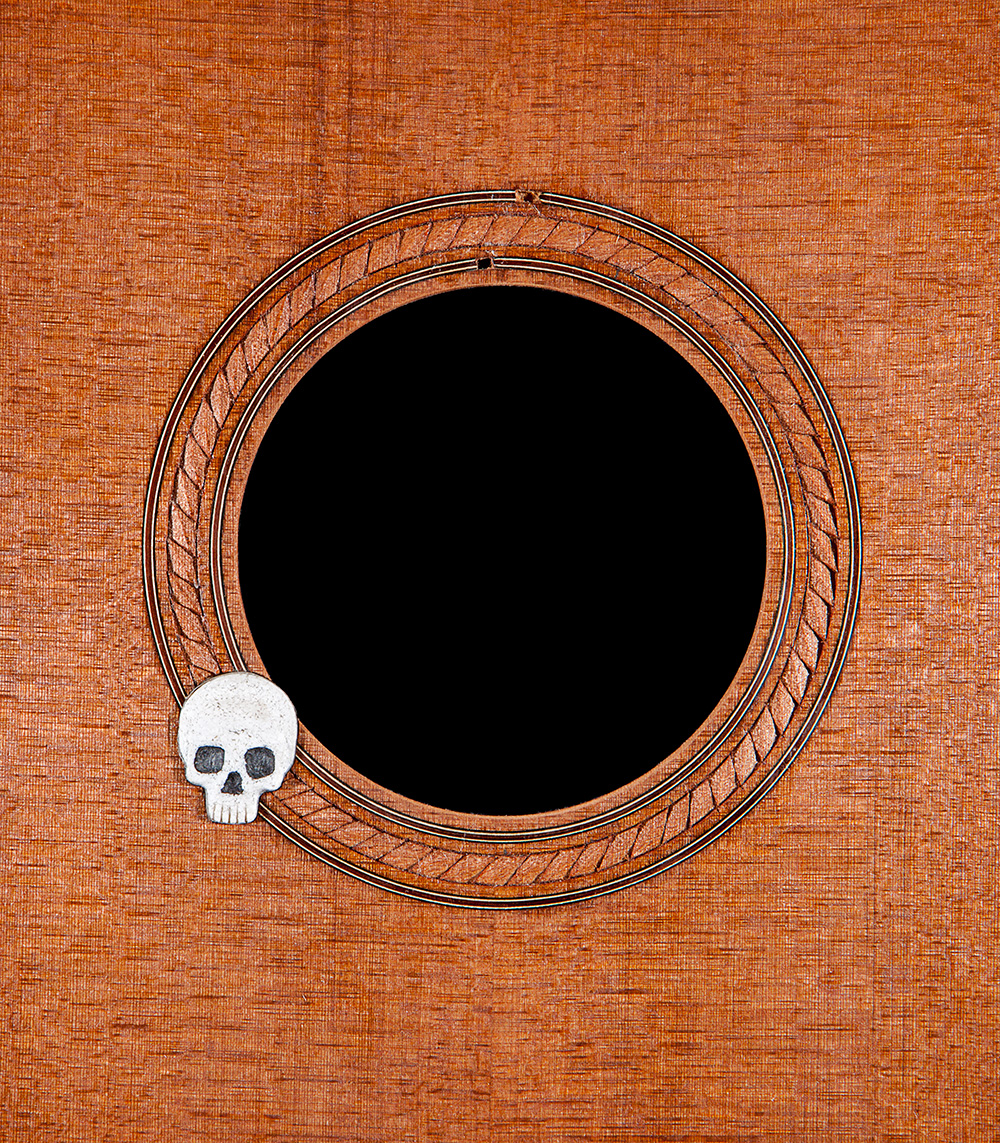
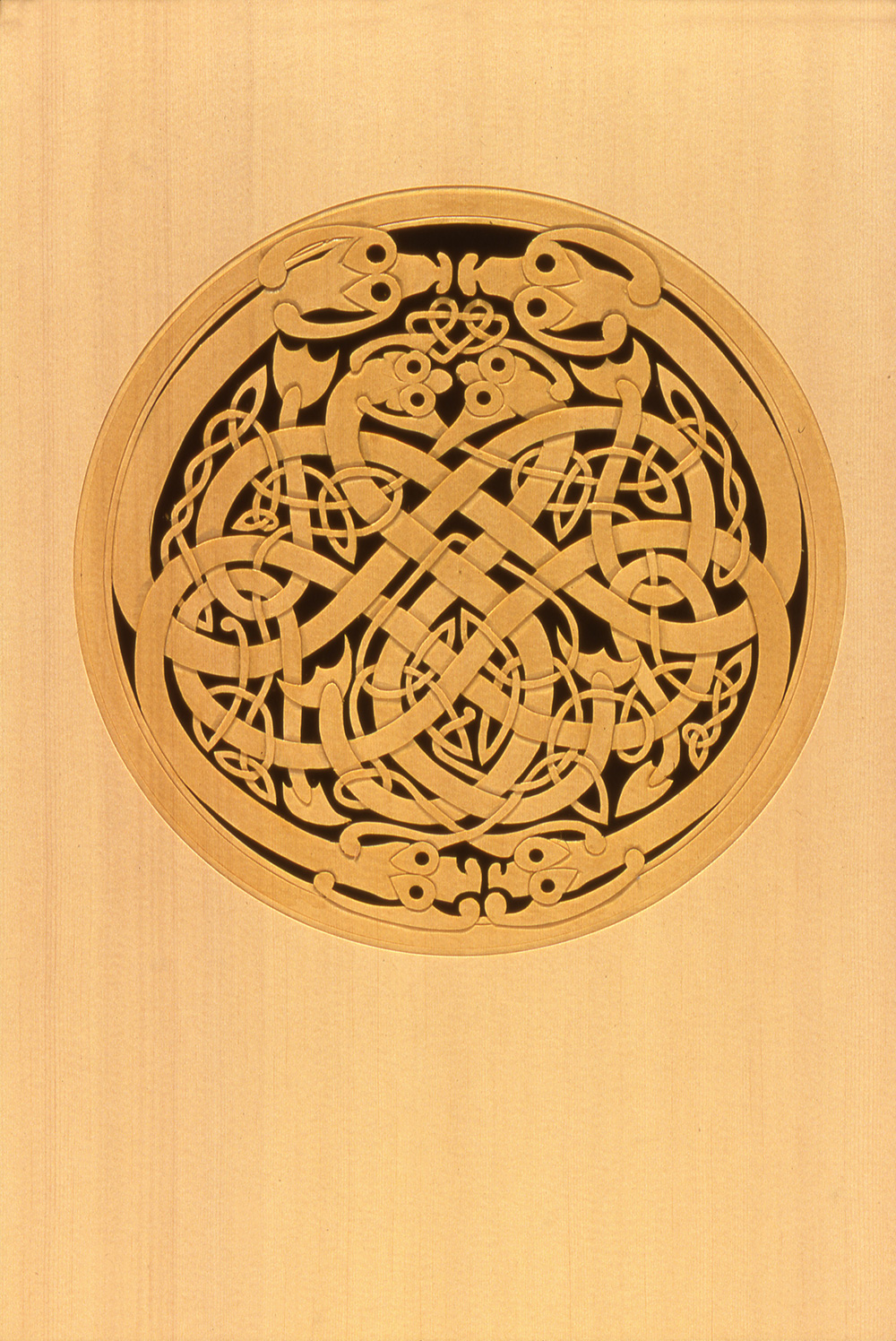
My artwork began with my making (inlaying and carving) of the rosettes (the soundhole decorations) of my guitars. While one can purchase commercially made rosettes from supply houses, I make all of mine by myself.
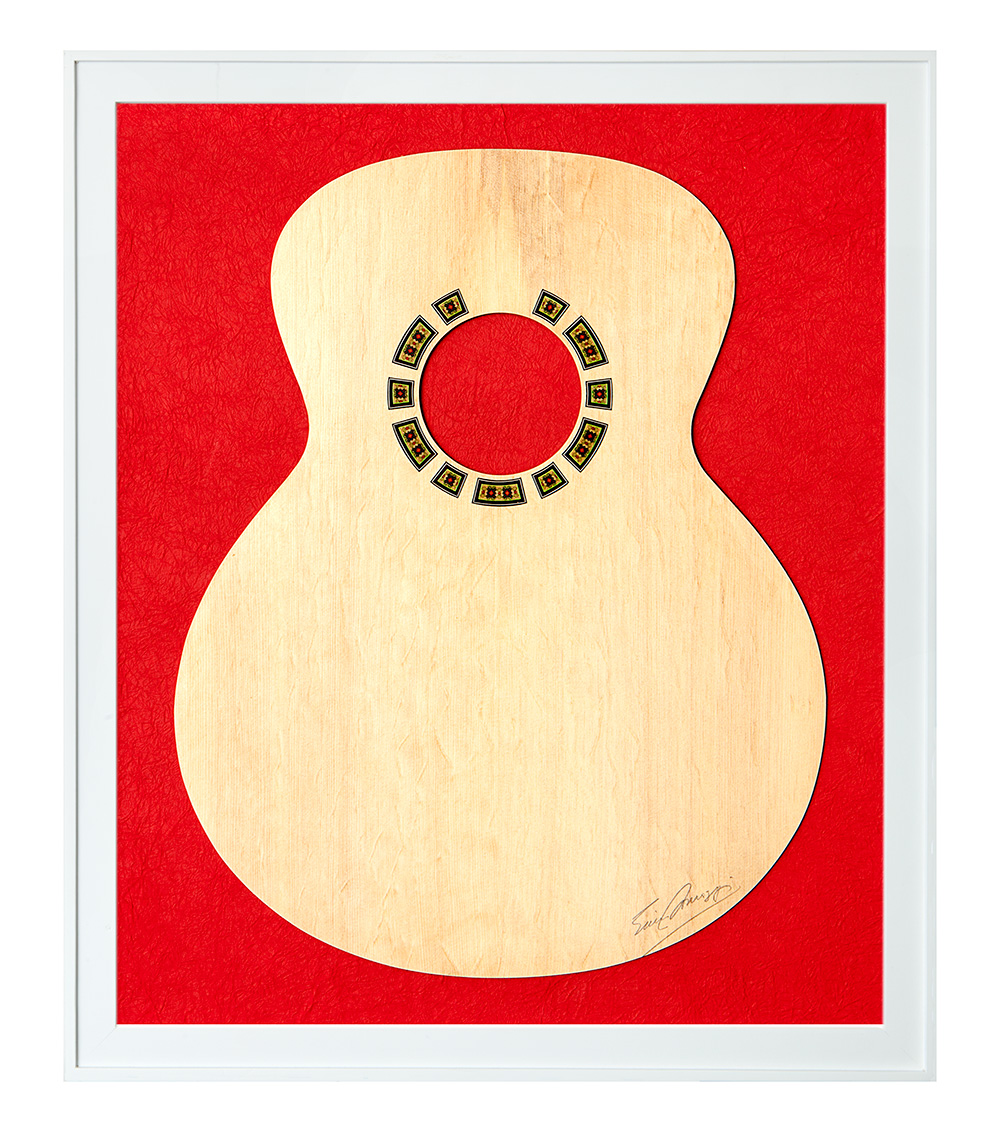
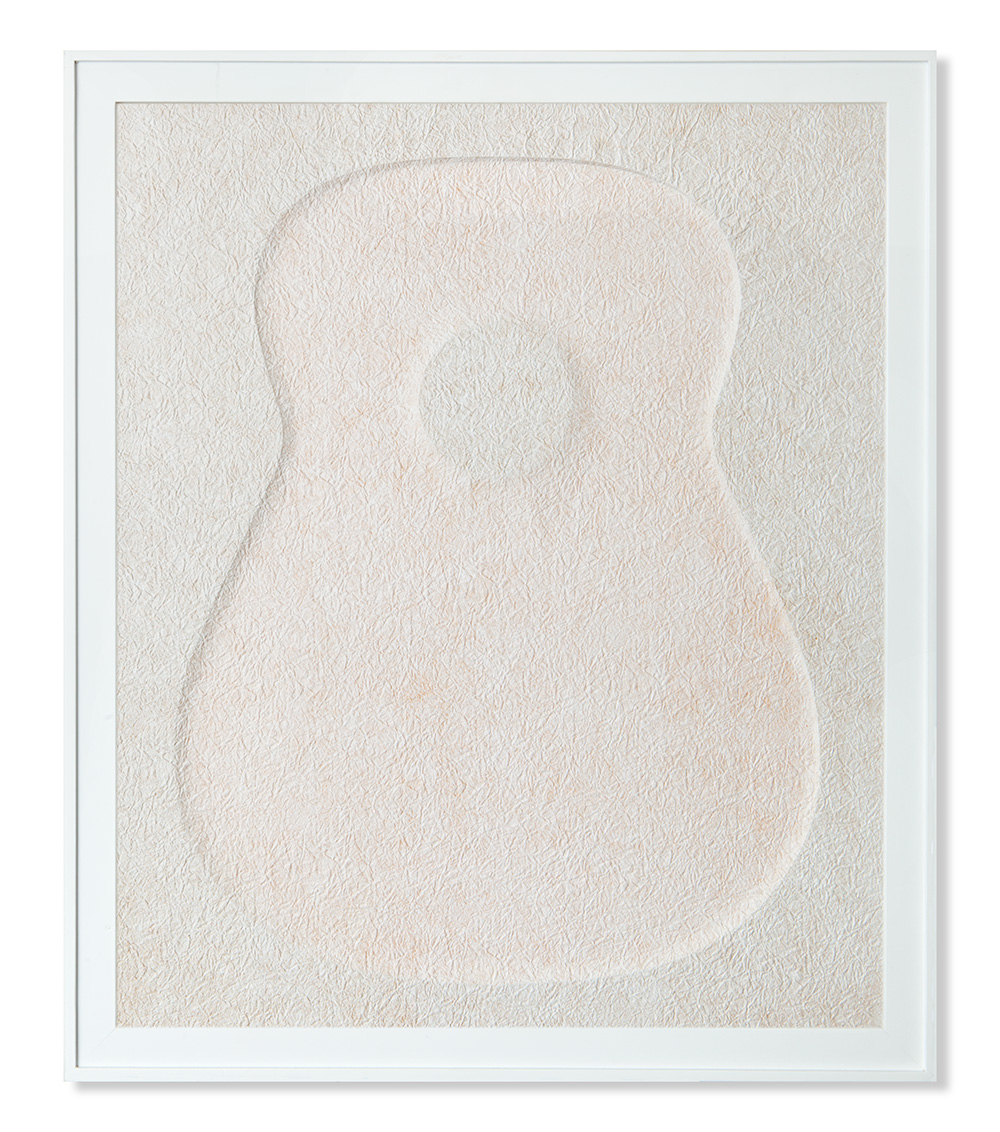
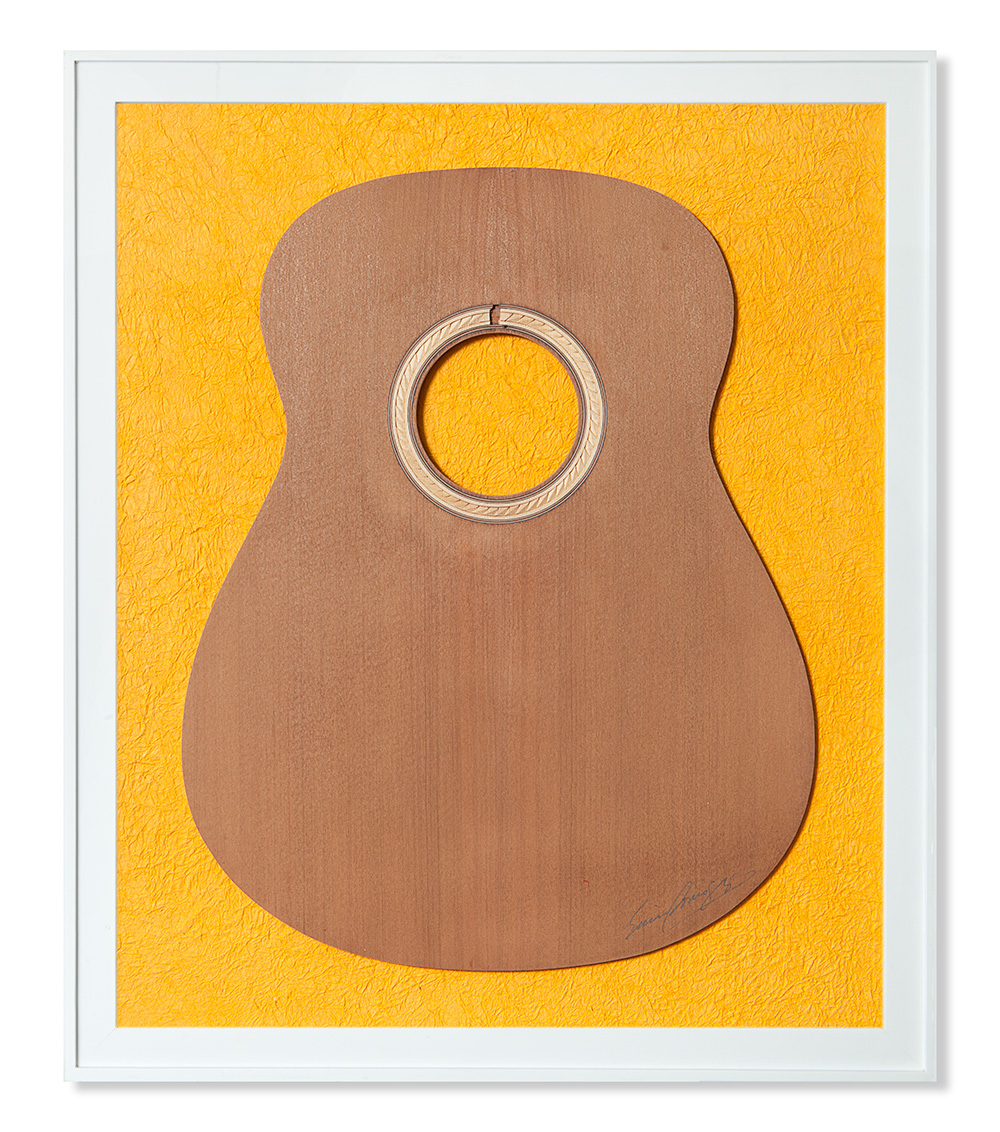
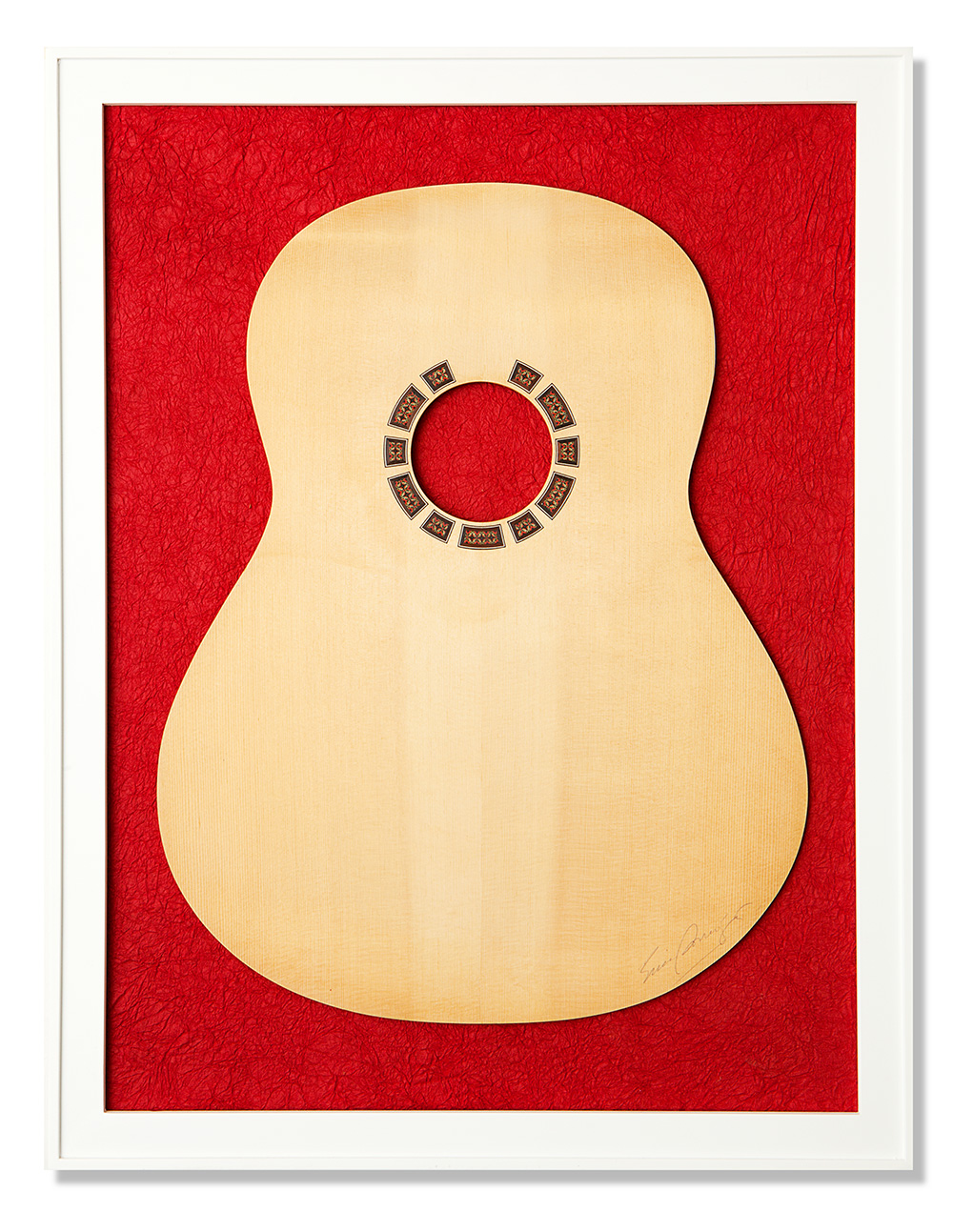
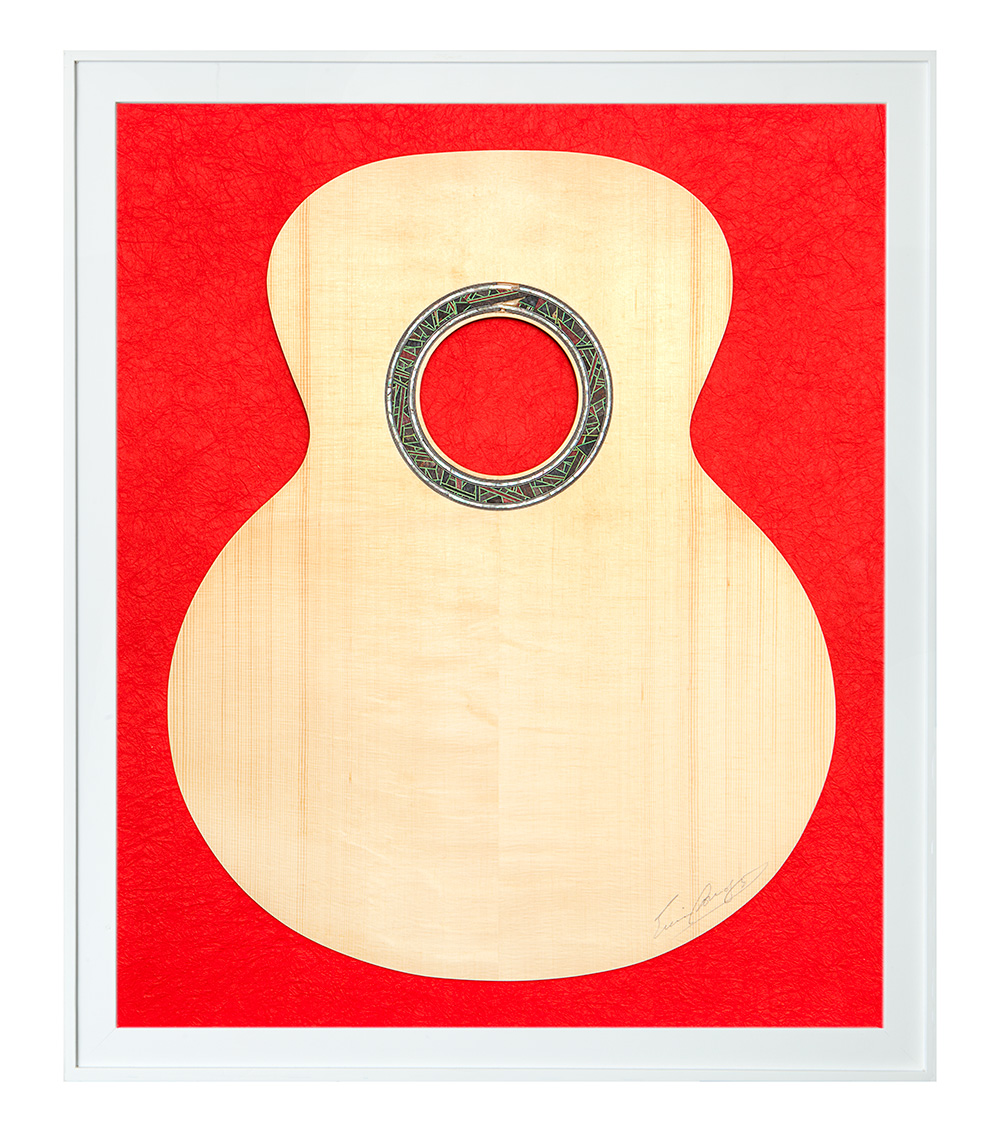
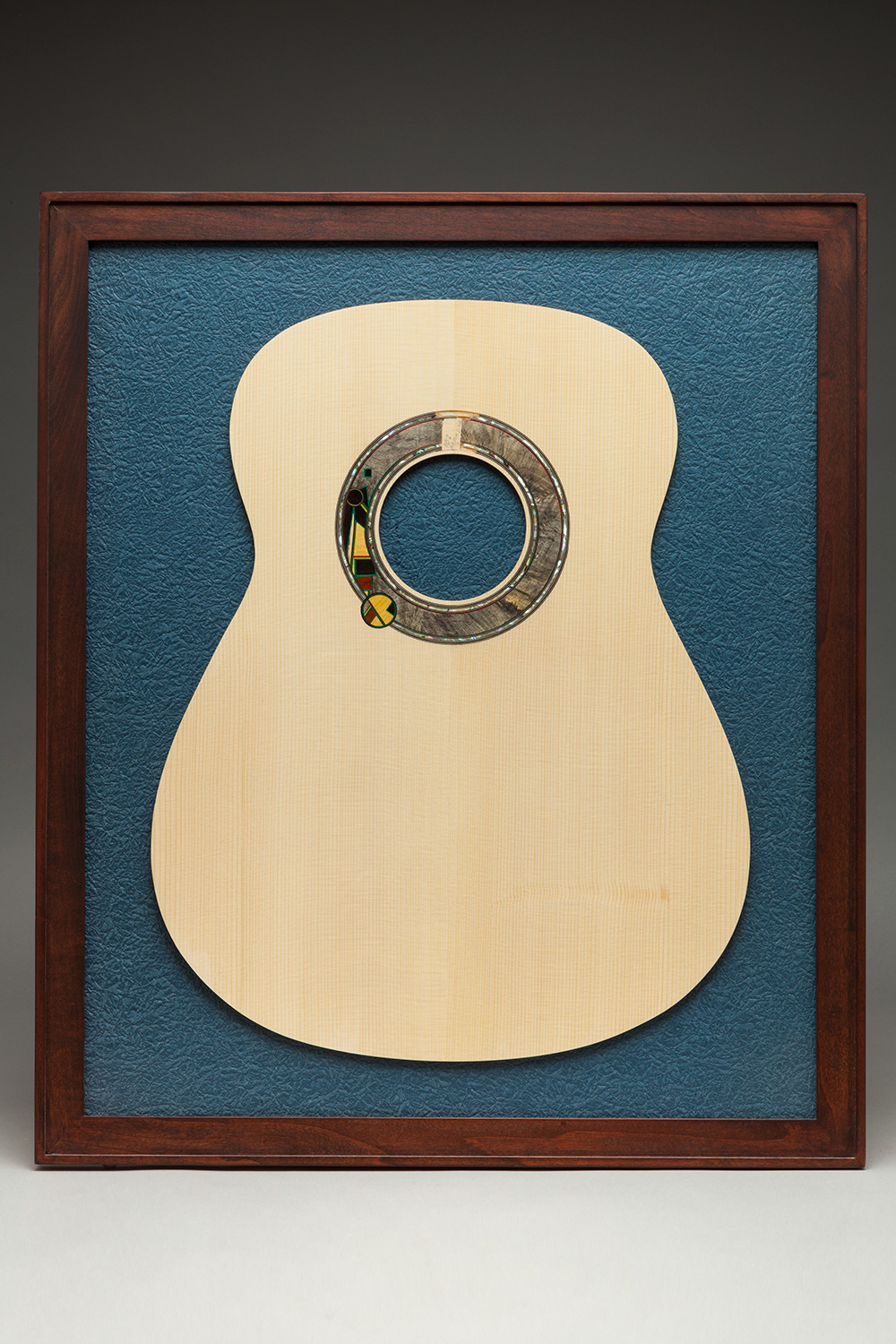
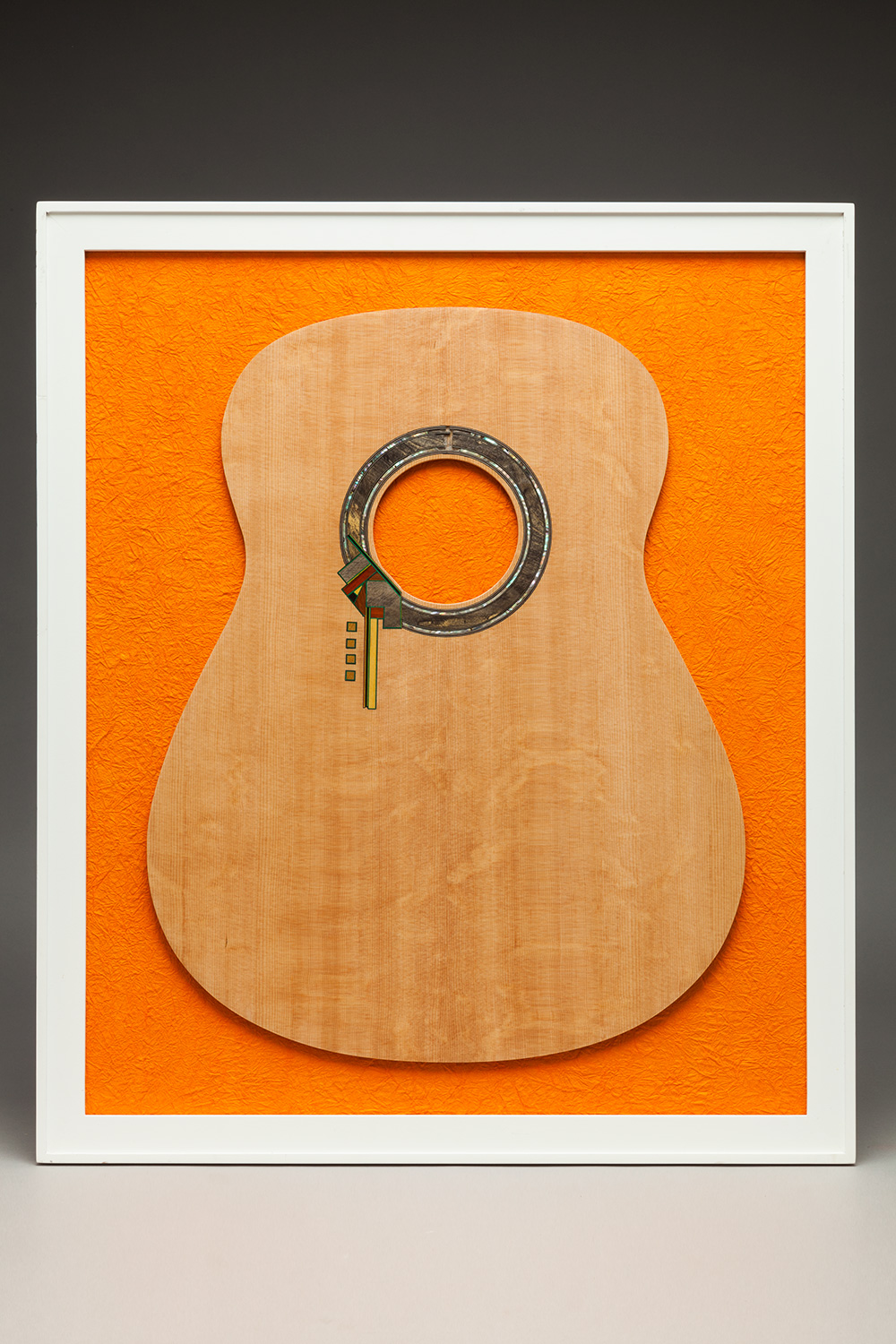
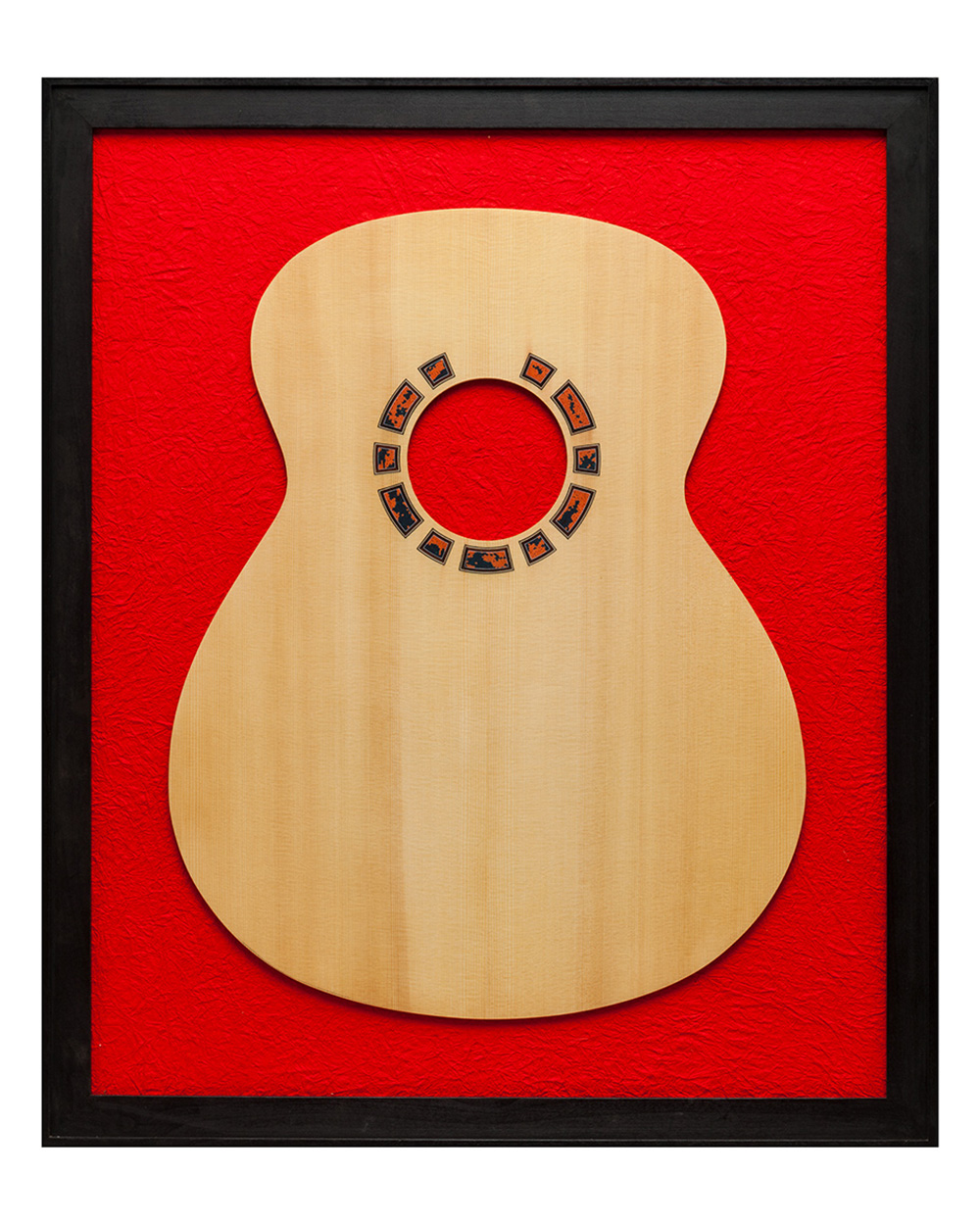
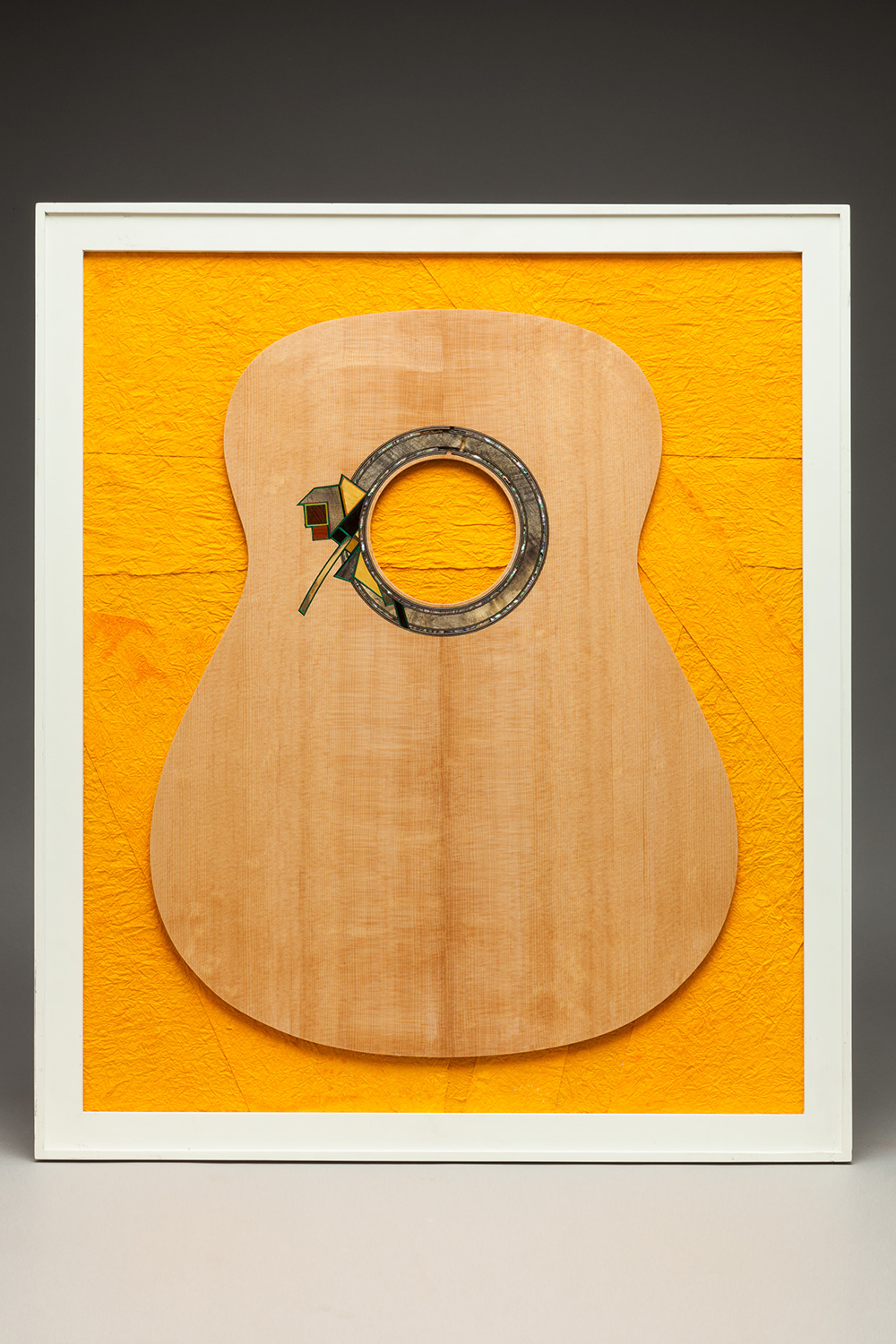
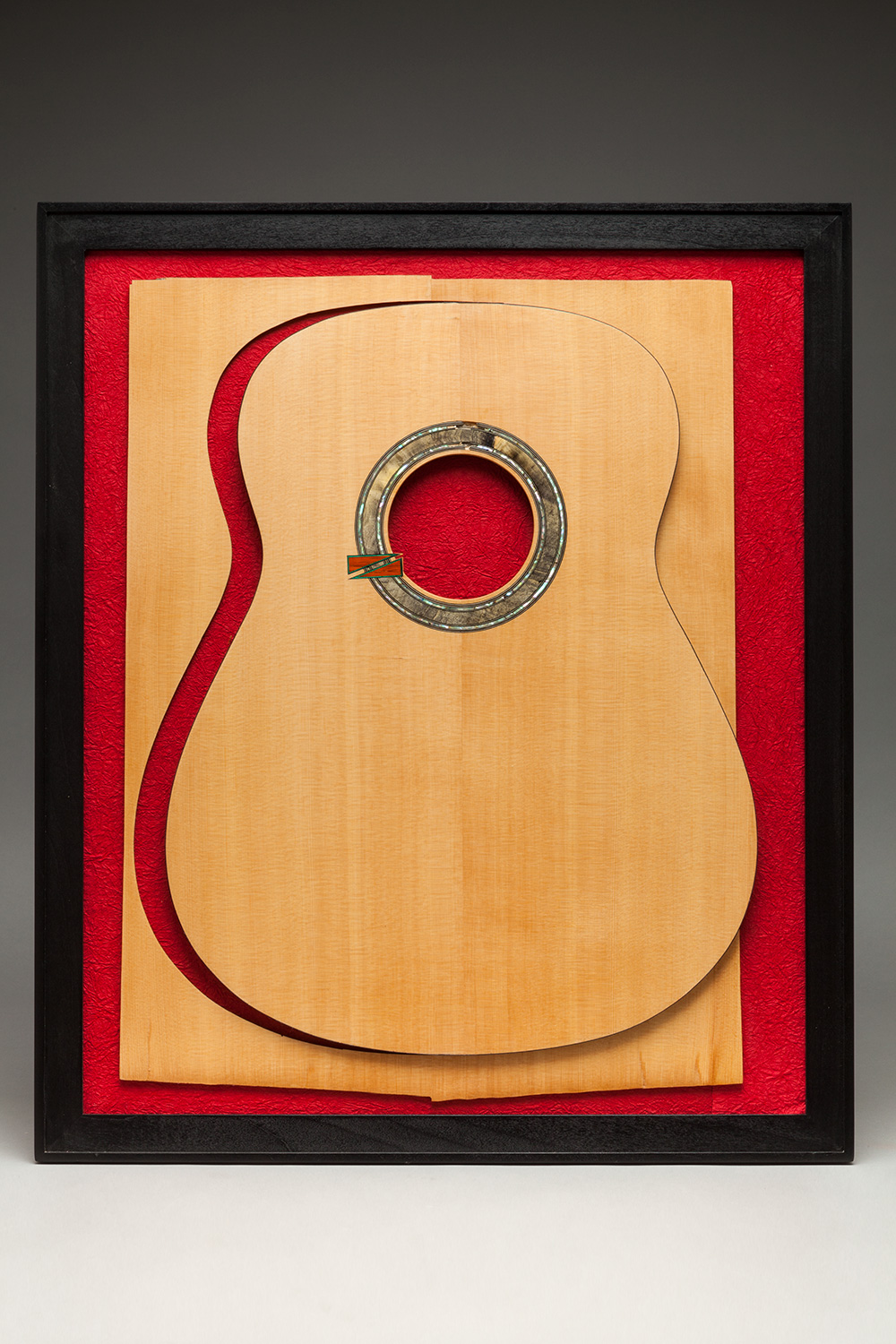
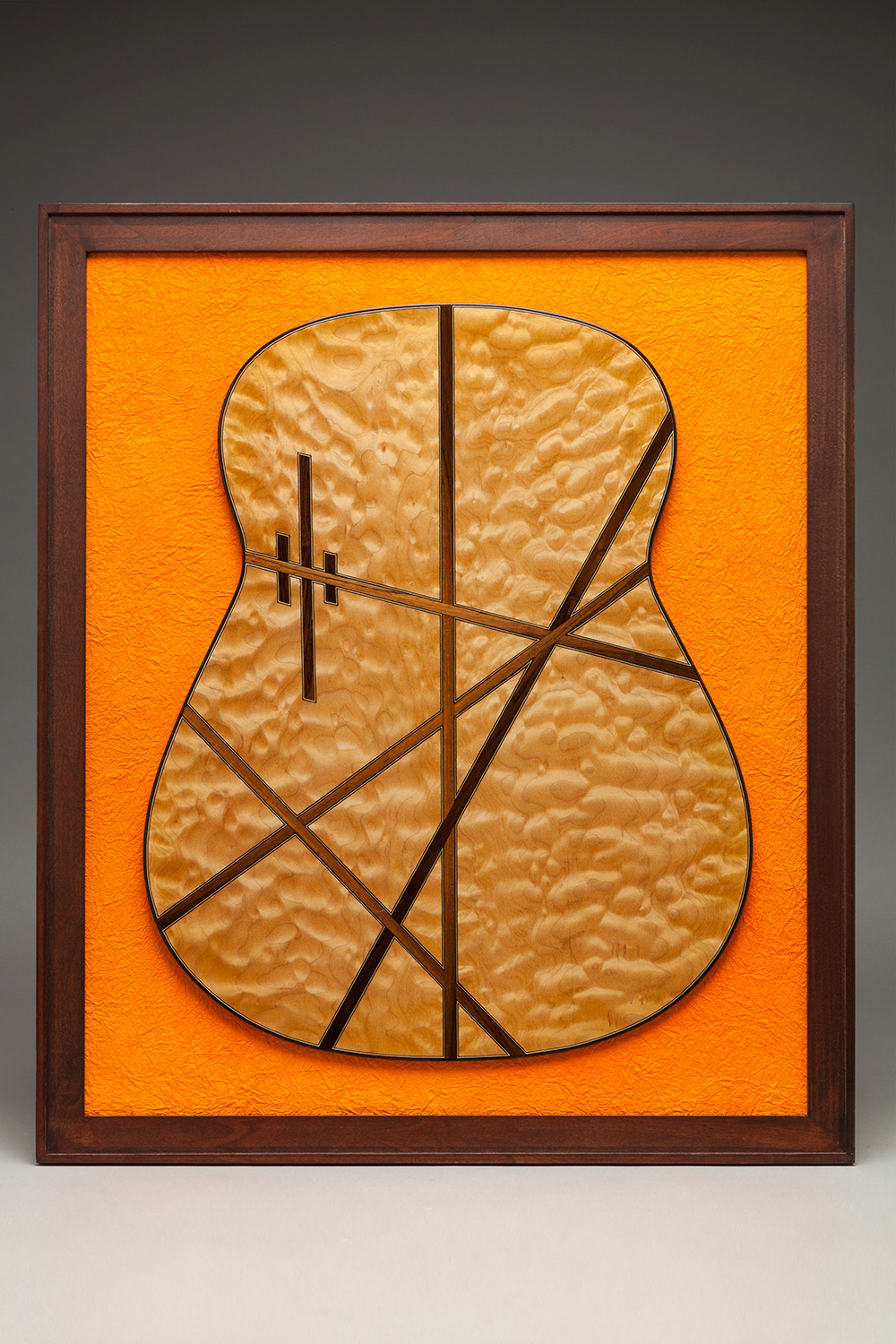
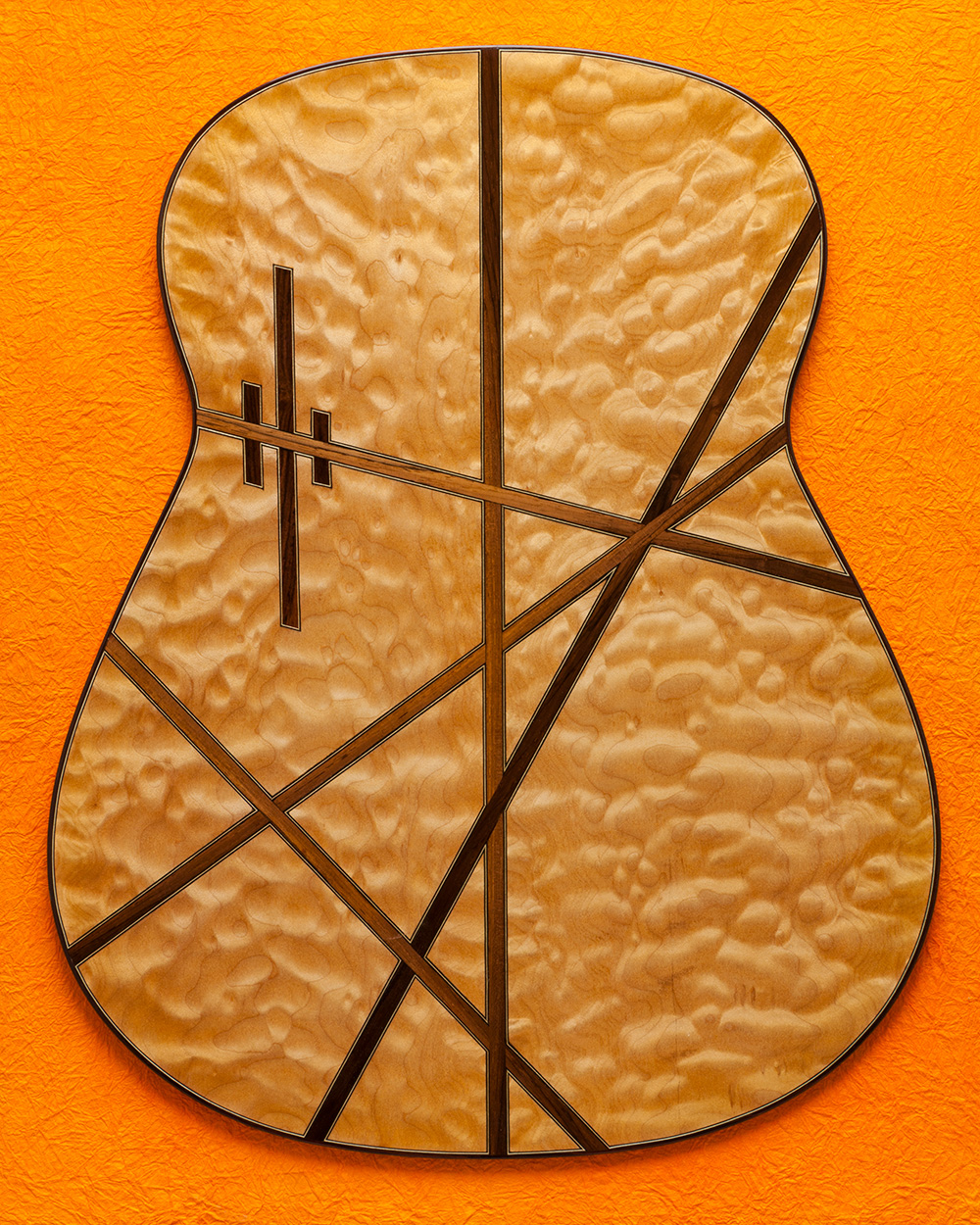
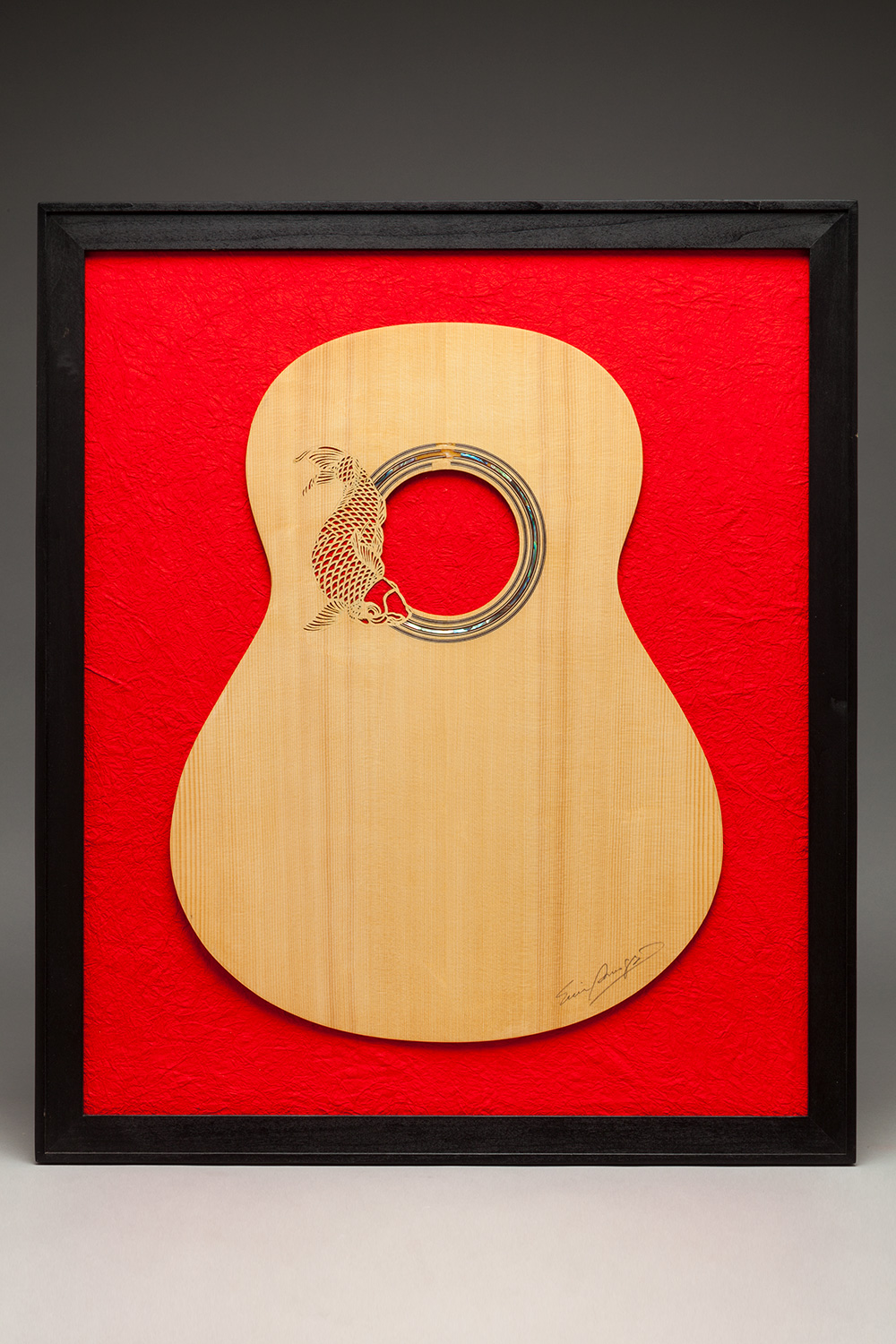
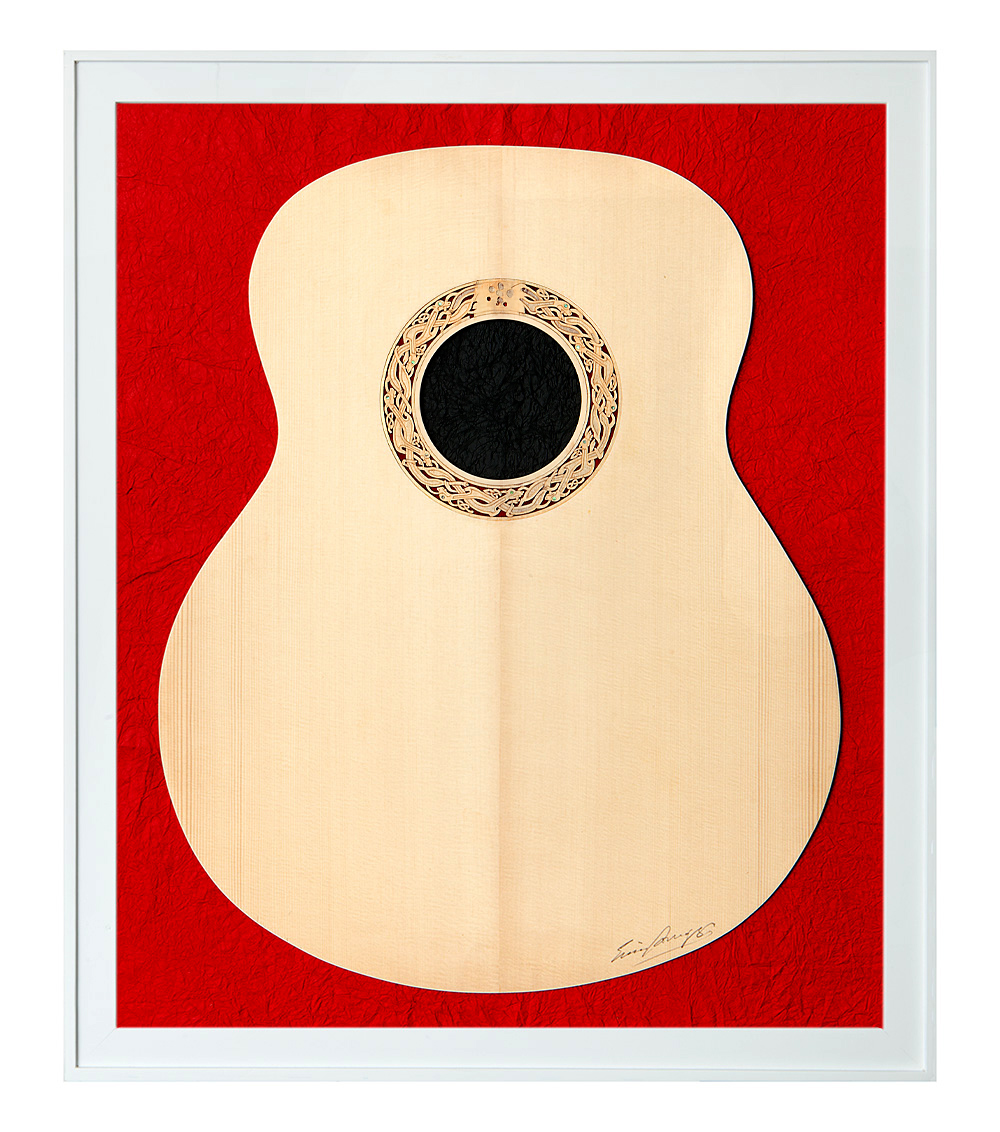
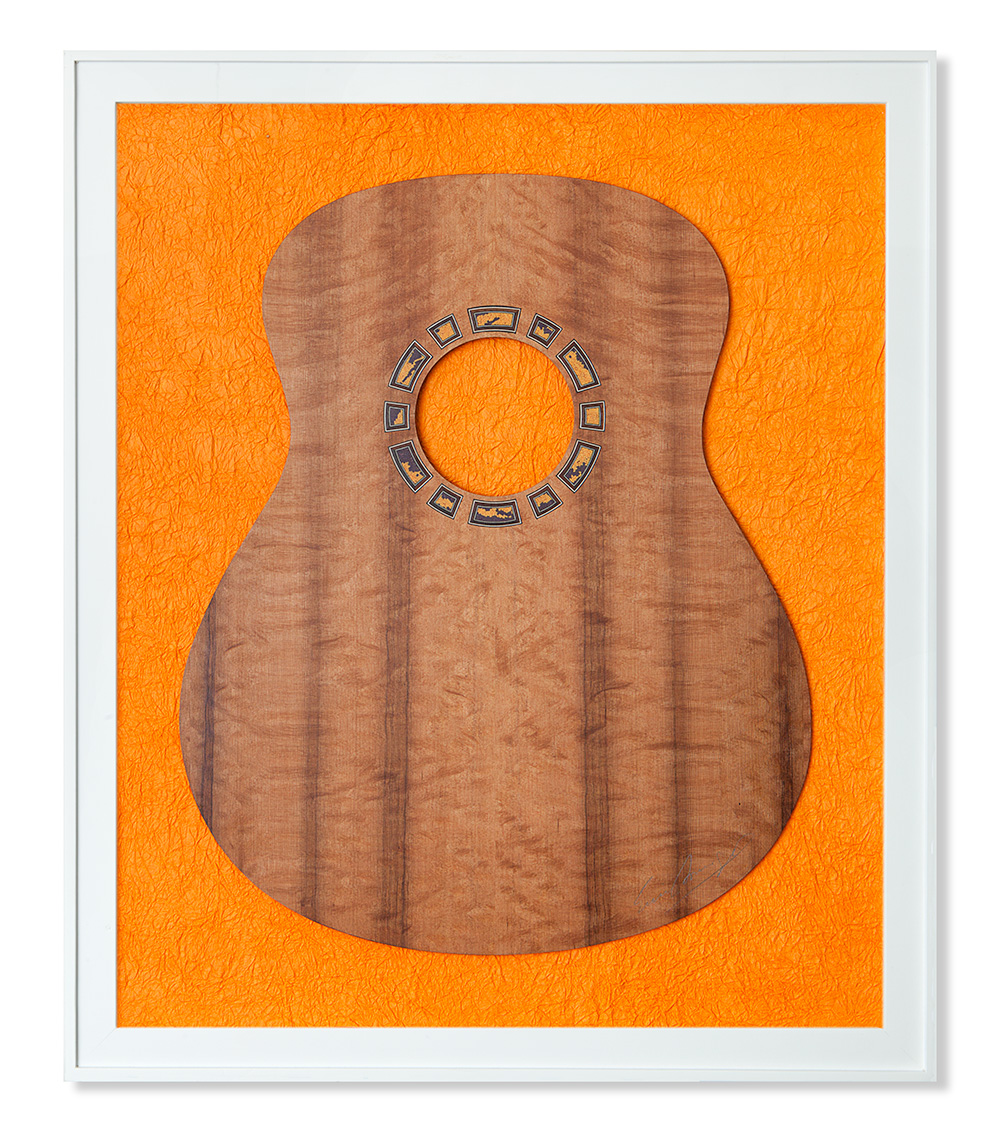
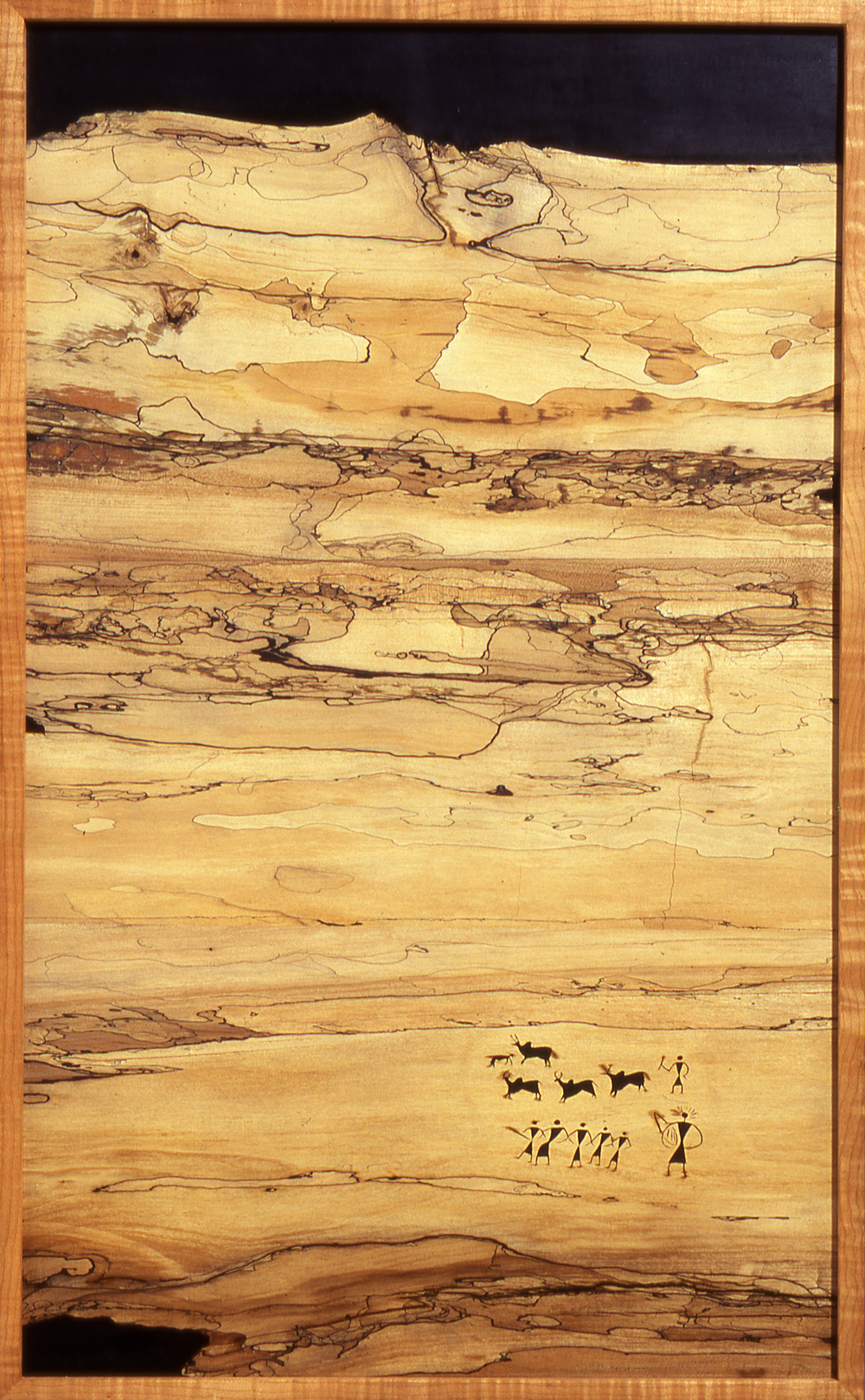
While all guitars have rosettes, I have explored the idea that the guitar tops I make can qualify as being art and don’t necessarily have to go on guitars. Accordingly, I’ve made a lot of guitar-tops (and also guitar backs) as framed art-for-the-wall. The framed tops have washi (handmade and colorfast Japanese paper) backing.
Each of these “canvases” is a two-piece plate of bookmatched and thinned wood – which is how guitar tops are made. The frames for this kind of art are themselves approximately 65 x 55 centimeters in size.
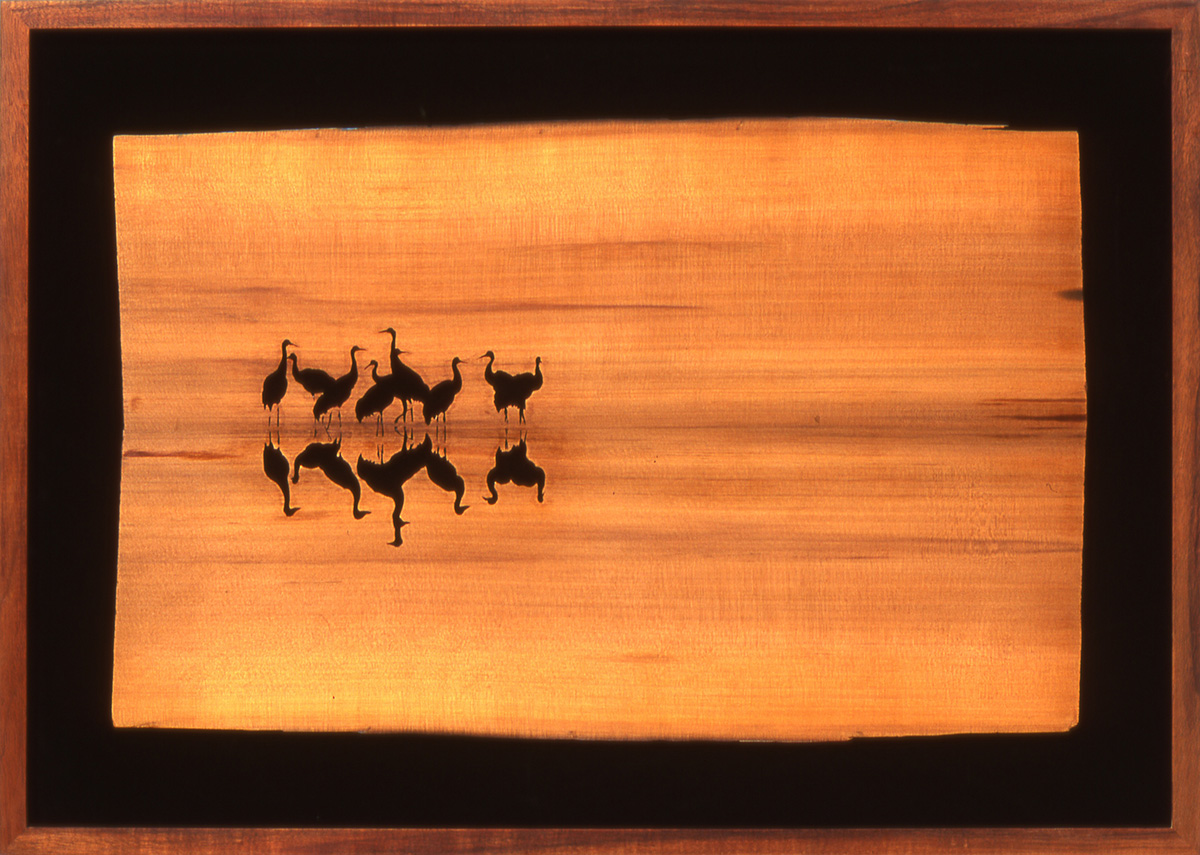
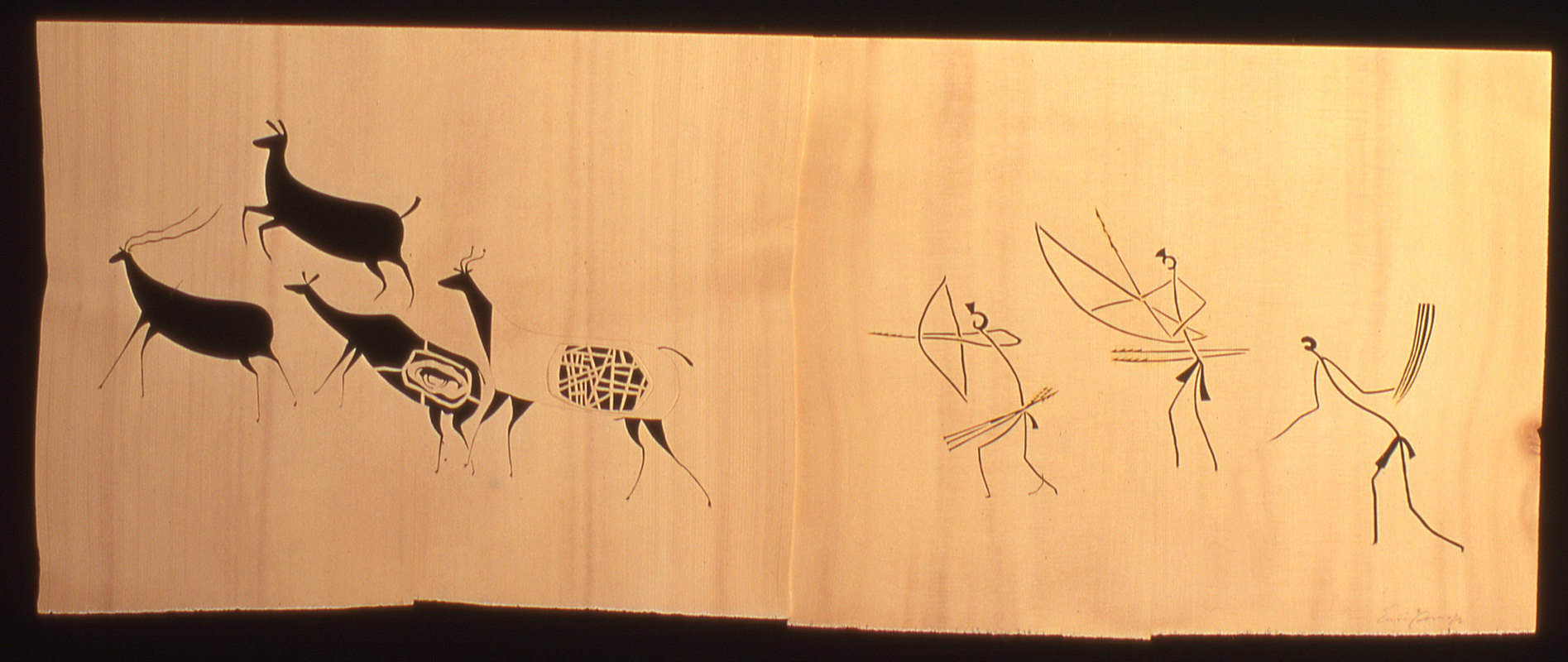
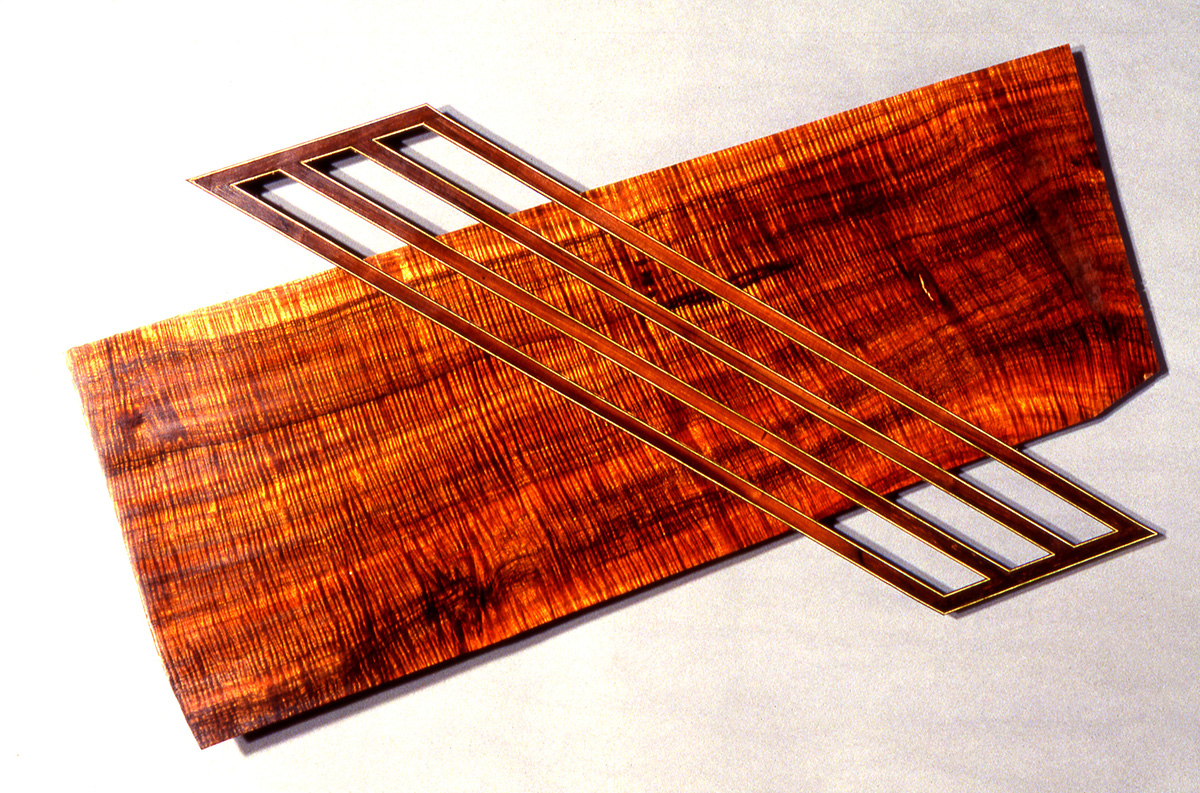
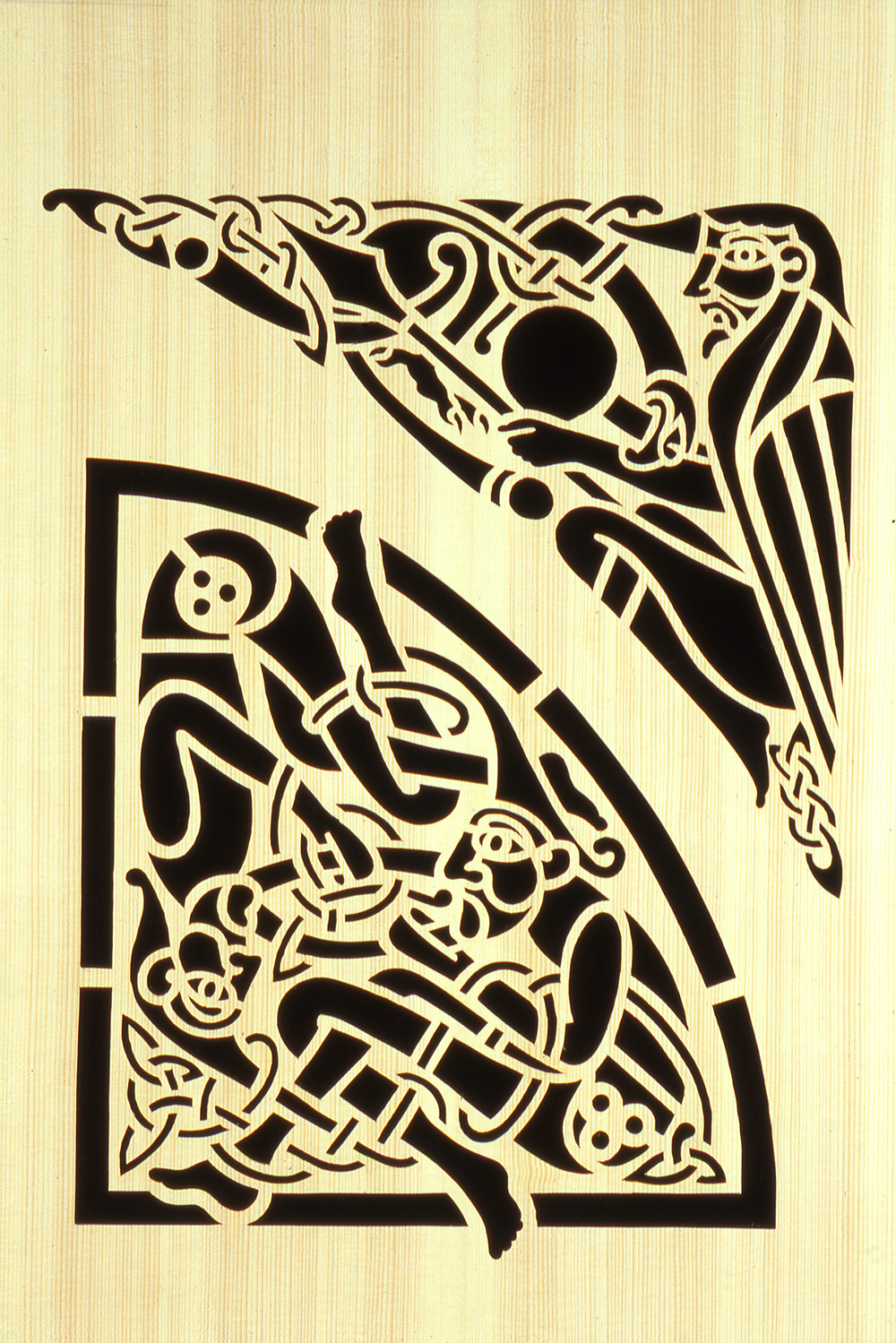
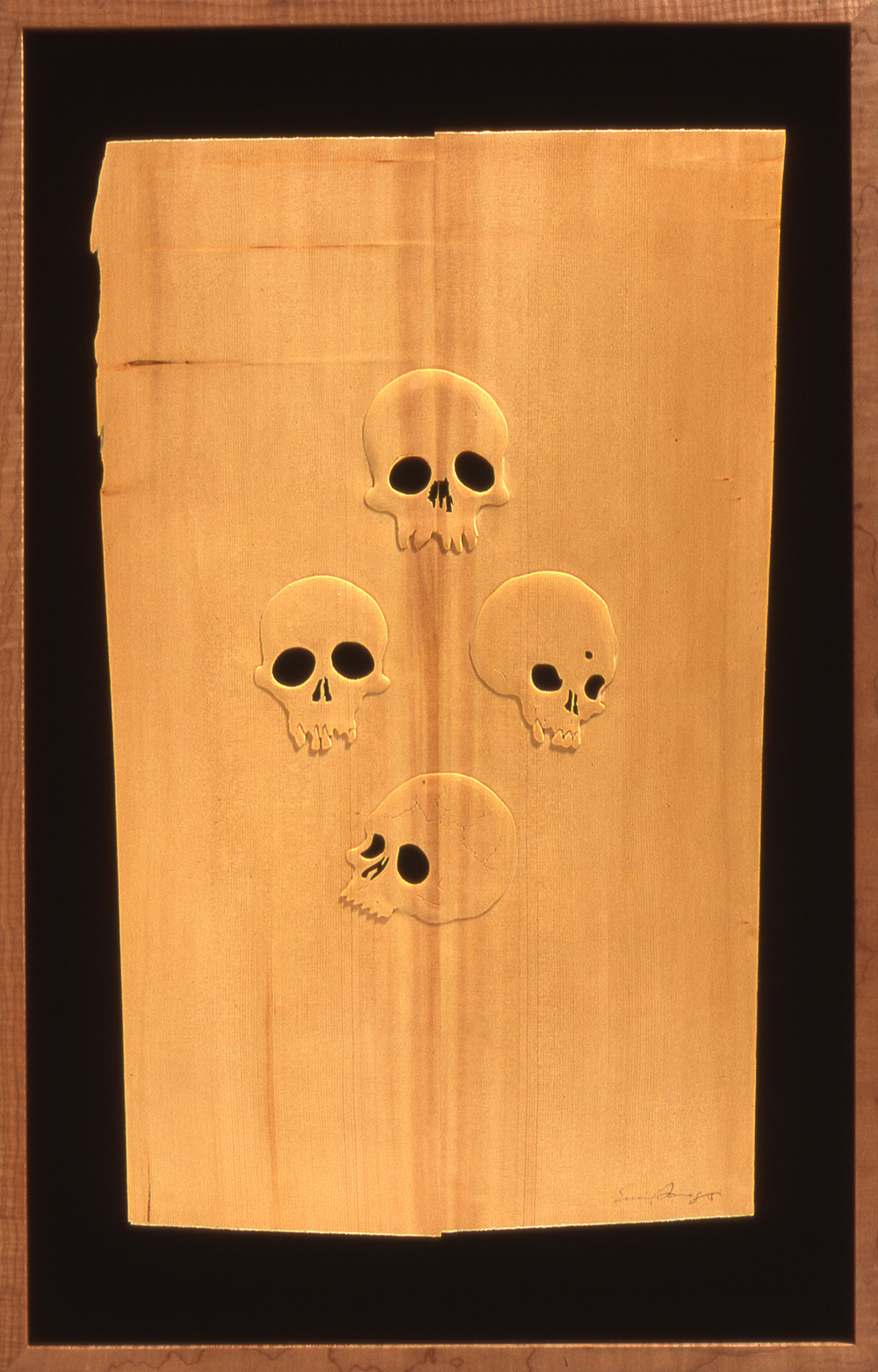
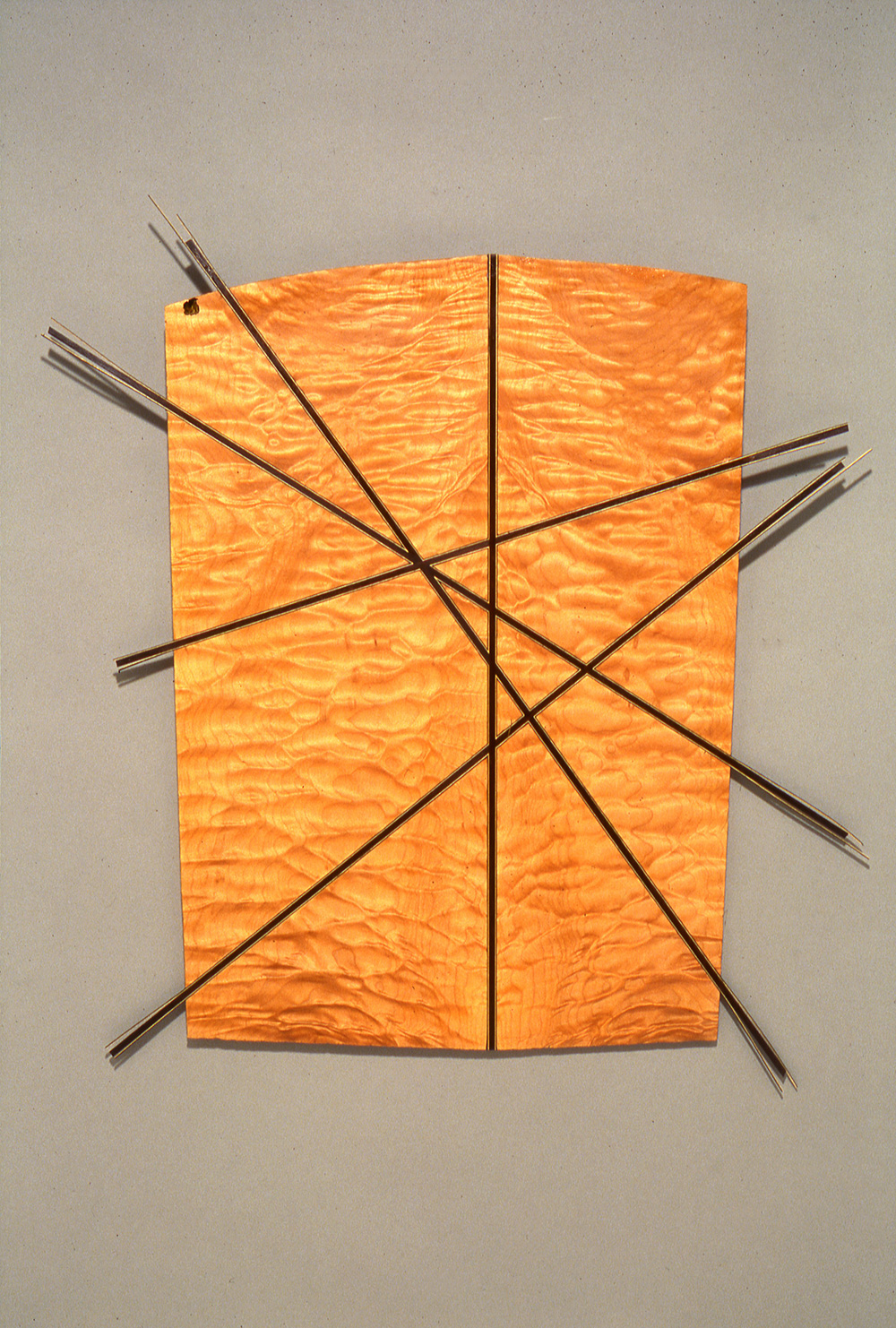
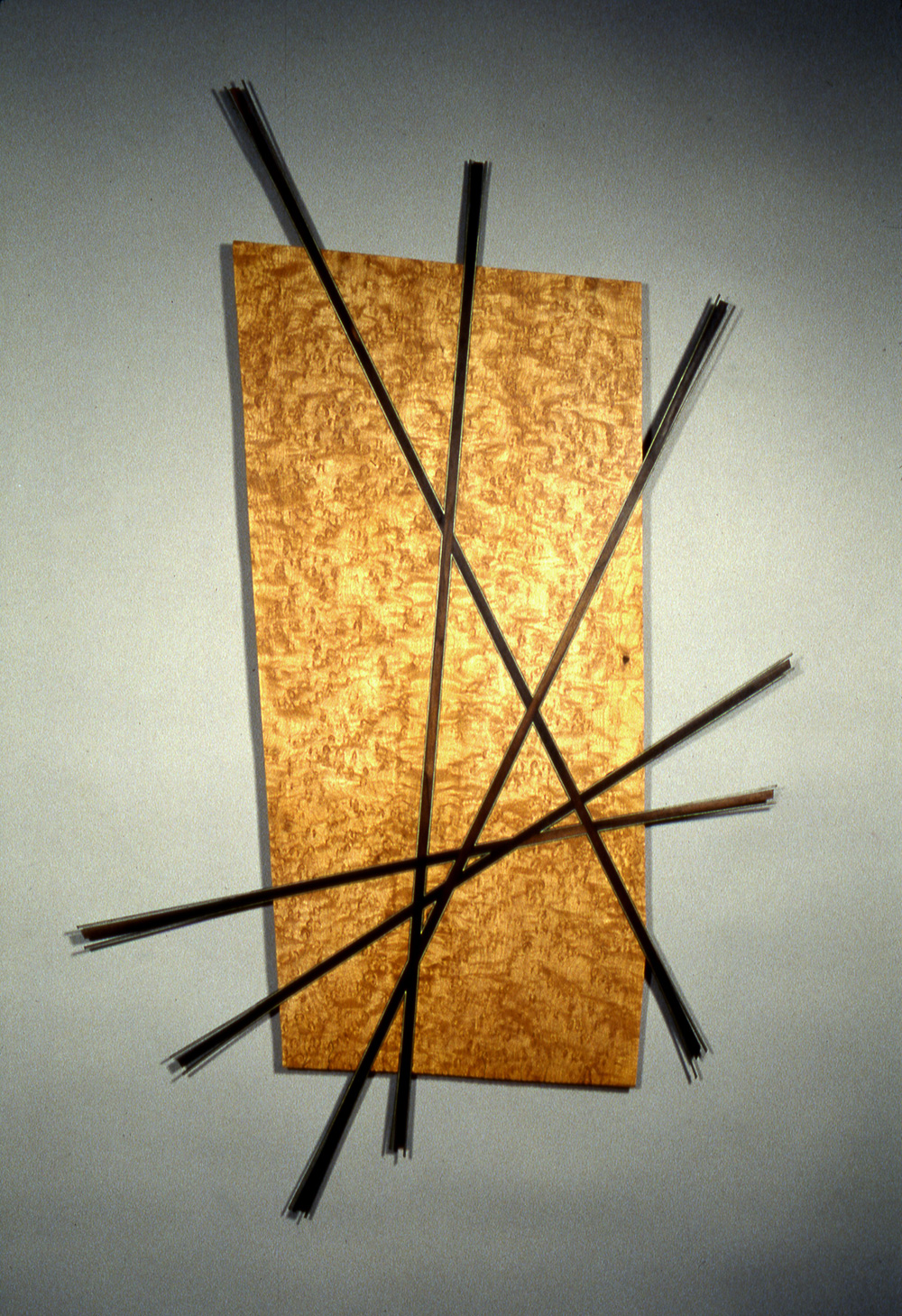
But I’ve also gone on to make differently sized, shaped, themed, and executed art in wood. Please look at them.
—
Most people don’t think of wood as being anything other than a material with which to make furniture, railroad ties, house framing, guitars, etc. One thing about these potential guitar tops, though is not just that they are made of wood; they are made of old wood. Each grain line in wood represents one year’s growth . . . and every spruce or cedar guitar plate I’ve ever made has at least one hundred and fifty grain lines to it — and usually a lot more. There can be as many as three or four hundred grain lines, each line representing one year’s growth, in the 8” wide pieces of wood that I used for each half of these plates. That means that each of those plates can be as old as your great-great-great-great-great-great-great-great-great-great grandparents.
You may want to count the grain lines — starting from the centerline and going out to the edge — on your own guitar top. And incidentally, classical guitar tops are more tight-grained than those on steel string guitars, so they’re even older.
The wood has an identity all its own, aside from its grain count. It is the skeletal remainder of a life form (i.e., a tree) that once lived long before us, that took in nutrients, grew, adapted to its conditions, participated in the cycles of the seasons, took in sunlight and converted carbon dioxide into oxygen, produced seed and leaves and sap and fruit, interacted with other life forms by giving them food and shelter, held the soil together as it put out roots, propagated itself, lived a long life, and then died. Or, more probably, was killed in order to serve our species’ needs. But wood — all wood — is exactly these things. And, speaking of age, these 8-inch-wide slices of guitar-top wood will in every case have come from much larger (and older) trees. Some felled spruces are larger in diameter than the people who cut them down are tall, and are of course many hundreds of years old.
—
Such age merits respect, I think.
Regarding this body of work, no two of the soundhole rosettes, or other carvings/inlays, are alike. Please feel free to look at these, both in the frames and in closeups.
This work is for sale; every square centimeter of it is something that has been painstakingly made by hand. Prices are in the $2000 to $4000 range (or best offer), with a very few exceptions. Please get in touch if any of this work interests you. If you wish to speak with me, my telephone number is (510) 610-6470.
—
PRICED UNFRAMED ARTWORK – FOR FRAMED ARTWORK PLEASE ADD $100.
Click to see full image. Note that the “Espalda” pieces are whole, without frames.